Waffles (Hominy)
Julia Parkman
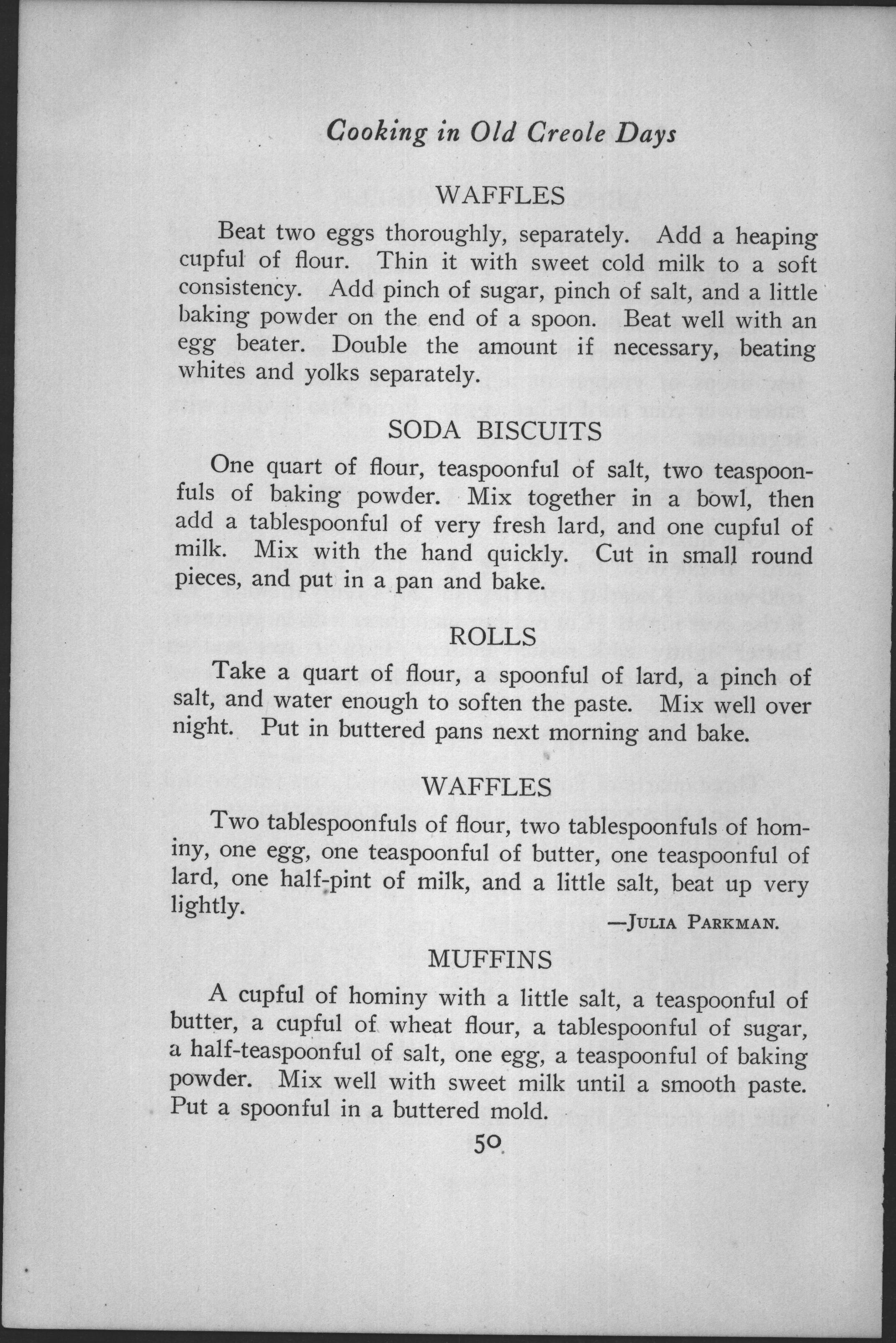
Two tablespoonfuls of flour, two tablespoonfuls of hominy, one egg, one teaspoonful of butter, one teaspoonful of lard, one half-pint of milk, and a little salt, beat up very lightly.
A Southern twist on the waffle iron, stretching a little flour with cooked hominy for a tender, faintly corn-sweet result.
- “Two tablespoonfuls of hominy”This means cooked hominy — the soft, nixtamalized corn, or its ground form, hominy grits — not the dry kernels. Cook it soft first, then measure.
- “One half-pint of milk”Half a pint is 1 cup. With only 2 Tbsp flour and 2 Tbsp hominy, this makes a very thin, delicate batter.
- Butter and lardThe teaspoon each of butter and lard enrich the batter and help it release from the iron; melt them in first. All butter, or a neutral oil, works fine today.
- “Beat up very lightly”A light hand keeps the waffles tender; mix just until everything is combined, no more.
- Heat the iron wellGrease a modern waffle iron generously and let it come fully to temperature; a thin batter like this needs a hot, well-seasoned surface to crisp.
Hominy is corn transformed: dried kernels simmered with an alkali — wood-ash lye or slaked lime — until the tough hulls slip away and the corn swells sweet and tender. The technique, called nixtamalization, is an ancient Mesoamerican invention that Native peoples shared with later settlers, and it became a cornerstone of Southern cooking, from hominy grits to a dish like this. Folding leftover hominy into batter was a canny bit of thrift — using up yesterday’s pot while giving the morning’s waffles a soft crumb and a gentle whisper of corn.
From page 50 of the 1904 edition.
Original page from the book