Okra Soup
Mrs. William C. Hill
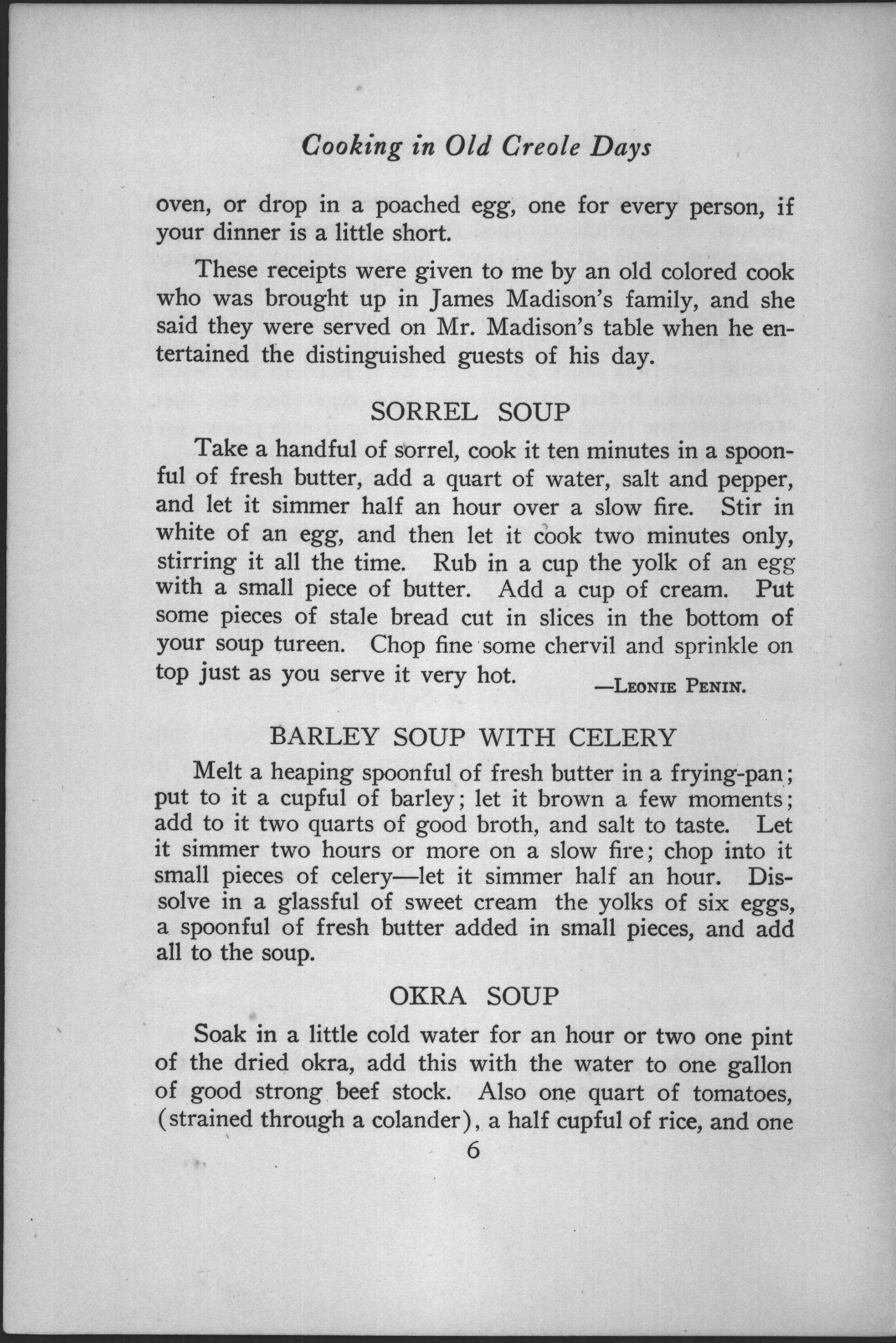
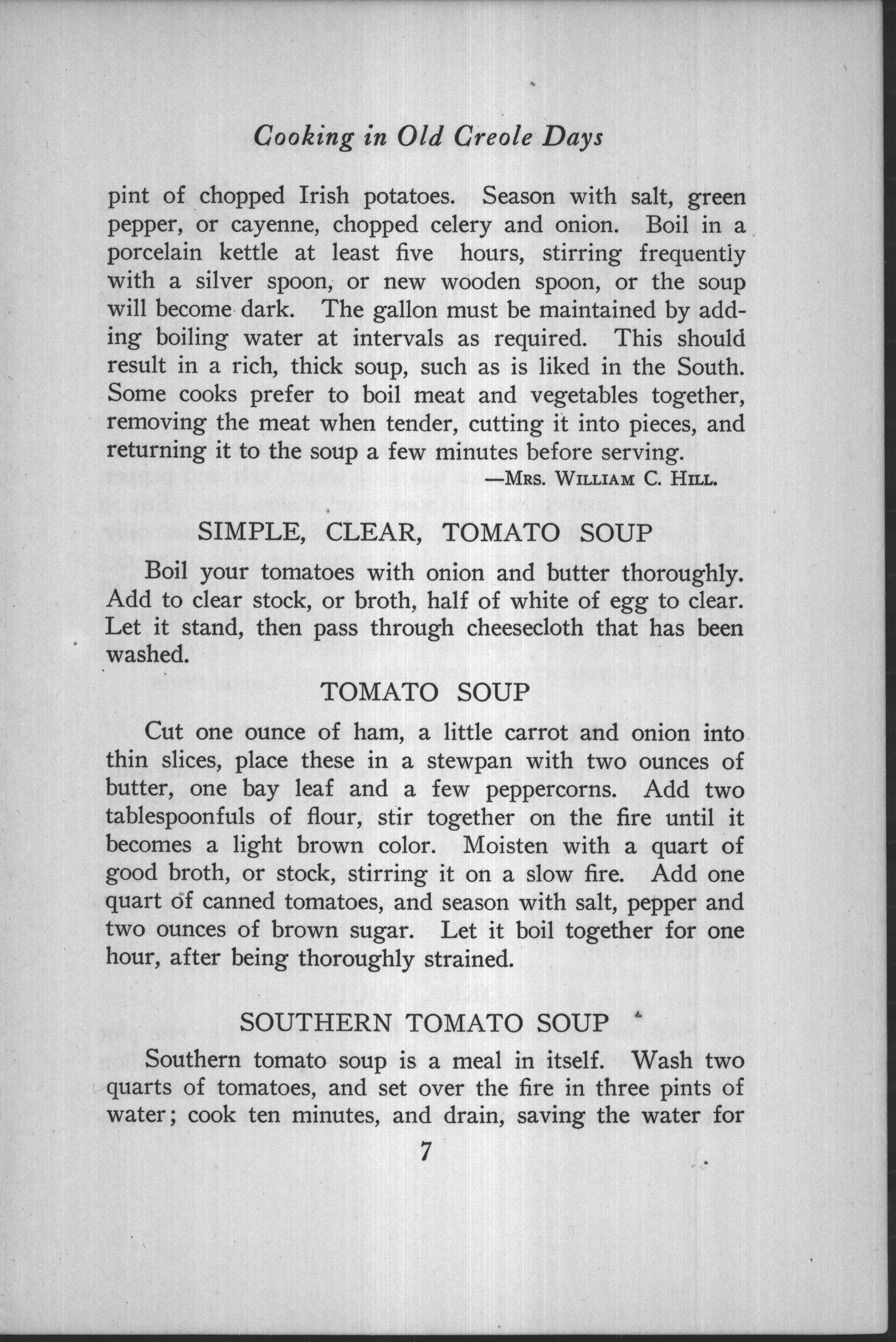
Soak in a little cold water for an hour or two one pint of the dried okra, add this with the water to one gallon of good strong beef stock. Also one quart of tomatoes, (strained through a colander), a half cupful of rice, and one pint of chopped Irish potatoes. Season with salt, green pepper, or cayenne, chopped celery and onion. Boil in a porcelain kettle at least five hours, stirring frequently with a silver spoon, or new wooden spoon, or the soup will become dark. The gallon must be maintained by adding boiling water at intervals as required. This should result in a rich, thick soup, such as is liked in the South. Some cooks prefer to boil meat and vegetables together, removing the meat when tender, cutting it into pieces, and returning it to the soup a few minutes before serving.
A hearty okra-and-tomato soup that’s nearly a stew. Note the pointed instruction about pots and spoons — it’s real cook’s wisdom, not fussiness.
- Dried okra → fresh or frozenSoaking “dried okra” was a way to keep it year-round; 1 pint dried rehydrates to a good amount. Fresh or frozen sliced okra (about 1 lb) works directly.
- Why “porcelain kettle” and “silver spoon”Okra and tomatoes are acidic and react with bare cast iron, turning dark and metallic-tasting. Use an enameled or stainless pot — exactly what the old cook meant. Modern nonreactive cookware solves this.
- Long, slow cookingFive hours melds and thickens it; okra’s body does the work. Stir now and then to keep it from catching.
- Season CréoleSalt, green or cayenne pepper, celery, and onion — build the seasoning to taste.
The warning to use a “porcelain kettle” and a “silver spoon” is a window into the pre-stainless kitchen, where acidic foods like tomato and okra could pick up an inky tinge and a metallic taste from raw iron pots. Okra soup itself is a cornerstone of the African-influenced cooking of the American South and Lowcountry, close kin to gumbo — the same beloved pod, the same slow hand, thickening the pot as it goes.
From page 6 of the 1904 edition.
Original pages from the book