Pop-Overs
Sarah Johnston
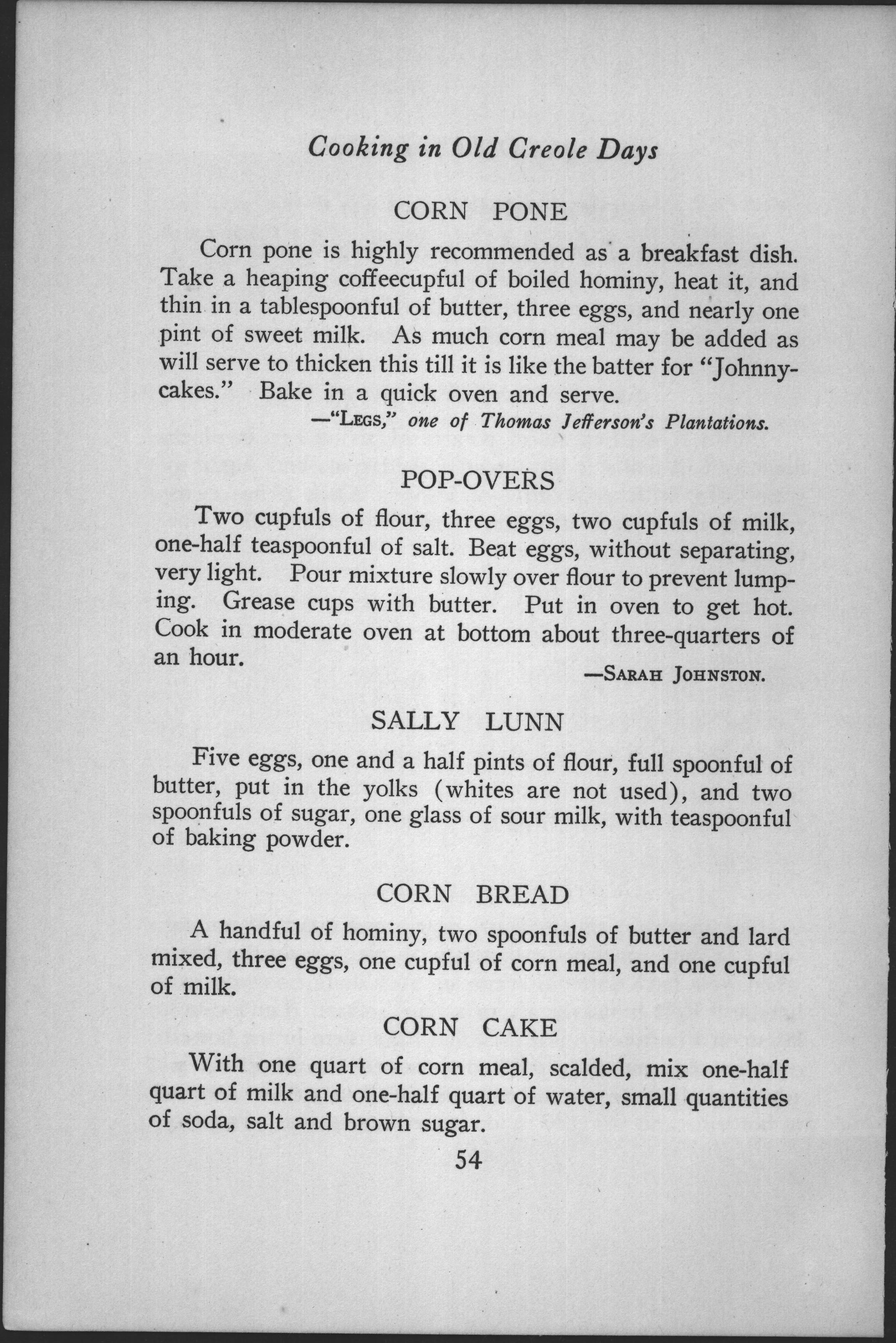
Two cupfuls of flour, three eggs, two cupfuls of milk, one-half teaspoonful of salt. Beat eggs, without separating, very light. Pour mixture slowly over flour to prevent lumping. Grease cups with butter. Put in oven to get hot. Cook in moderate oven at bottom about three-quarters of an hour.
The magic here is steam, not leavening — a thin egg batter that puffs into a hollow, crisp shell.
- No leavening at allThere’s no baking powder or yeast; the eggs and steam alone make popovers rise, so beat in plenty of air and don’t overwork the flour.
- Preheat the pan“Put in oven to get hot” is key — pour the batter into hot, well-greased cups so it bursts upward on contact.
- Pour slowly over the flourAdding the wet to the flour gradually keeps the thin batter lump-free; a whisk or blender works beautifully.
- Real oven heat“Moderate” runs a bit low for popovers; many cooks start at 450°F for 15 minutes, then drop to 350°F to finish the roughly 40–45 minutes.
- Resist opening the doorSteam does the lifting, so keep the oven shut until they’re tall and set, or they can collapse.
Popovers are the American cousin of English Yorkshire pudding — the same lean batter of eggs, milk, and flour that puffs dramatically in a hot, greased pan. Where the English version was traditionally baked beneath roasting meat to catch the drippings, thrifty and inventive American cooks baked the batter alone in individual cups. The cheerful name is native to 19th-century America and describes exactly what the batter does: it pops over the rims of the pan as it billows up. Remarkably, they rise on steam alone, with no yeast or baking powder to help.
From page 54 of the 1904 edition.
Original page from the book