Corn Pone
"Legs," one of Thomas Jefferson's Plantations
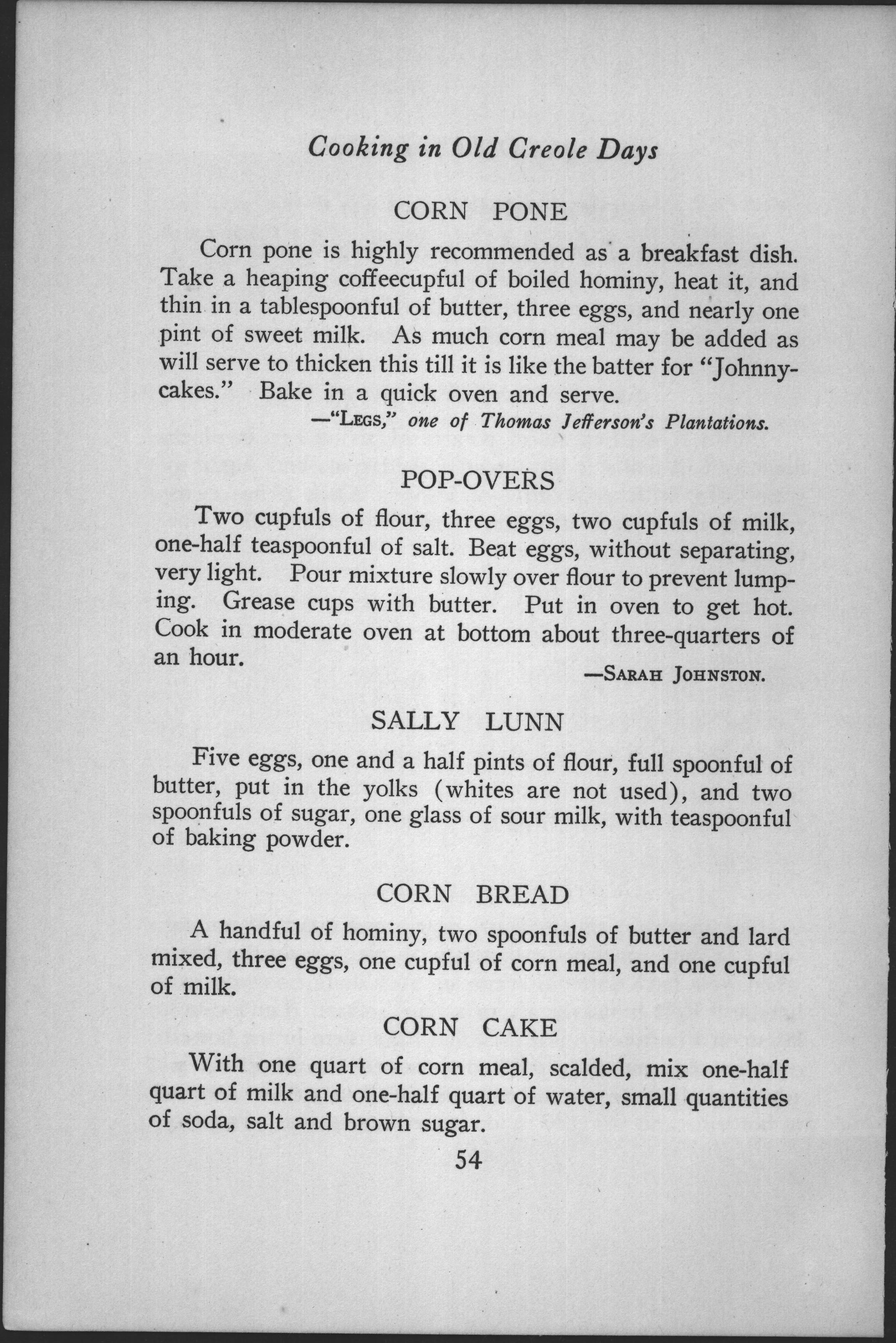
Corn pone is highly recommended as a breakfast dish. Take a heaping coffeecupful of boiled hominy, heat it, and thin in a tablespoonful of butter, three eggs, and nearly one pint of sweet milk. As much corn meal may be added as will serve to thicken this till it is like the batter for "Johnny-cakes." Bake in a quick oven and serve.
Despite the humble name, this is a soft, rich, spoon-style corn bread bound with hominy, eggs, and milk.
- “Heaping coffeecupful”A coffeecup was about 1 cup; heaping, call it a generous cupful of cooked hominy.
- “Nearly one pint of sweet milk”Just under 2 cups of whole milk.
- Warm the hominy firstHeating the cooked hominy (grits or mashed canned hominy) lets the butter melt in and the eggs blend smoothly.
- “Like Johnny-cake batter”Add cornmeal until it’s a thick but pourable batter — not a stiff dough.
- “Quick oven”That means hot: bake at about 425°F in a greased pan until set and golden.
The word pone is a genuine piece of America’s oldest culinary vocabulary. It comes from an Algonquian word of the Virginia coast — recorded by early English colonists in forms like appone and apan — meaning something baked. Corn pone originally meant the plainest possible bread: cornmeal, water, and salt, shaped by hand and baked in the ashes or a heavy pan. Cooks steadily enriched it, as here, with hominy, eggs, and milk. The dish became so emblematic of the rural South that “corn pone” entered the language as a byword for homespun, down-home simplicity.
From page 54 of the 1904 edition.
Original page from the book