Rolls
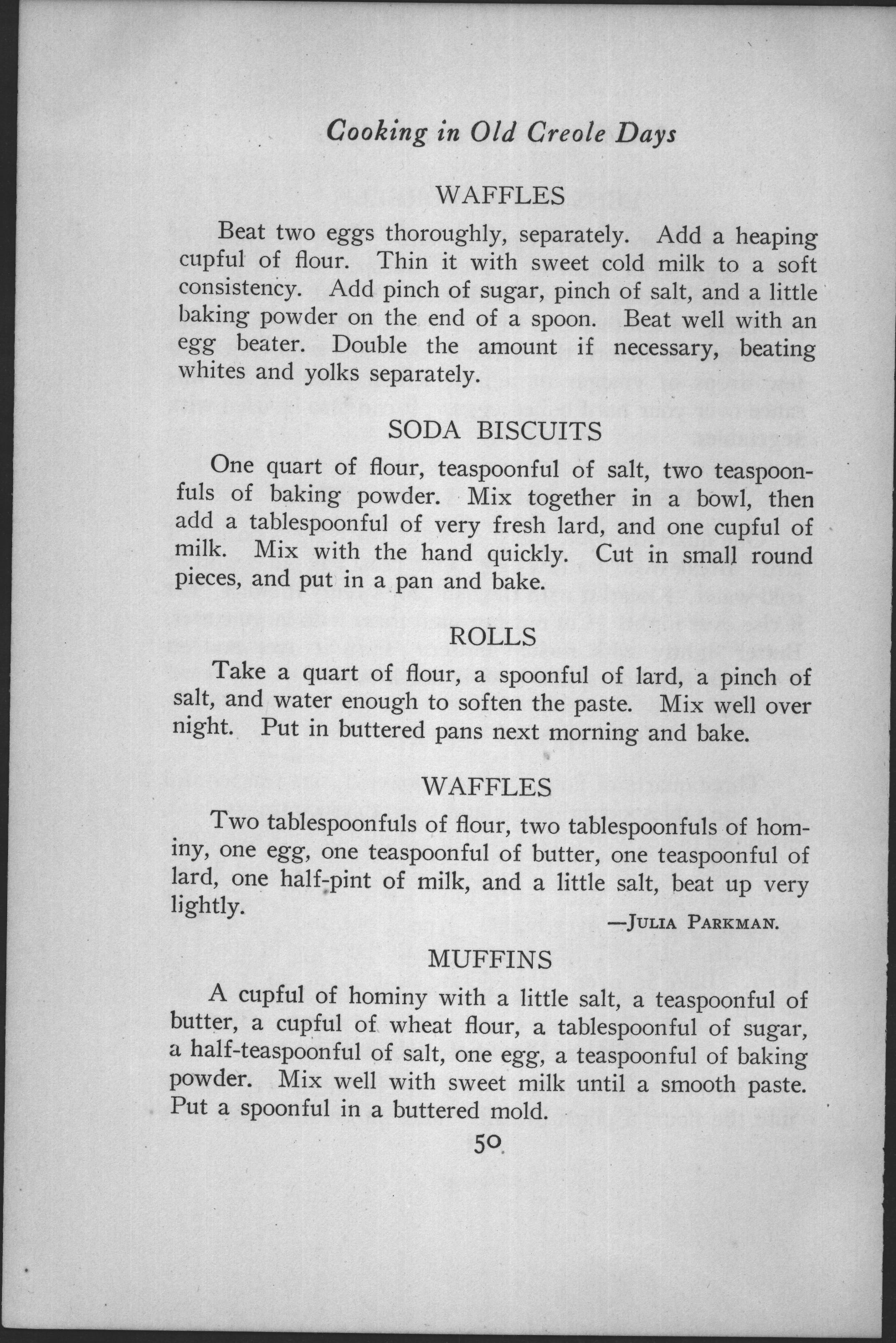
Take a quart of flour, a spoonful of lard, a pinch of salt, and water enough to soften the paste. Mix well over night. Put in buttered pans next morning and bake.
About as plain as bread gets — flour, a little fat, salt, and water, rested overnight and baked. Note what’s missing: any leavening at all.
- “A quart of flour”That’s about 4 cups.
- No leavening as writtenThere’s no yeast, soda, or baking powder here, so as written these bake up dense and firm — closer to a hard roll or a water cracker than a fluffy dinner roll.
- For lighter rollsAdd a packet of yeast (about 2¼ tsp) dissolved in the water; the overnight rest then becomes a slow rise that gives real lift by morning.
- “A spoonful of lard”Roughly 1 Tbsp; butter or oil works just as well and softens the crumb.
- Shaping and bakingShape into rounds and bake in a hot oven, 425–450°F, until firm and lightly colored.
Plain water-and-flour rolls have a long lineage in home and ship’s kitchens, where yeast was not always on hand and a cook made do with what the larder held. An overnight rest lets the flour fully hydrate and the gluten relax, which improves the texture of even an unleavened dough — the same principle behind today’s no-knead breads. Recipes this spare were common in nineteenth-century community cookbooks, jotted down as memory-joggers for cooks who already knew, without being told, exactly how a roll of theirs was meant to turn out.
From page 50 of the 1904 edition.
Original page from the book