Sweet Potatoes
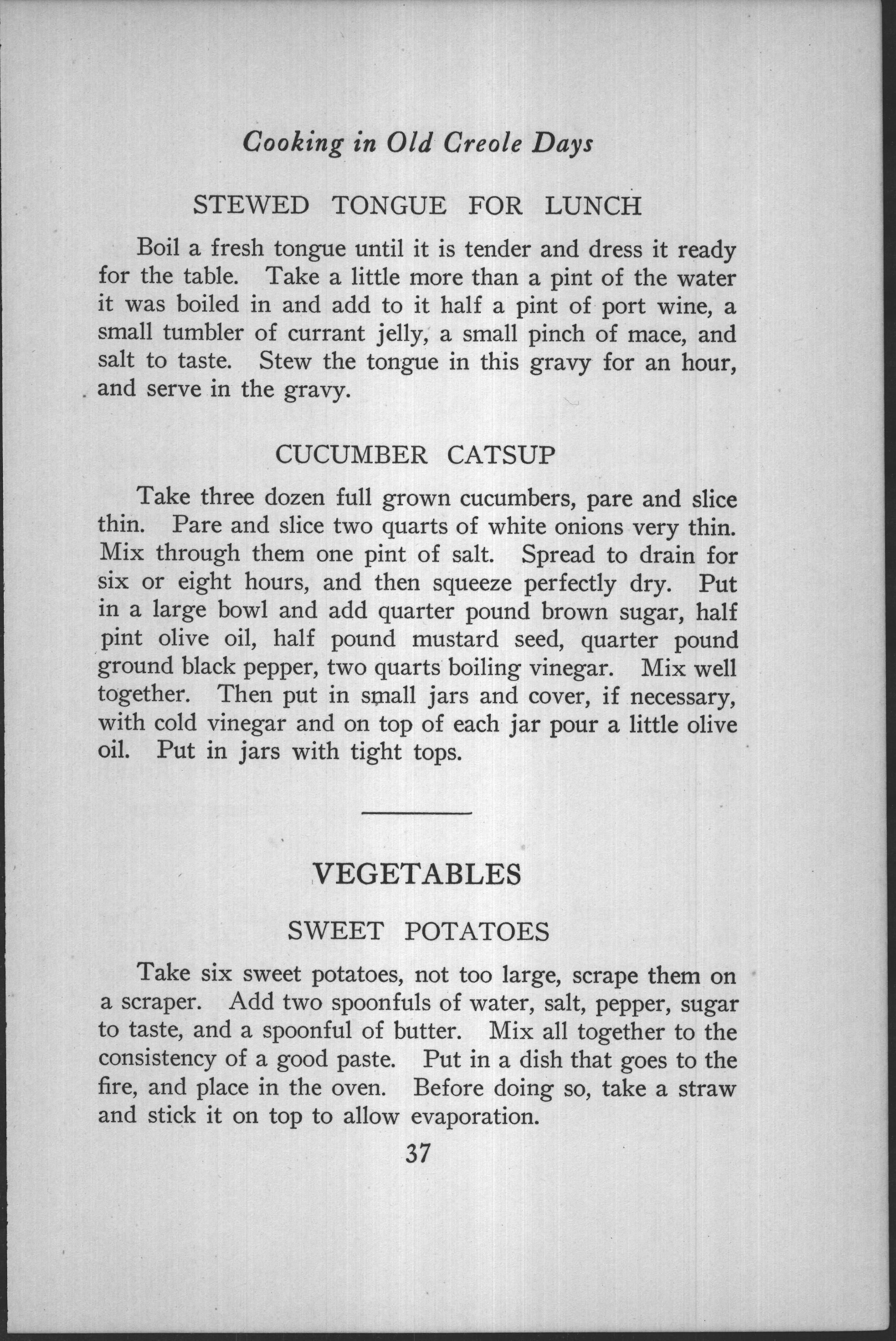
Take six sweet potatoes, not too large, scrape them on a scraper. Add two spoonfuls of water, salt, pepper, sugar to taste, and a spoonful of butter. Mix all together to the consistency of a good paste. Put in a dish that goes to the fire, and place in the oven. Before doing so, take a straw and stick it on top to allow evaporation.
A soft, sweet, baked sweet-potato paste — think of it as a lighter cousin to the sweet-potato pudding that follows it in the book.
- “Scrape” = grateGrate the raw sweet potatoes on a box grater; grating raw, rather than boiling and mashing, gives this dish its smooth, dense texture.
- Spoonfuls, sizedRead the two “spoonfuls” of water and one of butter as tablespoons — about 1 Tbsp butter for six potatoes.
- Sugar to tasteSweet potatoes vary a lot in natural sweetness; start with a tablespoon or two of sugar and adjust.
- The straw is a ventSticking a straw upright lets steam escape so the paste bakes rather than turns gummy; a couple of knife slits, or simply baking uncovered, does the same job.
- A moderate ovenBake at 350°F (175°C) until set and lightly browned; “a dish that goes to the fire” just means an ovenproof one.
The sweet potato is a New World plant, grown across the Americas long before Europeans arrived, and it became one of the foundations of the Southern table. It is not a true yam — that word belongs to a separate African root — but enslaved West Africans, familiar with starchy tubers at home, folded the sweet potato into Southern and Creole cooking so thoroughly that the two names have been tangled ever since. Dishes like this grated, sugared bake show how completely it had crossed from field crop to refined side dish.
From page 37 of the 1904 edition.
Original page from the book