Sweet Potato Pudding
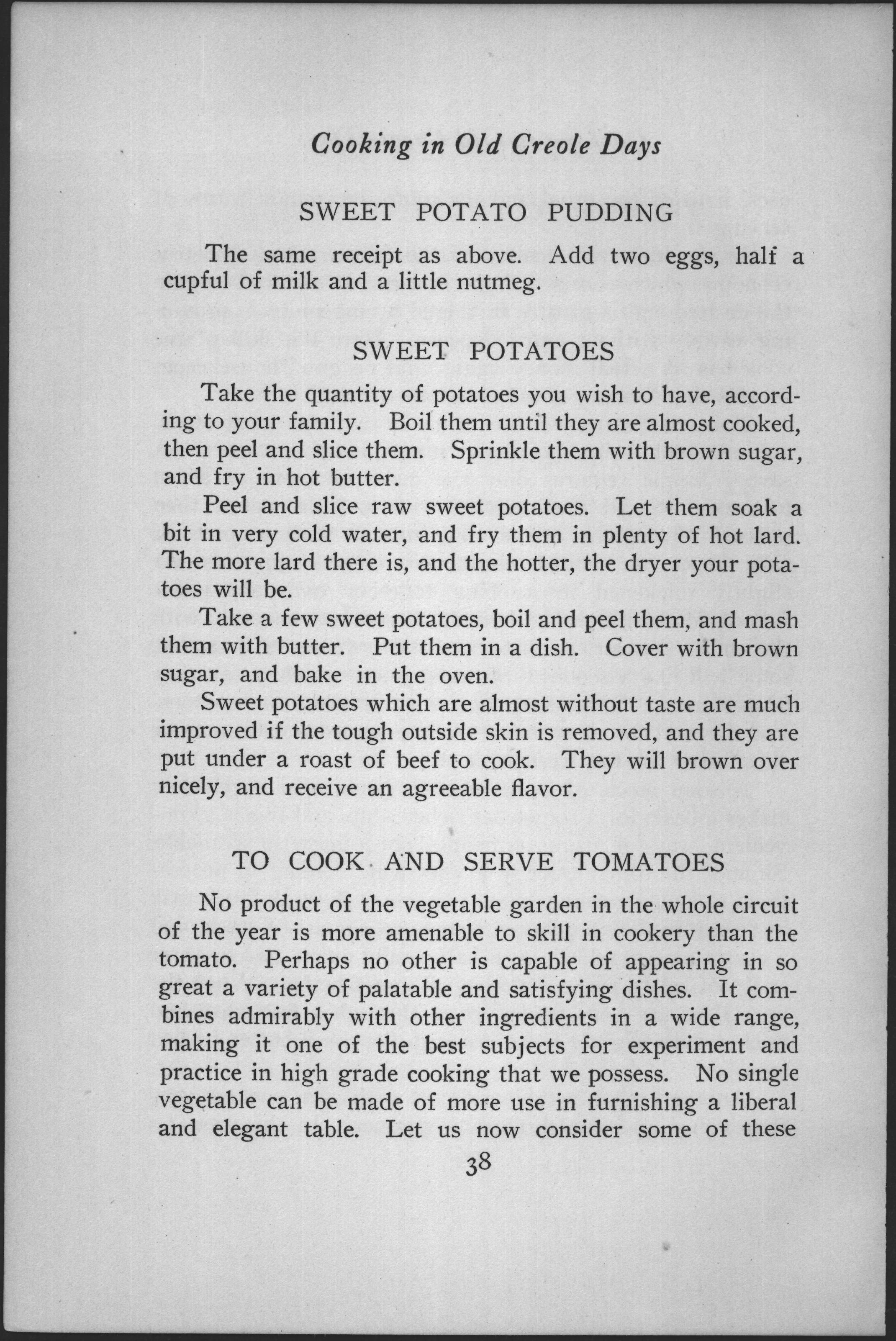
The same receipt as above. Add two eggs, half a cupful of milk and a little nutmeg.
The same grated sweet-potato base as the recipe above, enriched with egg and milk so it sets into a soft baked pudding.
- “Receipt” means recipeAn old word for a cookery formula; this one simply builds on the preceding grated-sweet-potato dish.
- Eggs turn paste into puddingTwo beaten eggs give the custardy set that separates a pudding from the plain baked paste before it.
- Half a cupful of milkUse about ½ cup of whole milk to loosen the mixture.
- Nutmeg, freshly gratedA little goes a long way; grate it fresh for the warm, slightly resinous note Victorian cooks loved in sweet puddings.
- Bake gently350°F (175°C) until just set in the center; like any custard, it firms as it cools, so don’t overbake.
Grated sweet-potato puddings are among the oldest sweets of the American South, appearing in cookbooks well before the Civil War — Mary Randolph’s The Virginia Housewife gave one in 1824. Unlike a pie, they were baked without a crust and leaned on eggs, milk, sugar and warm spice — nutmeg, cinnamon, sometimes a splash of spirits — to become something between a custard and a cake. The Creole version keeps that lineage but, true to New Orleans restraint, goes light on the spicing. It is comfort food made from a root that kept all winter in a cool cellar.
From page 38 of the 1904 edition.
Original page from the book