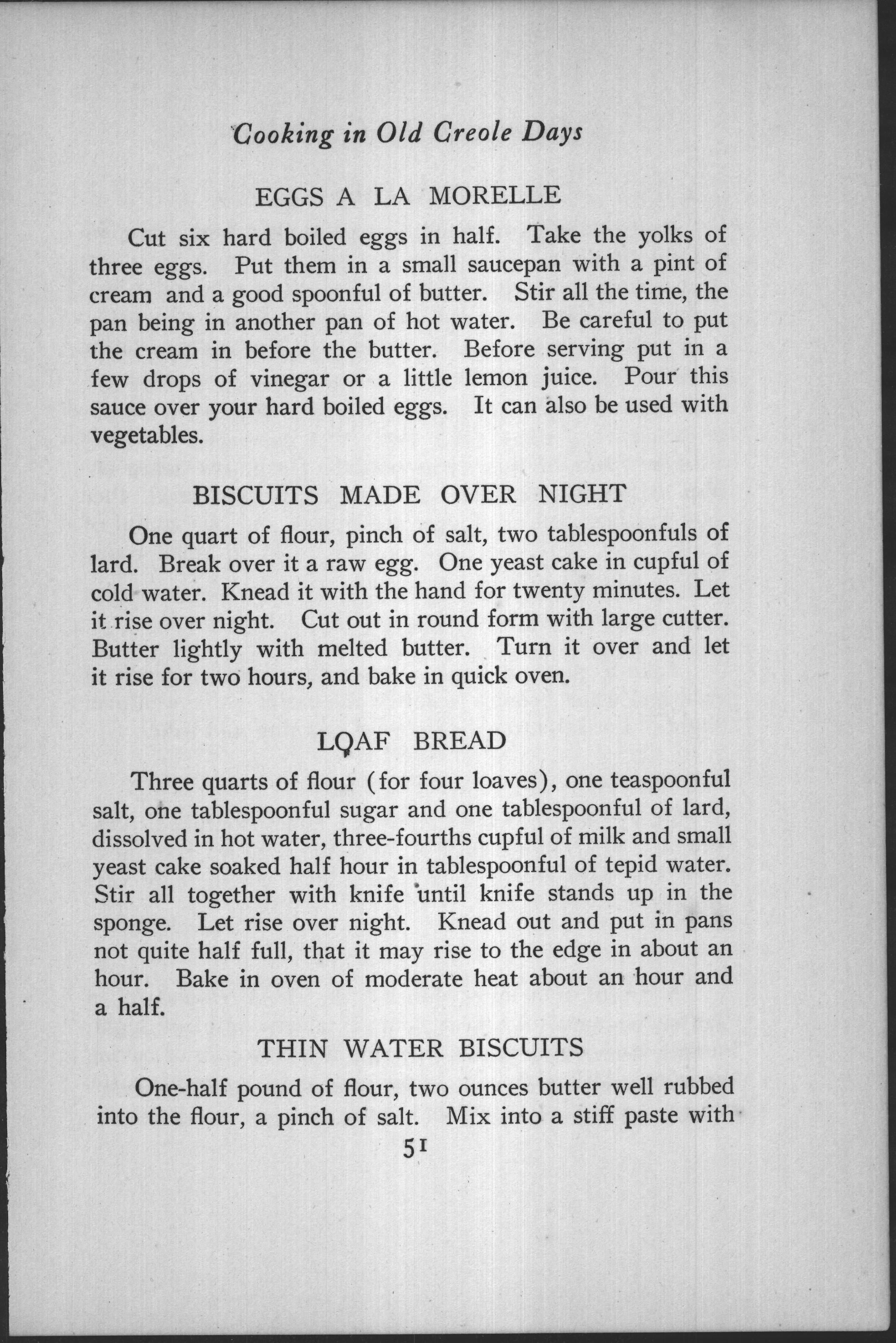
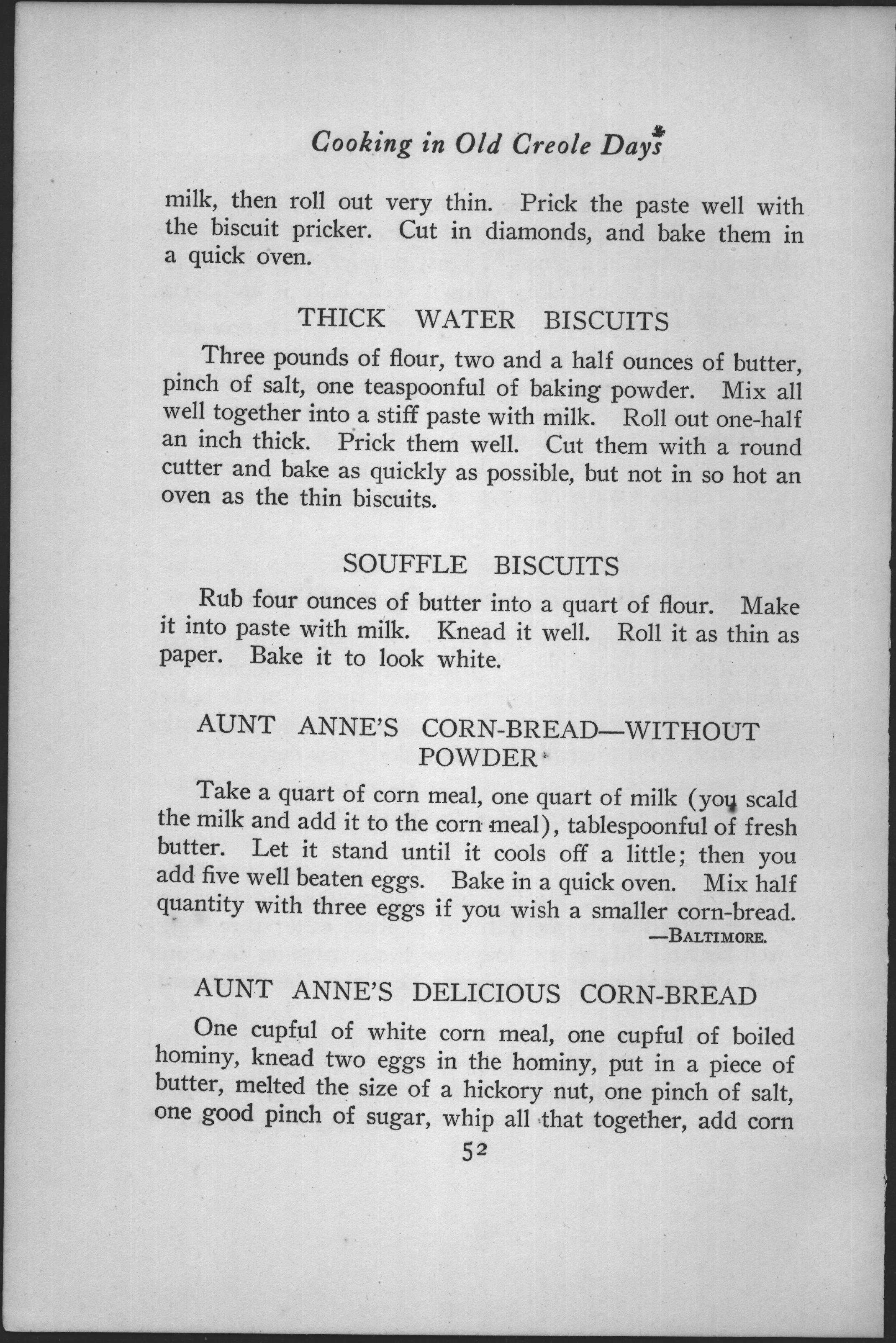
Thin Water Biscuits
One-half pound of flour, two ounces butter well rubbed into the flour, a pinch of salt. Mix into a stiff paste with milk, then roll out very thin. Prick the paste well with the biscuit pricker. Cut in diamonds, and bake them in a quick oven.
“Water biscuits” in the British sense — plain, crisp, unsweetened crackers, rolled paper-thin and pricked so they bake up flat and shatter-crisp.
- “One-half pound of flour”About 1¾ cups. Two ounces of butter is 4 Tbsp, rubbed in until the mixture looks sandy.
- “Mix with milk”Add just enough milk to make a stiff paste; a dry, firm dough rolls the thinnest and bakes the crispest.
- “The biscuit pricker”This is a docker — a spiked roller, though a fork works fine — that pierces the dough so it stays flat instead of puffing in the oven.
- Roll very thinAim for a paper-thin sheet, about a sixteenth of an inch; the thinner it is, the crisper the cracker. Cut into diamonds.
- A quick ovenBake hot and fast, 425–450°F, and watch closely — thin crackers take on color in minutes.
The water biscuit is a British table cracker — flour, a little fat, and water or milk, with nothing to sweeten it — made to partner cheese and wine without competing for attention. Its plainness is the whole point, and its ancestry is thoroughly practical: the same lean, long-keeping dough descends from the hard ship’s biscuit that fed sailors for centuries. Docking the sheet with a pricker, as here, is the classic trick for keeping a cracker flat and even. On a Creole table, thin crisp biscuits like these would have accompanied cheese, preserves, or an afternoon cup of coffee.
From page 51 of the 1904 edition.
Original pages from the book