Thick Water Biscuits
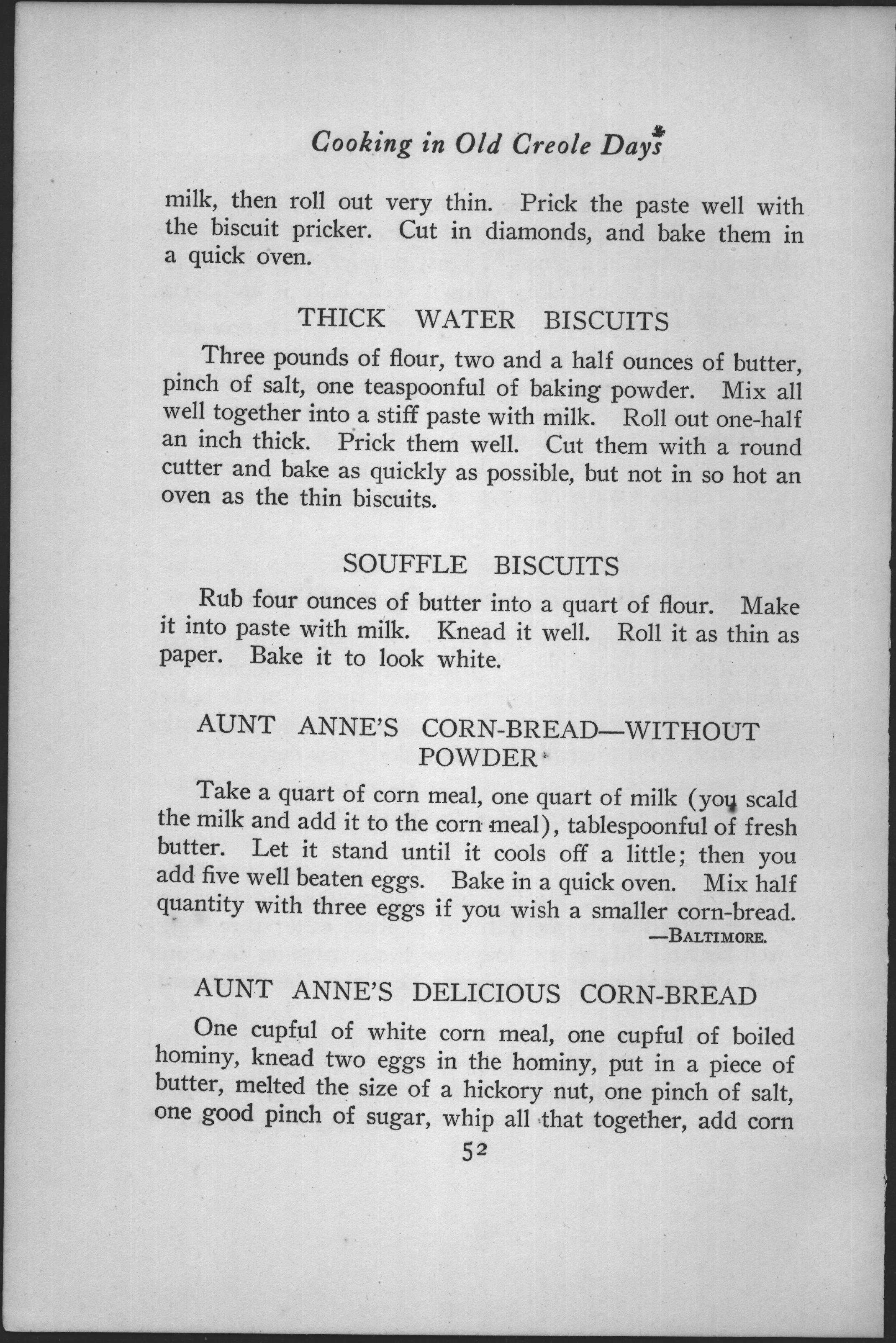
Three pounds of flour, two and a half ounces of butter, pinch of salt, one teaspoonful of baking powder. Mix all well together into a stiff paste with milk. Roll out one-half an inch thick. Prick them well. Cut them with a round cutter and bake as quickly as possible, but not in so hot an oven as the thin biscuits.
The sturdier cousin of the thin water biscuit — the same lean dough, rolled thick and lightly leavened, for a cracker with more bite.
- Scaling down“Three pounds of flour” is about 10–11 cups — a baker’s batch. A third of the recipe (1 lb flour, a scant ounce of butter) suits a home oven.
- Rub in the butterTwo and a half ounces is 5 Tbsp; rub it into the flour as you would for pastry, until crumbly.
- Now with baking powderUnlike the thin biscuits, these carry a teaspoon of baking powder for a lighter, more open crumb inside the thicker round.
- “Roll one-half inch thick”Much thicker than the thin version; prick them well and cut with a round cutter.
- A gentler ovenBake “not so hot” as the thin biscuits — about 400°F — so the thicker rounds cook through before the surface over-browns.
Where the thin water biscuit is all crackle, its thick counterpart edges toward a true biscuit — and toward the hardtack that provisioned armies and ships. Long-keeping flour-and-water rounds like these were among the most practical baked goods a household could make: cheap, filling, and slow to stale. The teaspoon of baking powder is the modern grace note, a nineteenth-century convenience lightening a dough whose plainest ancestors were nothing but flour, water, and a very hot oven. Pricked and baked firm, biscuits like these kept for weeks in a tin against a hungry week.
From page 52 of the 1904 edition.
Original page from the book