Tomatoes
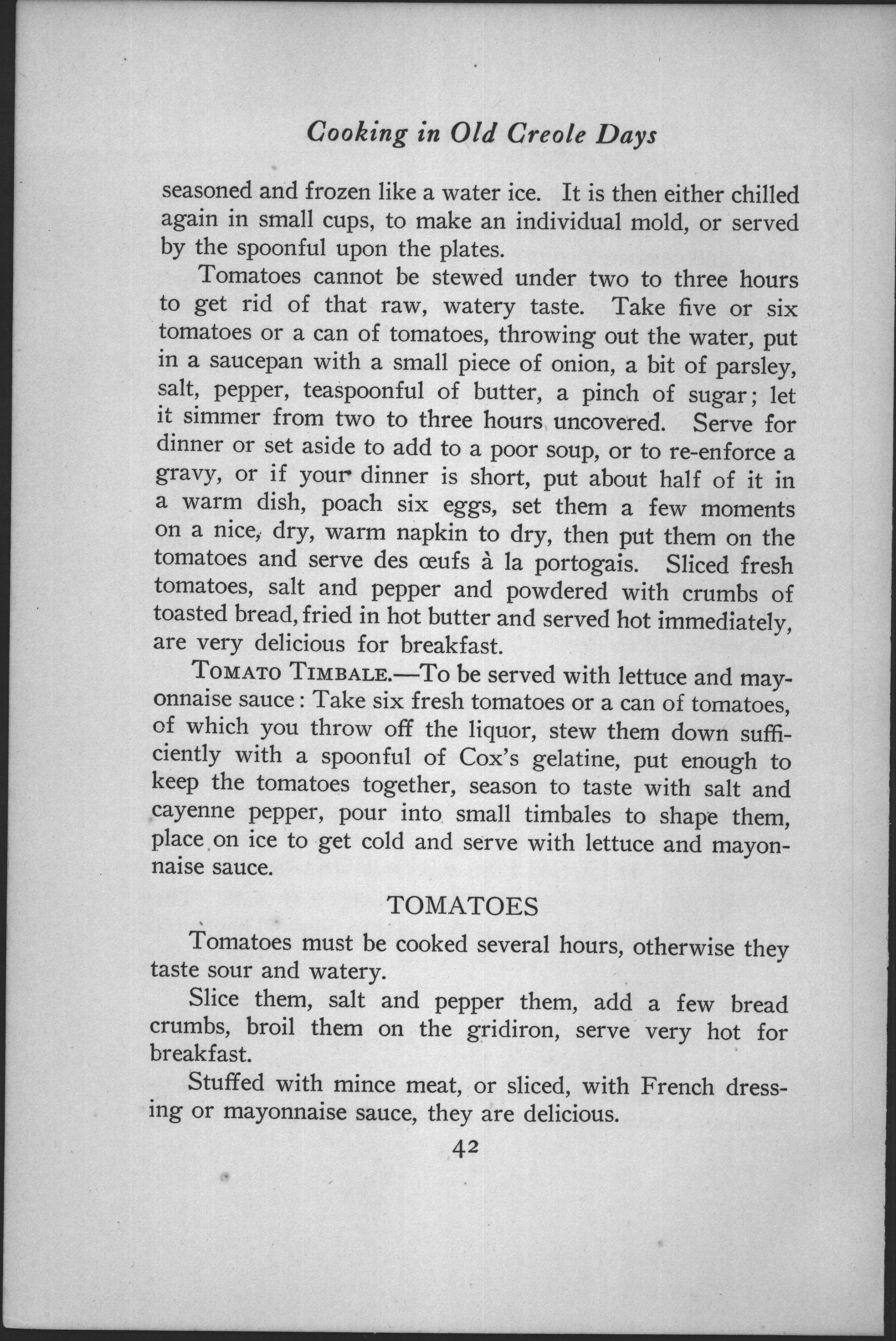
Tomatoes must be cooked several hours, otherwise they taste sour and watery.
Slice them, salt and pepper them, add a few bread crumbs, broil them on the gridiron, serve very hot for breakfast.
Stuffed with mince meat, or sliced, with French dressing or mayonnaise sauce, they are delicious.
Scald, peel, and slice them. Put in the refrigerator, with French dressing. Put a slice of onion in the dish with them, and remove it before serving.
A cluster of quick tomato ideas — broiled hot for breakfast, stuffed, or dressed cold as a salad.
- The “several hours” mythLike the longer tomato essay, this one overstates cooking time; modern tomatoes need far less to shed their “sour and watery” edge.
- “Gridiron” = grill or broilerBroil or grill the crumbed slices over high heat and serve at once, before they weep.
- “Mince meat” here is savoryThis means finely chopped meat, not the sweet, spiced fruit filling — a stuffing, not a pie.
- “French dressing” = vinaigretteSimply oil and vinegar with seasoning; the period term for what we now call a basic vinaigrette.
- The onion trickA slice of onion left in the dish, then removed, perfumes the cold tomatoes without overpowering them — a neat, still-useful touch.
Cooking tomatoes was accepted long before eating them raw was. Even after the stewed tomato became common, a plate of cold, sliced, undressed tomatoes struck many 19th-century diners as risky or vulgar — which is why raw preparations almost always arrived armored in vinegar, oil and salt, as here. The “French dressing” the recipe calls for was doing double duty: it seasoned the fruit and, in the cook’s mind, corrected its dangerous rawness. The chilled, onion-scented salad marks the tomato’s final promotion to a food eaten simply for its own fresh taste.
From page 42 of the 1904 edition.
Original pages from the book