Yorkshire Pudding, to Serve with Hot Roast Beef
Katie Seabrook, Pres. McKinley's Cook
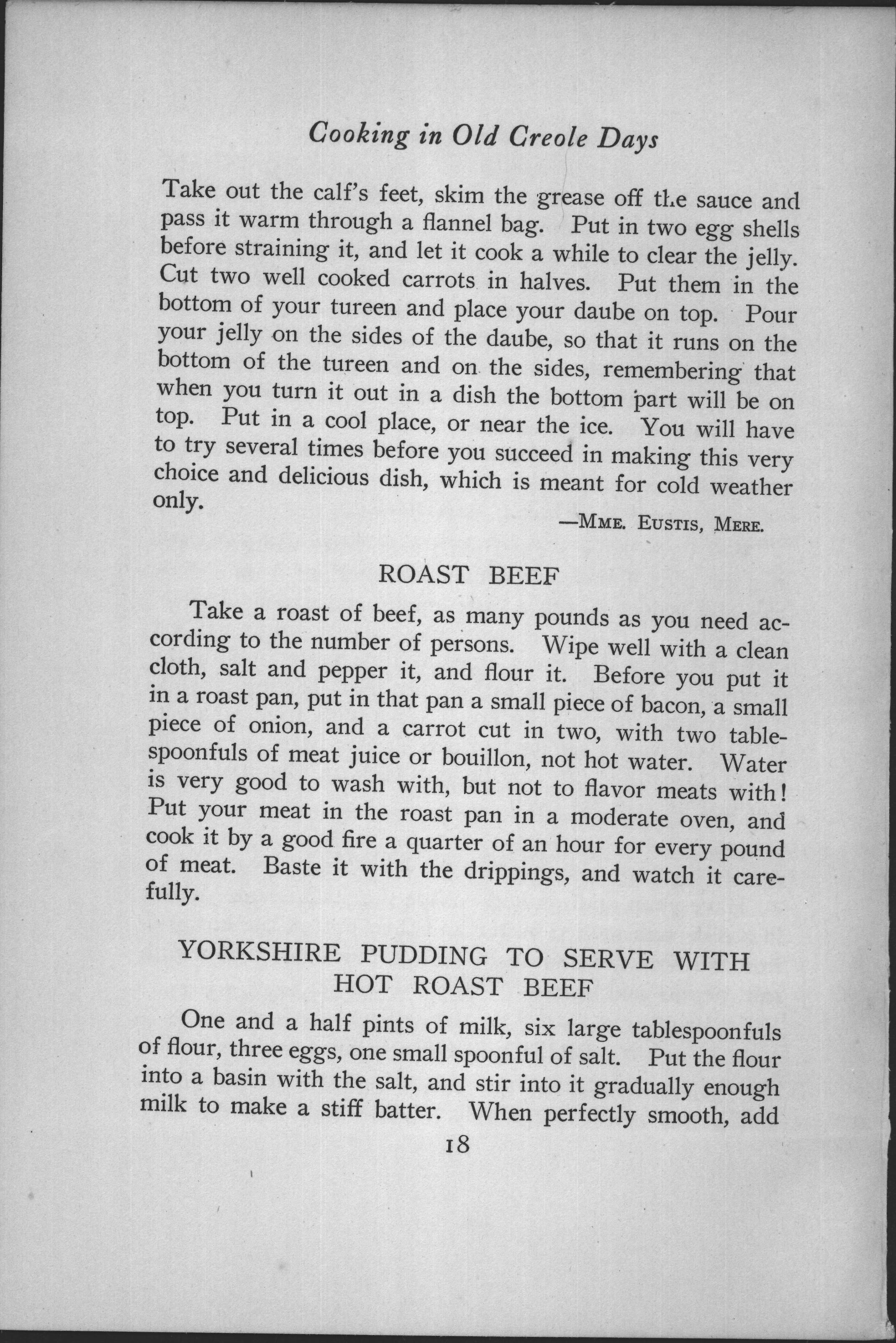
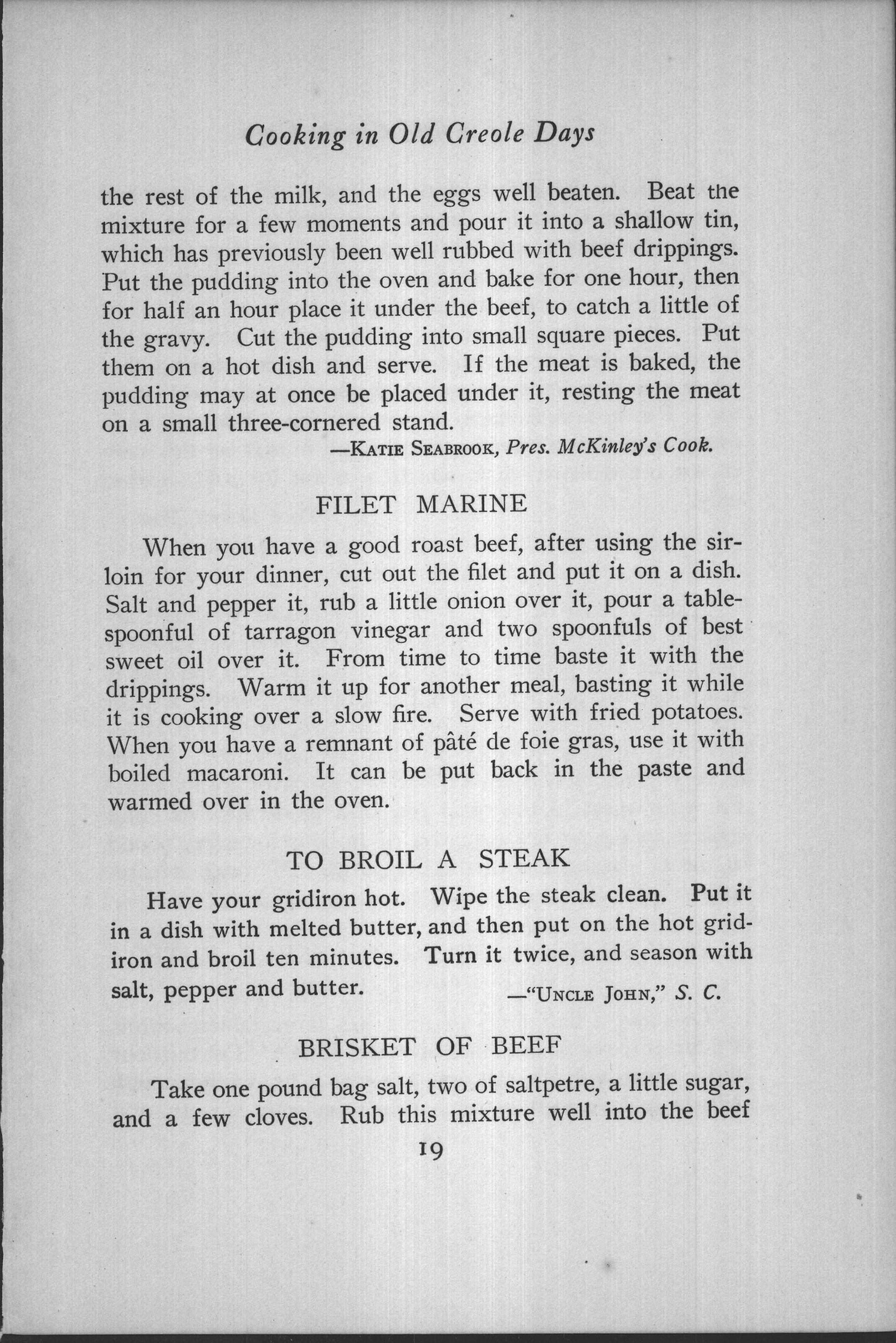
One and a half pints of milk, six large tablespoonfuls of flour, three eggs, one small spoonful of salt. Put the flour into a basin with the salt, and stir into it gradually enough milk to make a stiff batter. When perfectly smooth, add the rest of the milk, and the eggs well beaten. Beat the mixture for a few moments and pour it into a shallow tin, which has previously been well rubbed with beef drippings. Put the pudding into the oven and bake for one hour, then for half an hour place it under the beef, to catch a little of the gravy. Cut the pudding into small square pieces. Put them on a hot dish and serve. If the meat is baked, the pudding may at once be placed under it, resting the meat on a small three-cornered stand.
A batter pudding baked crisp, then slipped under the roast to drink up the drippings — the classic partner to roast beef.
- Convert the measures“One and a half pints of milk” is 3 cups; the six tablespoons of flour, three eggs, and about a teaspoon of salt make a notably thin, custardy batter.
- For a puffier puddingModern Yorkshire pudding uses roughly equal volumes of egg, flour, and milk. For a taller rise, increase the flour substantially (to about 1½–2 cups) or cut the milk; as written, expect a soft, set custard more than a dramatic popover.
- Rest the batterLet it stand 30 minutes or longer before baking — this hydrates the flour and improves the rise, a step old recipes assumed you knew.
- Get the fat and oven hotThe tin must be smoking with beef drippings and the oven hot, 425–450°F (220–230°C), for the batter to leap — a slow bake sets it soft rather than crisp.
- Finishing under the beefSliding the pudding beneath the roast to catch gravy is the original point of the dish; a small three-cornered stand (a trivet) lifts the meat so its juices rain down.
The name “Yorkshire pudding” is usually credited to Hannah Glasse, who printed it in 1747; the dish began humbler still, as a “dripping pudding” set beneath meat turning on a spit to catch the fat. Cooks in Yorkshire were said to make it best, and the name stuck. By tradition it was served before the meat, with gravy, to blunt hearty appetites so less of the costly roast was eaten. That this recipe comes from President McKinley’s cook shows how thoroughly an English batter pudding had crossed into the American table by the century’s end.
From page 18 of the 1904 edition.
Original pages from the book