Roast Beef
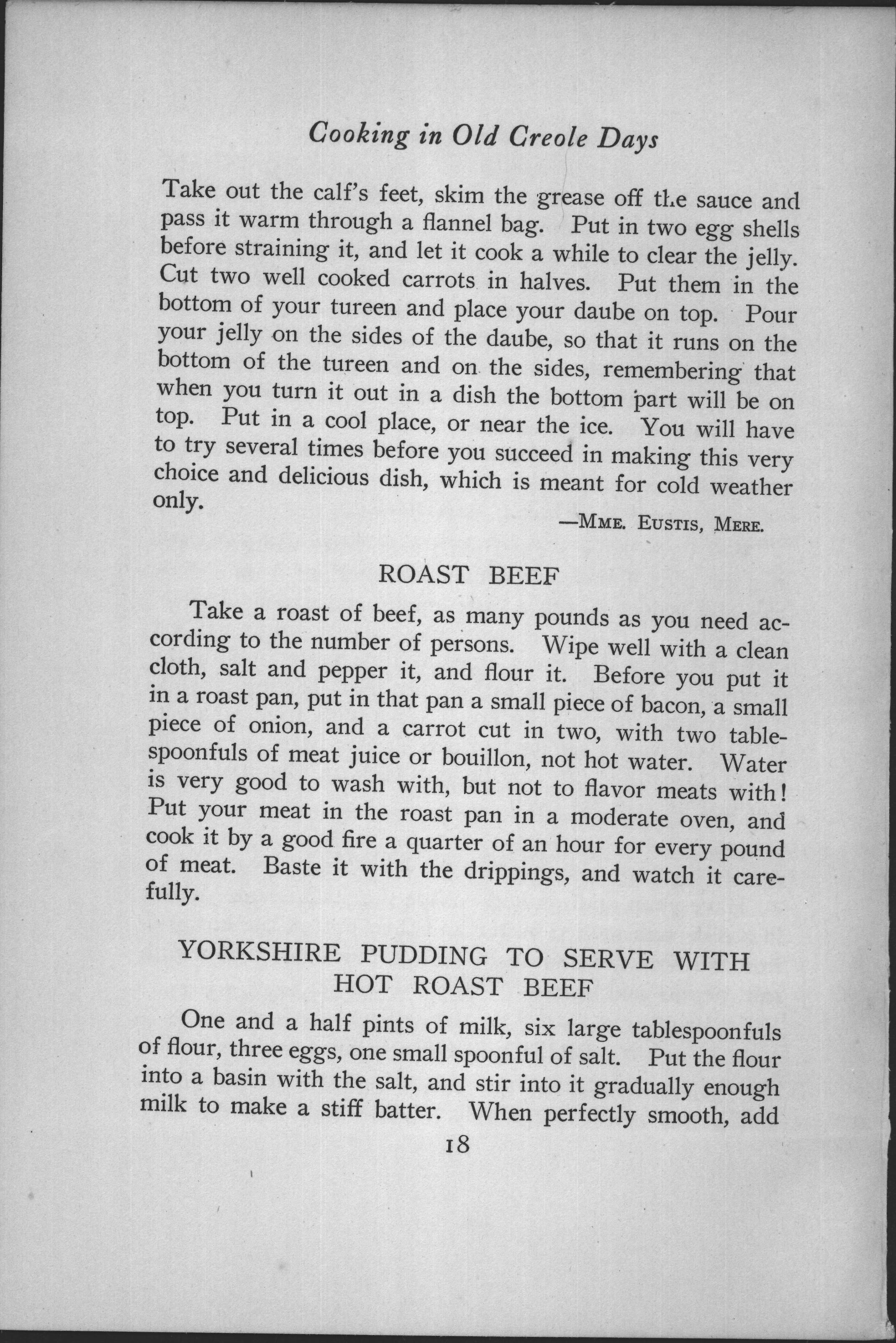
Take a roast of beef, as many pounds as you need according to the number of persons. Wipe well with a clean cloth, salt and pepper it, and flour it. Before you put it in a roast pan, put in that pan a small piece of bacon, a small piece of onion, and a carrot cut in two, with two tablespoonfuls of meat juice or bouillon, not hot water. Water is very good to wash with, but not to flavor meats with! Put your meat in the roast pan in a moderate oven, and cook it by a good fire a quarter of an hour for every pound of meat. Baste it with the drippings, and watch it carefully.
A plain, sound method for roasting beef, built on a bed of aromatics and one firm rule: flavor the pan with stock, never water.
- Moderate oven = 350°FA “moderate oven” is 350°F (175°C). The bacon, onion, and carrot in the pan form a little mirepoix that flavors the drippings and keeps the base from scorching.
- “A quarter of an hour to the pound”That’s 15 minutes per pound at 350°F, which lands a large roast around medium-rare — but ovens vary, so trust a thermometer, not the clock.
- Use a meat thermometerPull the roast at 125–130°F for rare, 130–135°F for medium-rare, and rest it 15–20 minutes; the temperature climbs several degrees as it stands.
- Meat juice or bouillonTwo tablespoons of meat juice or bouillon is simply concentrated stock. The author’s scolding — “water is very good to wash with, but not to flavor meats with” — is sound: stock in the pan builds a richer gravy.
- Baste and restBasting with the pan drippings paints flavor and color onto the surface; keep it up, and don’t skip the rest before carving.
Roast beef is so bound up with English identity that the French nicknamed the English les rosbifs, and Georgian diners sang “The Roast Beef of Old England.” True roasting once meant turning meat on a spit before an open fire; what most ovens do is technically baking, a distinction old cooks felt keenly. The mirepoix bed and drippings gravy here are pure French technique, showing how thoroughly Creole kitchens blended English roasts with Continental method. The result is the Sunday centerpiece that anchored respectable tables on both sides of the Atlantic.
From page 18 of the 1904 edition.
Original page from the book