Filet Marine
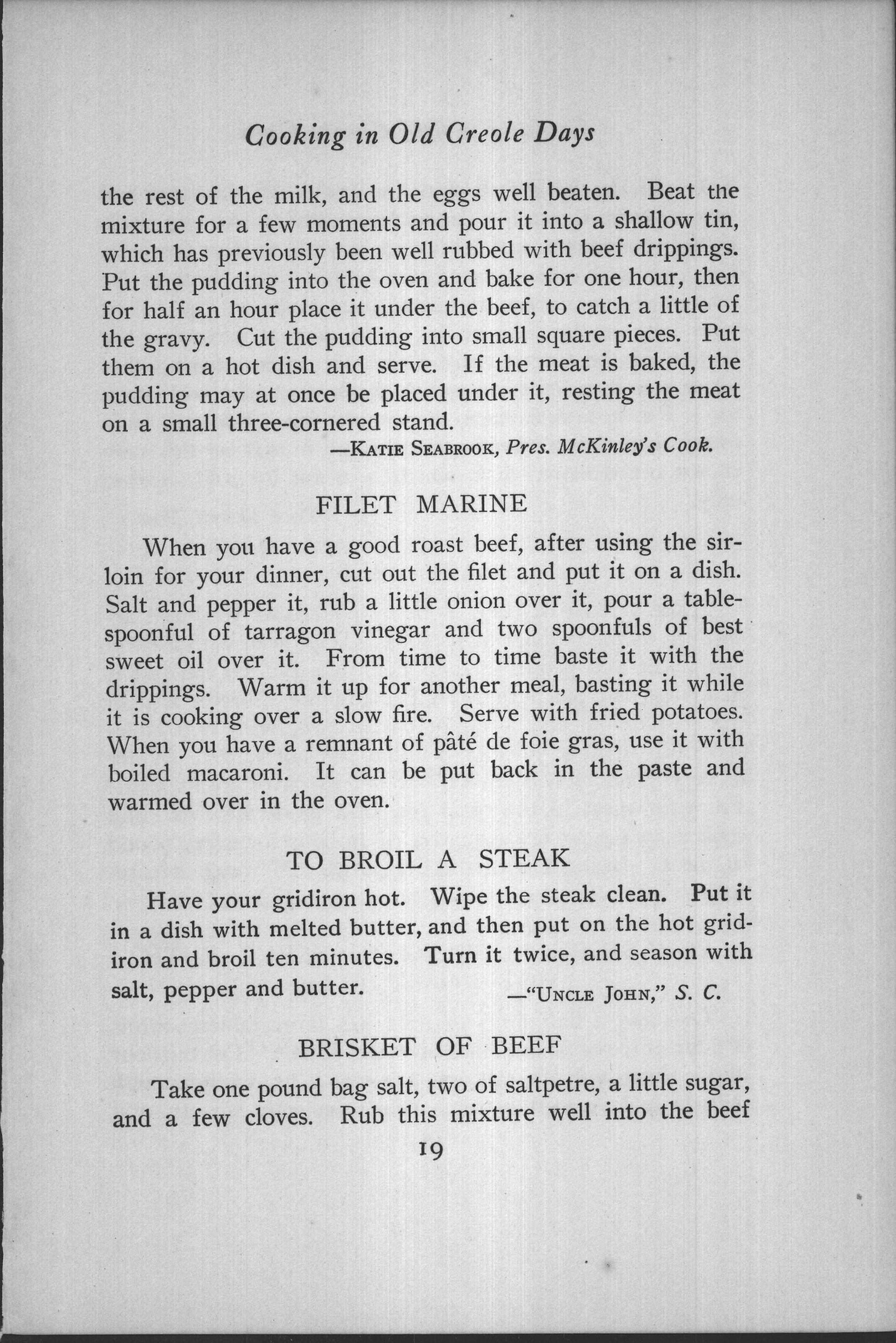
When you have a good roast beef, after using the sirloin for your dinner, cut out the filet and put it on a dish. Salt and pepper it, rub a little onion over it, pour a tablespoonful of tarragon vinegar and two spoonfuls of best sweet oil over it. From time to time baste it with the drippings. Warm it up for another meal, basting it while it is cooking over a slow fire. Serve with fried potatoes. When you have a remnant of pâté de foie gras, use it with boiled macaroni. It can be put back in the paste and warmed over in the oven.
A thrifty Creole trick: rescue the tenderloin left in a roast, marinate it, and warm it through for a second, quietly luxurious meal.
- “Marine” means marinatedThe filet steeps in tarragon vinegar, onion, and oil — a quick marinade that both flavors and tenderizes the cold, cooked meat before it’s gently reheated.
- “Best sweet oil” = olive oilSweet oil was the period name for good olive oil. Two spoonfuls, with a tablespoon of tarragon vinegar, is essentially a warm vinaigrette bath for the beef.
- Reheat low and slowSince the filet is already cooked, keep the fire gentle and baste often — you’re warming it through, not cooking it again, so it stays rosy rather than gray.
- No tarragon vinegar?Steep a sprig of fresh tarragon in white wine vinegar for an hour, or use plain wine vinegar with a pinch of dried tarragon.
- The foie gras noteThe tail advice — leftover pâté de foie gras tossed through boiled macaroni — is the same thrift: rich scraps stretched into a whole new dish.
The name captures the method: to marinate comes, by way of French mariner, from Latin marinus, “of the sea” — a nod to the sea-salt brines long used to preserve and flavor meat and fish. This little recipe belongs to the deep French tradition of the réchauffé, the artful “made dish” that transforms yesterday’s roast into something new rather than wasting it. In a Creole household, thrift and elegance were not opposites: the same cooks who could set a jellied daube knew how to coax a second dinner, dressed with tarragon and olive oil, from a leftover fillet.
From page 19 of the 1904 edition.
Original page from the book