Home › Some Useful Recipes › Beef Stew
Beef Stew
Cut cold beef into small pieces, and put into cold water; add one tomato, a little onion chopped fine, pepper and salt, and cook slowly; thicken with butter and flour, and pour over toast. Or chop fine, cold steak or roast beef, and cook in a little water; add cream or milk, and thicken with flour; season to taste, and pour over thin slices of toast.
A leftovers dish rather than a stew in the long-simmered sense: the beef is already cooked, so the whole job is to warm it through in a flavoured liquid without cooking it a second time. Two versions are given, one tomato-based, one creamed.
- The hinge: barely simmerThe beef is cooked already. Hold the pan at a bare shiver, 15-20 minutes at most, just long enough to soften the onion and reduce the liquid. A rolling boil will squeeze the remaining moisture out of cooked beef and leave it stringy.
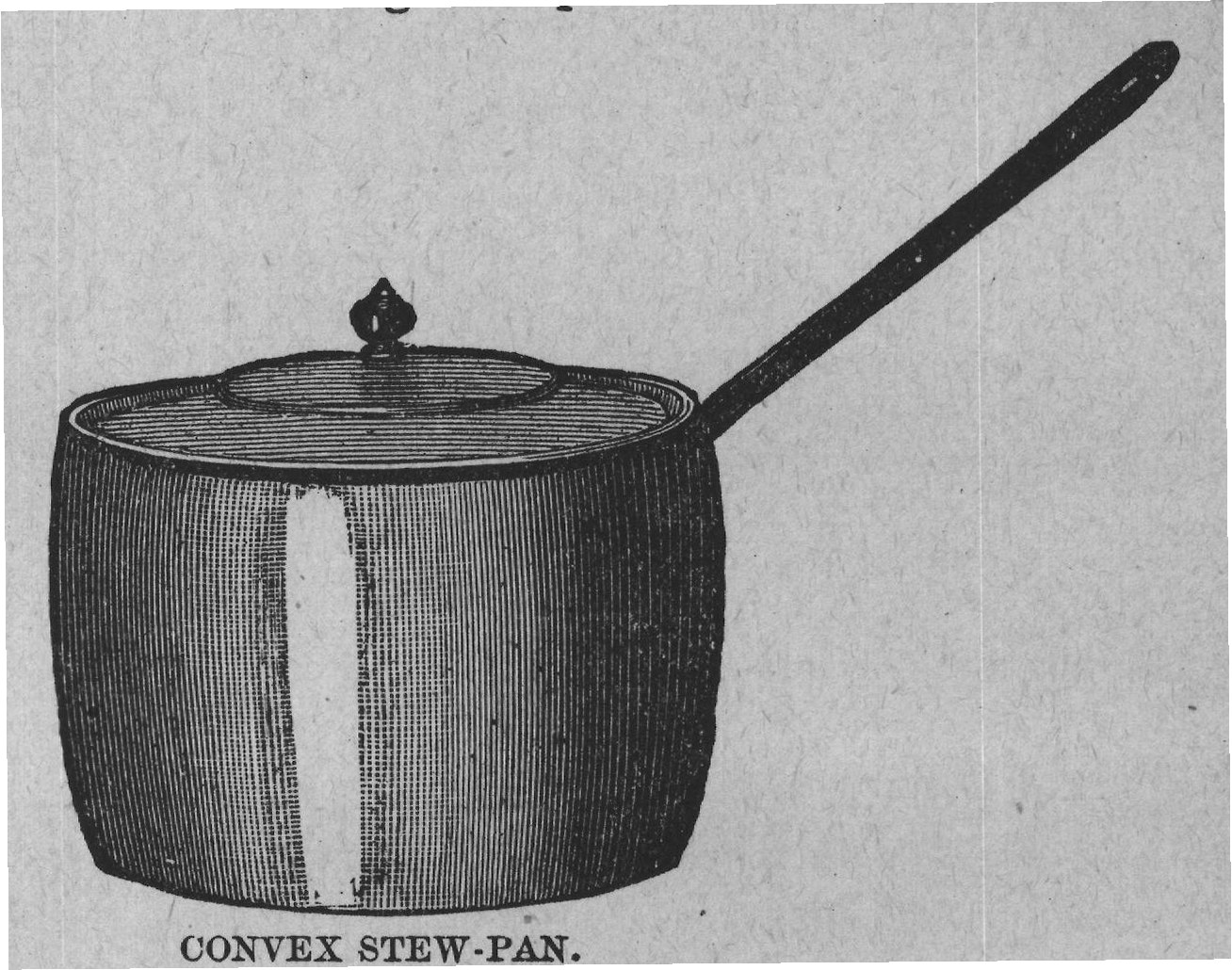
- "Convex stew-pan"This reads as a heading carried over from an illustrated pan rather than an instruction; 'convex' most likely describes a rounded-bottomed pan. Any heavy saucepan or small Dutch oven does the same work.
- Cold beefLeftover roast, pot roast or steak, trimmed of gristle and cut into half-inch pieces or chopped, depending on which version you follow. No quantity is given; roughly 1 lb of cooked meat makes a sensible batch.
- Cold water, and how muchNone is specified. Start with just enough to barely cover the meat, about a cup to a cup and a half per pound; you want a sauce at the end, not a broth.
- One tomatoIn this period this could as easily mean a stewed or canned tomato as a fresh one, since fresh tomatoes were seasonal. Half a cup of canned chopped tomato with its juice gives the acidity the dish is after.
- Thicken with butter and flourEqual parts kneaded together cold into a paste, then stirred into the simmering liquid in pieces. About 1 tablespoon of each per cup of liquid gives a light gravy; let it cook two or three minutes to lose the raw flour taste.
- The creamed versionCook the chopped beef in a little water first, then add cream or milk and thicken. Adding flour directly to dairy over heat invites lumps and scorching, so slacken the flour with a spoonful of the cooking liquid before it goes in, and keep the pan below a boil once the milk is in.
- The toastCut thin and toasted dry and firm, it is meant to soak up the gravy without collapsing. Serve immediately; this does not hold. Two generous servings from a pound of meat, three if there is something alongside.
This is a hash by another name, and it belongs to a whole class of recipes built around the Sunday roast's afterlife. Household books of the period devoted real space to the second and third appearances of a joint of beef, because a large roast was an economical purchase only if nothing was wasted, and because refrigeration was an icebox at best. Serving the result over toast, rather than with potatoes, kept the dish to one pan and stretched a modest amount of meat across a family; the same logic produced creamed chipped beef, minced beef on toast and the various "beef toasts" that fill American cookery of the era. The two variants here show the period's two standard sauce directions in miniature, a tomato and onion gravy on one hand and a milk or cream sauce thickened with flour on the other, both finished the same way.