Home › Some Useful Recipes › Irish Stew
Irish Stew
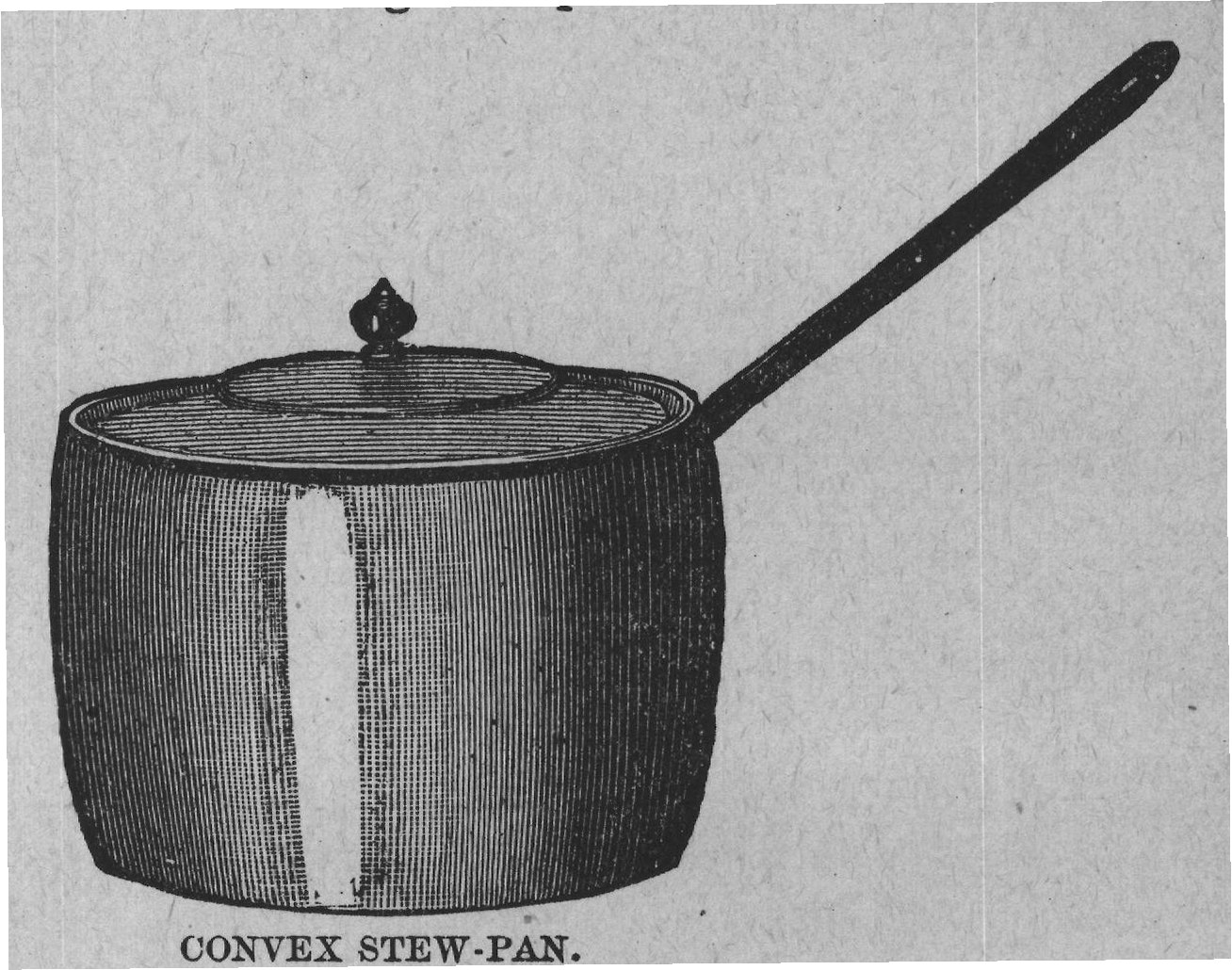
Take a neck of mutton, trim off some of the fat, and cut into as many cutlets as you have bones; shape them, and sprinkle them with pepper. Peel six moderate-sized onions, and for every pound of meat take one pound of potatoes. Blanch the vegetables separately. Take a clean three-quart stew-pan, and add half a pint of water or stock. Arrange a layer of potatoes at the bottom of the stew-pan, then cutlets, then onions; then potatoes, then cutlets, then onions, and so proceed until you have the whole in. Stew at least two hours if you want it rich; or one hour if the meat is to be more solid.
A layered stew rather than a stirred one — the point is that the potatoes break down into the liquid and thicken it while the chops stay whole. Resist lifting the lid or stirring.
- Mutton and neckMutton means sheep over two years old, now sold mainly by halal and specialist butchers. Lamb neck cut into chops on the bone is the direct substitute; expect a milder result and slightly shorter cooking. Ask for the neck sawn across into rounds, one per bone as the recipe says.
- Half a pintThe recipe's pint is most likely the imperial one, so about 10 fl oz (roughly 1 1/4 US cups, 285 ml); read as a US pint it would be one cup. Either way it is deliberately little -- the potatoes and onions give up a great deal of water, and too much stock at the start leaves you with soup. Add more only if the pan looks dry after an hour.
- "Blanch the vegetables separately"A brief boil, two or three minutes, drained. It takes the raw sharpness off the onions and rinses surface starch from the potatoes so they hold their shape a little longer. Skipping it is not fatal but the stew will be muddier.
- Potato choiceThe proportion given is a pound of potatoes to a pound of meat, which is generous. Use a floury variety such as russet or Maris Piper if you want the bottom layer to melt into a sauce, waxy if you want defined slices.
- Heat and vesselA three-quart pan is a little under 3 litres. 'Convex stew-pan' most likely means a pan with a rounded, bulging base; the recipe says nothing about a lid, though stewing implies a covered pot. It assumes the stovetop: keep it at a bare simmer on the lowest burner, or, if you prefer, set it in a low oven (around 300F), which is easier to hold steady for two hours.
- Two hours versus oneNeck is a collagen-heavy cut, so the two-hour version is the one that turns gelatinous. The one-hour option gives the firmer, 'more solid' meat the recipe says it is for.
- SeasoningPepper only is specified. Salt the layers as you build them, or the potatoes will taste flat no matter what you do at the table.
- YieldA neck yields roughly six to eight small chops, serving four generously with a green vegetable and bread.
Irish stew as a printed recipe is almost always mutton, onion and potato and nothing else, and the argument over whether carrots belong in it is more than a century old. Its plainness is not modesty but arithmetic: neck and shoulder were the cheap ends of a sheep, and potatoes were the staple of the Irish rural diet from the late eighteenth century onward. The layering method here — meat and vegetables built up in a covered pot and left alone over low heat — is what gives the dish its character, and it recurs in household cookery books as a reliable economy dish.