Home › Sauces, Salads, Pickles and Condiments › English Mansion House
English Mansion House
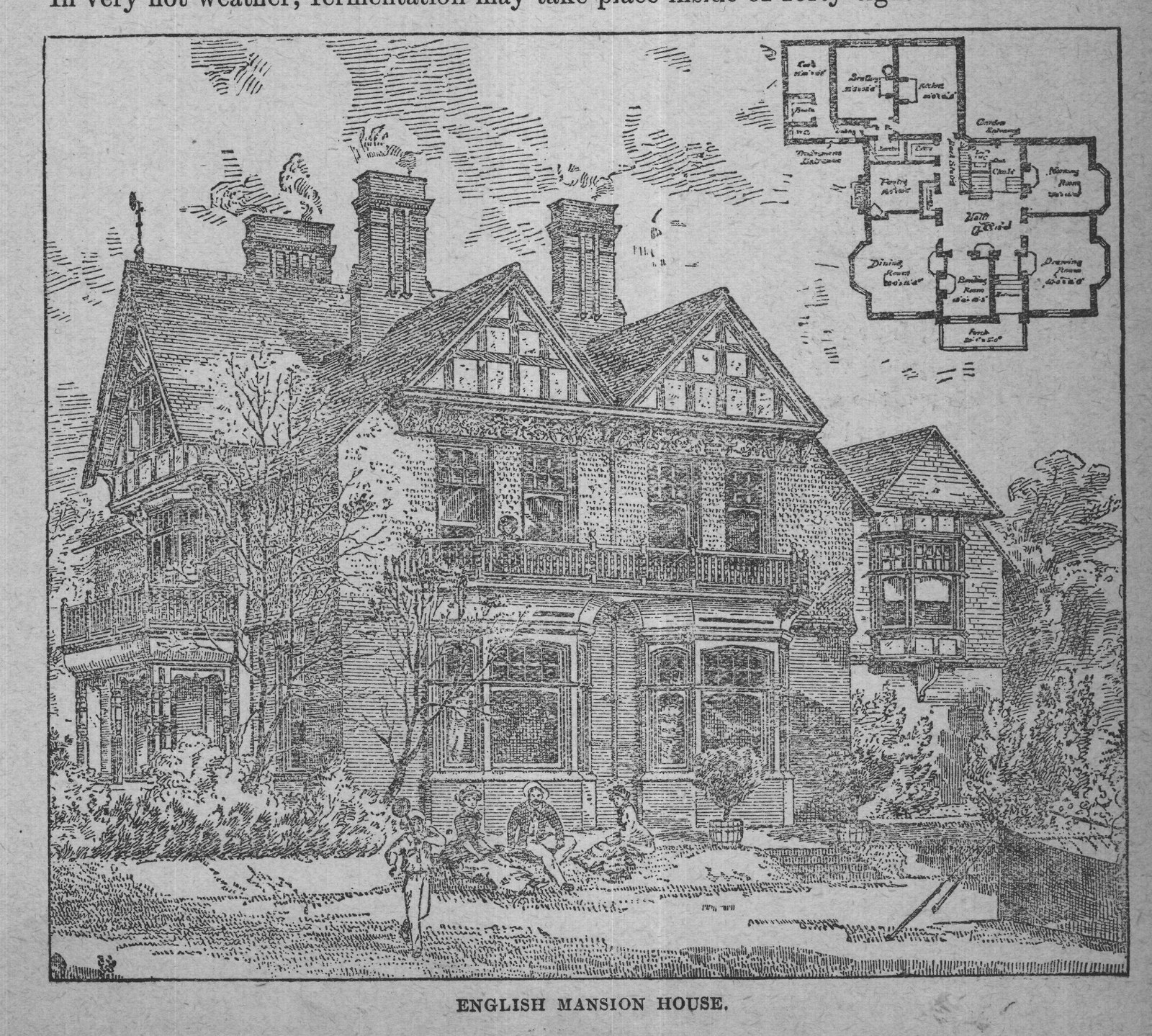
Rithre 2 Back Site Carden Dining Reso Cholt Marang Rang Forch Dreving 2. Take port wine and mushroom catsup, of each one quart; walnut pickle, one pint; soy, one-half pint; pounded anchovies, one-half pound; fresh lemon peel, minced shallots and horseradish, each two ounces; allspice and black pepper, bruised, each one ounce (or currie powder one-fourth ounce), digest for fourteen days, strain and bottle.
A Victorian "store sauce" — a bottled seasoning meant to live in the pantry and be splashed into gravies, stews and hashes rather than served on its own. The opening line of the entry is scrambled optical-character output from the original page and can be ignored; the recipe proper begins at "Take port wine."
- "Digest" means steep, not heat"Digest" means steep, not cook -- In nineteenth-century usage digestion is prolonged maceration, sometimes at gentle warmth, rather than boiling or simmering. Combine everything in a wide-mouthed jar, seal, keep it somewhere cool and dark, and shake it daily for the fourteen days.
- Scale it downAs written this makes roughly three quarts of finished sauce, a quantity that made sense when a household bottled its own seasonings for the year. Quartering the whole list gives a manageable pint and a half.
- Mushroom catsupNot tomato ketchup. Mushroom catsup is a thin, near-black, intensely savoury liquid made by salting mushrooms and pressing out the juice with spice. It is still sold by British specialists; a mix of mushroom soaking liquor reduced hard with a little soy is the nearest improvisation.
- Walnut pickleThe spiced vinegar from a jar of pickled green walnuts, not the walnuts themselves. Pickled walnuts remain available in Britain around Christmas; the liquor is what this recipe wants.
- SoySoy sauce; the soy sold in Britain and America at this period was generally an imported dark Chinese or Japanese product. A dark soy or a tamari sits closer to the intended weight than a light Japanese shoyu.
- AnchoviesHalf a pound of salt-packed anchovies, rinsed of their crust and pounded to paste in a mortar. Oil-packed fillets work but bring less salt, so taste before you consider adding any.
- Bruised spiceAllspice and peppercorns cracked under the flat of a knife or a rolling pin, not ground. Bruising releases flavour while leaving the fragments large enough to be caught by the strainer.
- Straining and keepingStrain through a sieve, then again through muslin; the anchovy will otherwise cloud and eventually settle as sludge. Bottle, and despite the salt, wine and vinegar in the mixture, keep it refrigerated — this is uncooked cured fish in a liquid whose acidity you have not measured.
- UseA teaspoon or two at a time, stirred into brown gravy, beef stew, kidneys or a deviling butter. It is a seasoning of the Worcestershire family, far too concentrated to pour over food directly.
Sauces of this kind — port, anchovy, walnut pickle, mushroom catsup and spice, left to macerate for a fortnight and then bottled — were the domestic ancestors of the commercial bottled sauces that took over the table in the nineteenth century, of which Worcestershire, generally traced to the Worcester chemists Lea and Perrins in the 1830s, is the survivor everyone still knows. "Mansion House" borrows the name of the Lord Mayor of London's official residence, a piece of aspirational branding common to Victorian recipe titles such as Reform Club sauce or Guards' pudding; the connection to the building is usually nominal. The alternative given at the end, a quarter ounce of curry powder in place of the allspice and pepper, is a small marker of how thoroughly Anglo-Indian seasoning had entered the British store cupboard.