Home › Sauces, Salads, Pickles and Condiments › Quick Pickles
Quick Pickles
Take small cucumbers of a uniform size, wash, put in a porcelain kettle, cover with cold water, add a little salt; set it on the stove, let it heat gradually and boil five minutes; then drain off all the water; add good vinegar; to one gallon of vinegar add one cup molasses, one tablespoonful cloves, and the same of cinnamon; let boil five minutes; remove to an earthen or stone dish; pour over them the hot vinegar; cover tight; when cold, they are ready for use.
A vinegar-and-molasses cucumber pickle of the fast, unfermented type — no weeks in a brine crock, no processing. A few things in it need translating, and one of them affects texture badly.
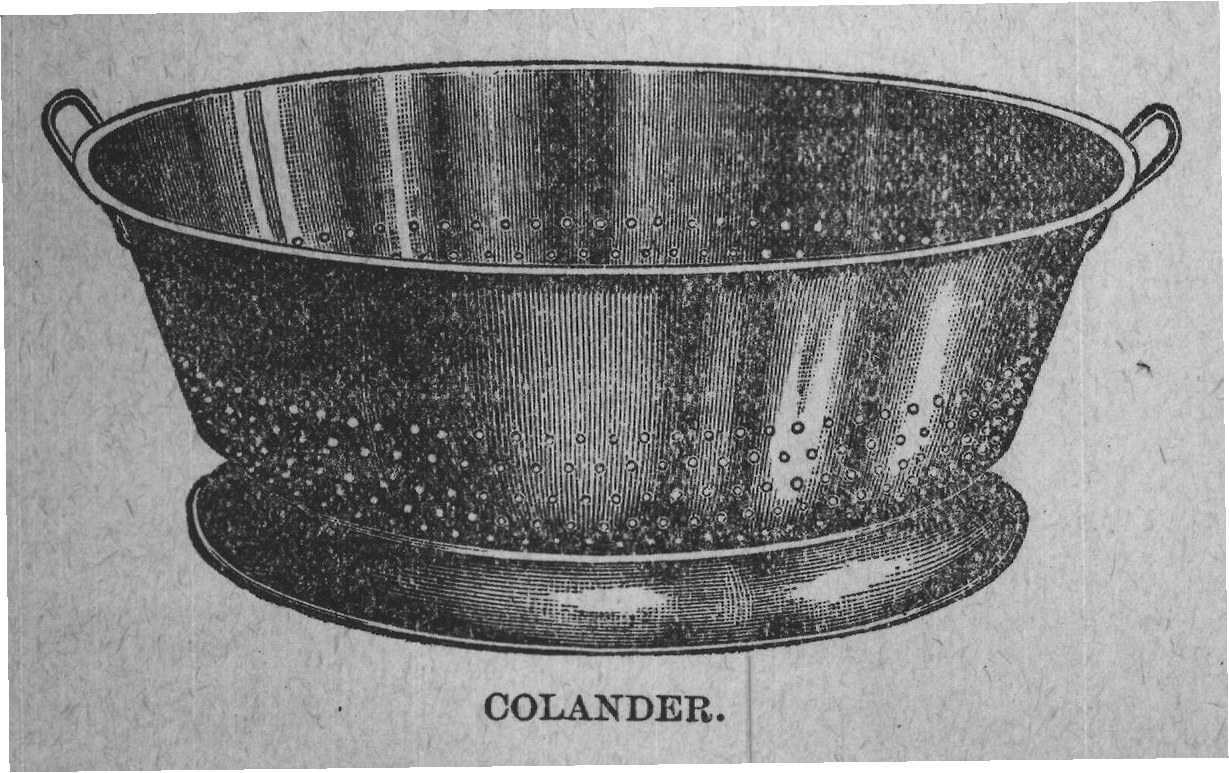
- The word "COLANDER"It heads the entry but does not describe the method; the recipe's only nod to one is the instruction to drain off the water. Why it sits at the head of a pickle recipe is unknown — possibly a mis-set heading or a fragment of an adjacent entry. Ignore it.
- Porcelain kettleThat means an enamelled cast-iron or enamel-on-steel pot, not china. The point is a non-reactive surface: hot vinegar pulls metal out of bare cast iron, aluminium and copper and turns the pickles grey and metallic. Stainless steel is the modern equivalent.
- The five-minute boil is the weak linkBoiling whole cucumbers in salted water for five minutes softens them before the vinegar ever reaches them, and small cucumbers come out limp. Current practice is to soak them in a cold salt brine for several hours instead, which firms the flesh by drawing out water. If you follow the text as written, expect a soft pickle.
- Vinegar strength"Good vinegar" meant a full-strength cider or white vinegar rather than a diluted one; historical vinegar strengths were not standardised, so no reliable comparison with the modern 5 percent can be drawn. Use a straight 5 percent cider or white vinegar and do not dilute it.
- Scale it downA gallon of vinegar is a crock-sized batch. The proportions divide cleanly: per quart of vinegar, 1/4 cup molasses and 3/4 teaspoon each of cloves and cinnamon. A quart of vinegar will just about cover 2 lb of small cucumbers in a wide jar.
- SpicesWhole cloves and a broken cinnamon stick give a clear syrup; ground spice makes it muddy and gritty. Tie them in muslin and lift them out with the boil if you want the liquid clean.
- SaltThe "little salt" in the blanching water is unmeasured and does not season the finished pickle; roughly a tablespoon per quart of water is a reasonable amount, and it is discarded with the water.
- StorageThis is a refrigerator pickle, not a canned one: nothing here is heat-processed or sealed, and the earthen dish with a tight cover was a cool-larder arrangement. Keep the finished jars in the fridge and eat them within a month or two.
Nineteenth-century American cookbooks divide pickles sharply into two families: the long-brined kind, salted down in a crock for weeks and fermented before ever meeting vinegar, and the "quick" or "sweet" pickle, where heat and strong vinegar do the whole job in an afternoon. This is squarely the second. Molasses rather than sugar as the sweetener is the older habit — sugar was long the costlier of the two in American households — and the clove-and-cinnamon pairing marks this as a sweet pickle for the relish dish, meant to be eaten alongside cold meat rather than kept through the winter. The instruction to use an earthen or stone vessel is practical rather than decorative: glazed stoneware was the ordinary acid-proof container before glass canning jars became universal.