Home › Village Receipts › Tomato Bisque
Tomato Bisque
One can of tomatoes, strained, one teaspoon of chopped onion, one pint of water, two tablespoons of flour, one teaspoon of sugar, salt and pepper, scant half-teaspoon of baking soda, one and one-half cups of milk. Cook strained tomatoes with onion and water, put in sugar, salt and pepper, thicken with the flour dissolved in water, put in soda and when it begins to effervesce add milk. Let it come
— Mrs. Elmer P. Miller
to a boil and serve.
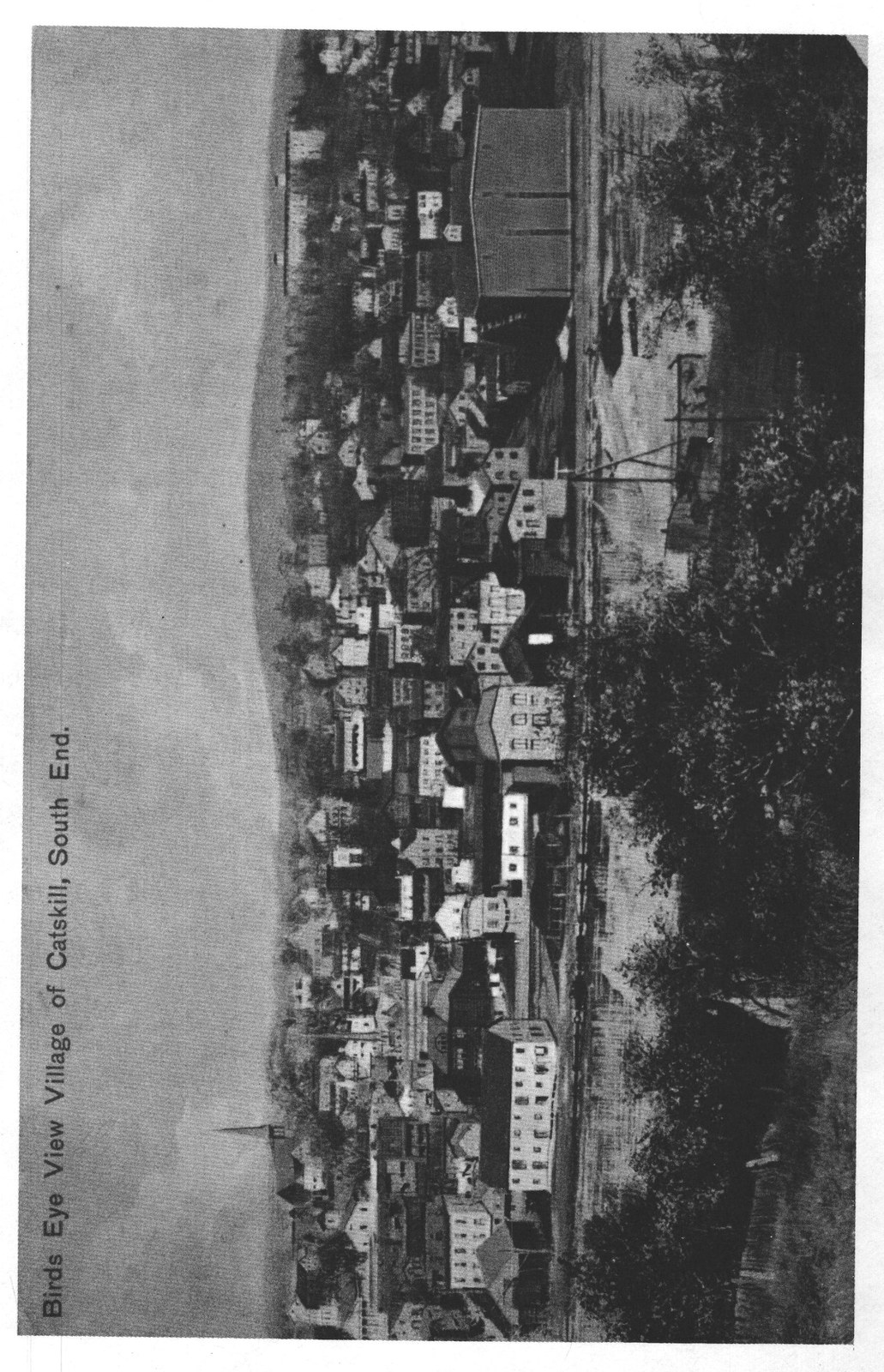
Birds Eye View Village of Catskill, South End.
HE
A plain cream-of-tomato soup of the sort that filled the middle of a village supper. The whole thing turns on the baking soda, which is there to keep the milk from curdling in the acid tomato.
- The hinge: soda, then milk, then off the heatThe soda neutralizes enough tomato acid that the milk will not break when it goes in. Add it away from a hard boil, let the foaming subside, then stir in the milk and bring the soup just to the point of steaming. A rolling boil after the milk is in will still curdle it, and prolonged boiling flattens the flavor into something dull and slightly soapy.
- Ignore the stray textThe line "Let it come — Mrs. Elmer P. Miller to a boil and serve" has the contributor's credit dropped into the middle of the sentence, and "Birds Eye View Village of Catskill, South End" appears to be a caption or running line from elsewhere on the page. Neither is an instruction.
- "One can of tomatoes"Period grocery cans of tomatoes were larger than today's standard; the common sizes ran from about 20 oz up to roughly a quart. A modern 14.5 oz or 15 oz can will give a lighter soup; a 28 oz can is closer to the older measure and may want the water adjusted.
- StrainingCanned tomatoes of the period were commonly packed whole in thin juice and often carried bits of skin and hard core, hence the instruction to strain. Push them through a sieve or food mill. A blender gives a smoother purée but leaves the seeds and skin in, which changes the texture.
- ThickeningTwo tablespoons flour slaked in cold water and stirred into the hot tomato base. Whisk it in off the boil and then cook it two or three minutes at a simmer, or the soup keeps a raw-flour taste.
- OnionA teaspoon of raw chopped onion is a very light hand by modern taste. It softens over the cooking of the tomato; if you want more, sweat a small amount in butter first rather than adding more raw.
- Amount of sodaThe recipe says a scant half-teaspoon, and it is worth respecting the 'scant'. More than that gives a metallic, slightly soapy edge and dulls the red color. If the tomatoes are a sweet modern brand, start with a quarter teaspoon and add the rest only if the milk shows signs of separating.
- YieldRoughly a quart and a quarter to a quart and a half of finished soup, depending on the size of the can, which serves four as a first course.
Tomato bisque was a fixture of American community cookbooks from the 1880s onward, arriving with two things at once: reliable canned tomatoes, which the postwar canning trade made cheap and year-round, and the household understanding that a pinch of soda would let acid tomato and fresh milk sit in the same pot. "Bisque" in French usage means a rich shellfish soup thickened and finished with cream; American cooks borrowed the word for any smooth cream soup. Church and village compilations like this Catskill collection are where such recipes settled into their standard form, each one attributed to the woman who submitted it — Mrs. Elmer P. Miller's name ends up wedged into the last sentence of her own instructions.