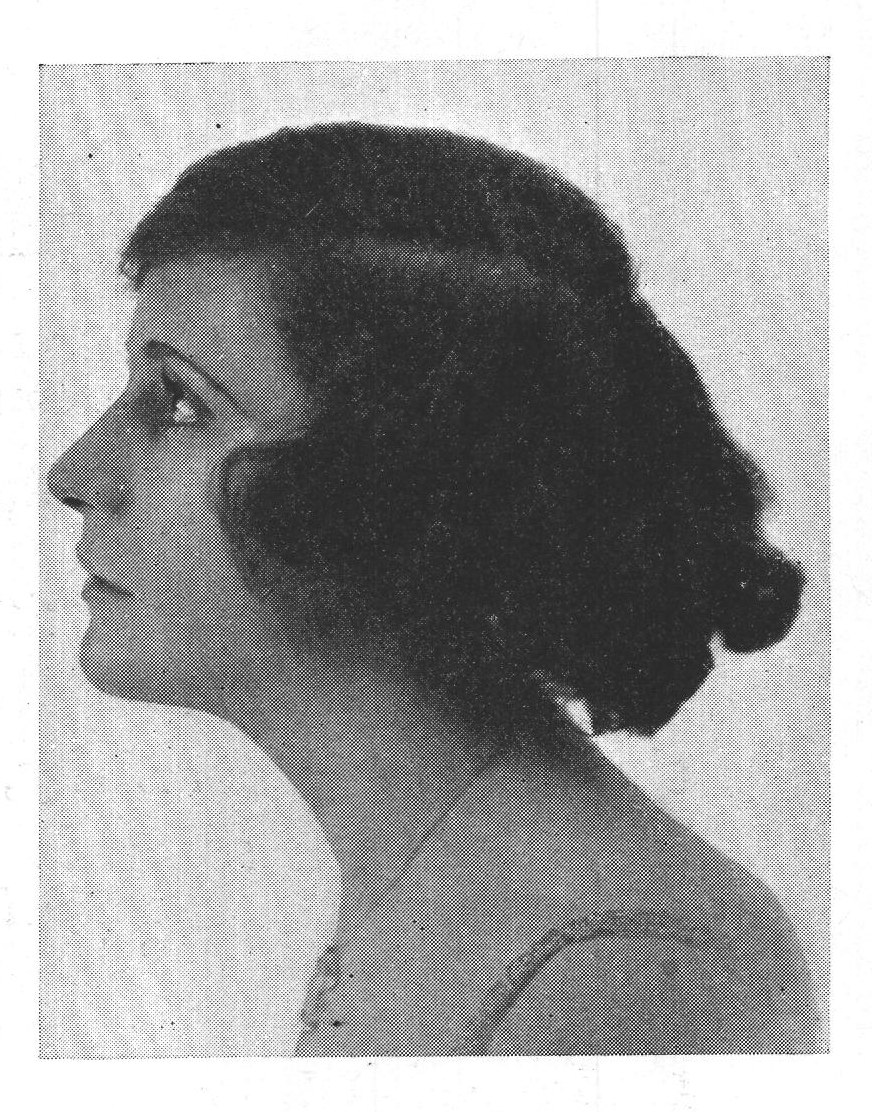
Beth Lydy

EGGS POACHED IN TOMATO SAUCE
1 10-cent can tomato soup ½ as much milk as soup 4 drops kitchen-bouquet 2 tablespoonfuls butter 6 eggs Buttered toast 1/4 teaspoonful Worcestershire sauce Combine the soup, milk, butter, and seasonings, and when it begins to bubble around the edge break in six eggs very carefully, taking care to keep each one separate. As soon as the white is set, lift out each egg onto the toast, add a little sauce and a dusting of paprika to each serving. This is an excellent dish for chafing-dish use.
Very truly yours,
ESCALLOPED POTATOES
Pare, soak and cut four large potatoes in one-quarterinch slices. Put a layer in buttered baking dish, sprinkle with salt and pepper, dredge with flour and dot over with butter; repeat; then add hot milk until it can be seen through the top layer. Bake two hours over medium flame.
Best wishes,
Two unrelated dishes printed together, with a stray heading from the page above. Both are simple; the details that need translating are the canned-soup measure, the vague oven instruction, and the two-hour bake.
- The stray heading"DEVILLED CRABS" appears at the top with no ingredients or method following it — a running head or index line picked up in the original typesetting. Only the poached eggs and the escalloped potatoes are actually given.
- A 10-cent can of tomato soupCondensed tomato soup in that era came in roughly a 10-11 oz can, close to what a standard can still holds. Use one can undiluted, then add half again as much milk by volume — roughly 2 cups.
- Kitchen BouquetStill sold: a caramel-and-vegetable browning sauce used for colour and a faint savoury depth. Four drops is a trace amount; if you have none, leave it out rather than substituting soy sauce, which will read as salt.
- Poaching in the sauceKeep the pan at the barest bubble around the rim, not a simmer. Whites set at about 145F and the sauce is thick enough to hold heat, so the eggs firm quickly — lift them out as soon as the white is opaque, or the yolks set solid.
- Chafing dishThe original recommends this for chafing-dish service, meaning a table-top pan over a spirit lamp. A wide skillet over the lowest burner gives the same gentle, even heat and room to keep six eggs apart.
- Soaking the potatoesSoaking pared slices in cold water rinses off surface starch; the recipe dredges each layer with flour, which is presumably what does the thickening. Drain and pat the slices dry or the milk will thin out.
- "Bake two hours over medium flame"Probably a moderate oven rather than a stovetop burner, around 350F. Two hours seems longer than needed for quarter-inch slices: expect roughly 60 to 75 minutes covered, then 15 minutes uncovered to brown. Test with a knife tip through the centre.
- YieldThe eggs serve six, one apiece on toast. Four large potatoes give four modest side servings.
Books of recipes solicited from stage performers were a common fundraising and publicity format in the 1910s and 1920s, and they tell you more about what convenience foods had reached the middle-class kitchen than about how actors actually ate. Both of these contributions lean on the era's new pantry: commercially canned condensed tomato soup, generally traced to Campbell's introduction in 1897, and bottled Worcestershire and Kitchen Bouquet doing the work that stock once did. The recommendation for chafing-dish use places the egg dish squarely in the after-theatre supper tradition that let a hostess produce something hot at midnight without a cook or a lit range, and chafing-dish cookery had its own shelf of manuals by this point. Escalloped potatoes, meanwhile, are the older item here: layered potatoes with flour, butter and milk appear in American cookbooks through the nineteenth century, the name sharing a root with scalloped, which is often traced to the scallop shell in which dishes were cooked and served, though the derivation is not fully settled.