Chicken Panade
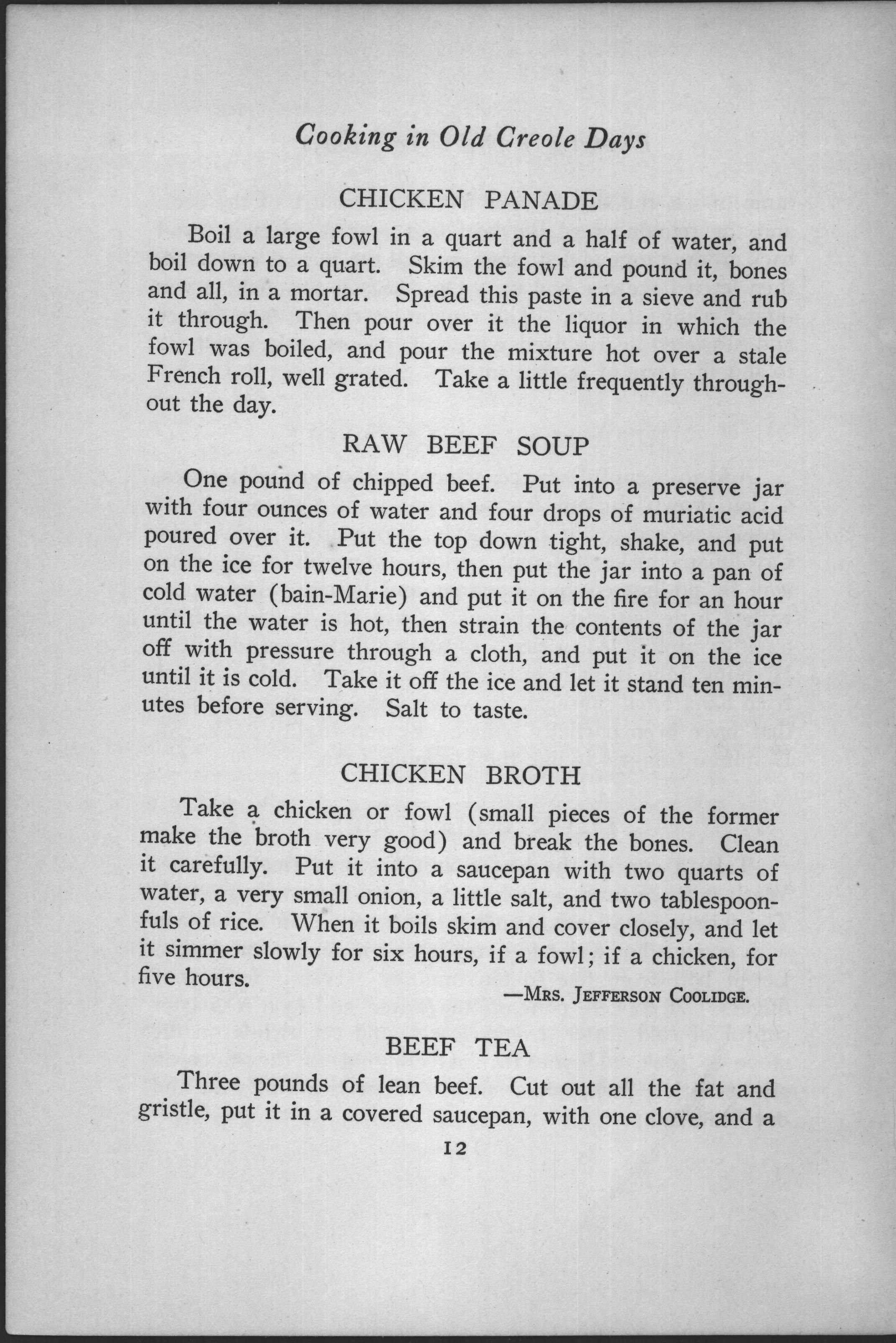
Boil a large fowl in a quart and a half of water, and boil down to a quart. Skim the fowl and pound it, bones and all, in a mortar. Spread this paste in a sieve and rub it through. Then pour over it the liquor in which the fowl was boiled, and pour the mixture hot over a stale French roll, well grated. Take a little frequently throughout the day.
A convalescent’s food from the sick-room tradition — a concentrated chicken essence thickened with grated bread. We include it as a historical curiosity more than a recipe to reproduce literally.
- Don’t pound “bones and all”The original pounds the whole boiled fowl, bones included, then sieves it. Skip the bones today — use only the cooked meat, pounded or blended smooth; there’s no benefit and real risk in the bones.
- What a “panade” isA paste of bread and liquid. Here, grated stale bread is soaked with concentrated chicken broth and meat into a soft, spoonable gruel.
- Make it appetizingAs written it’s bland invalid food. A modern cook would season it properly — salt, a little of the rich broth, perhaps a scrape of nutmeg.
- The intent“Take a little frequently throughout the day” marks this as nourishment for someone too ill to manage a real meal.
The panada or panade — bread cooked soft in broth or milk — is one of the oldest foods for the sick and the toothless, reaching back through medieval Europe. It belonged to the once-serious discipline of invalid cookery, a whole genre of gentle, concentrated dishes (beef tea, gruels, jellies, panadas) meant to keep the weak and feverish alive when appetite failed. Chicken, then as now, was thought especially restorative — the same instinct behind every pot of chicken soup carried to a sickbed.
From page 12 of the 1904 edition.
Original page from the book