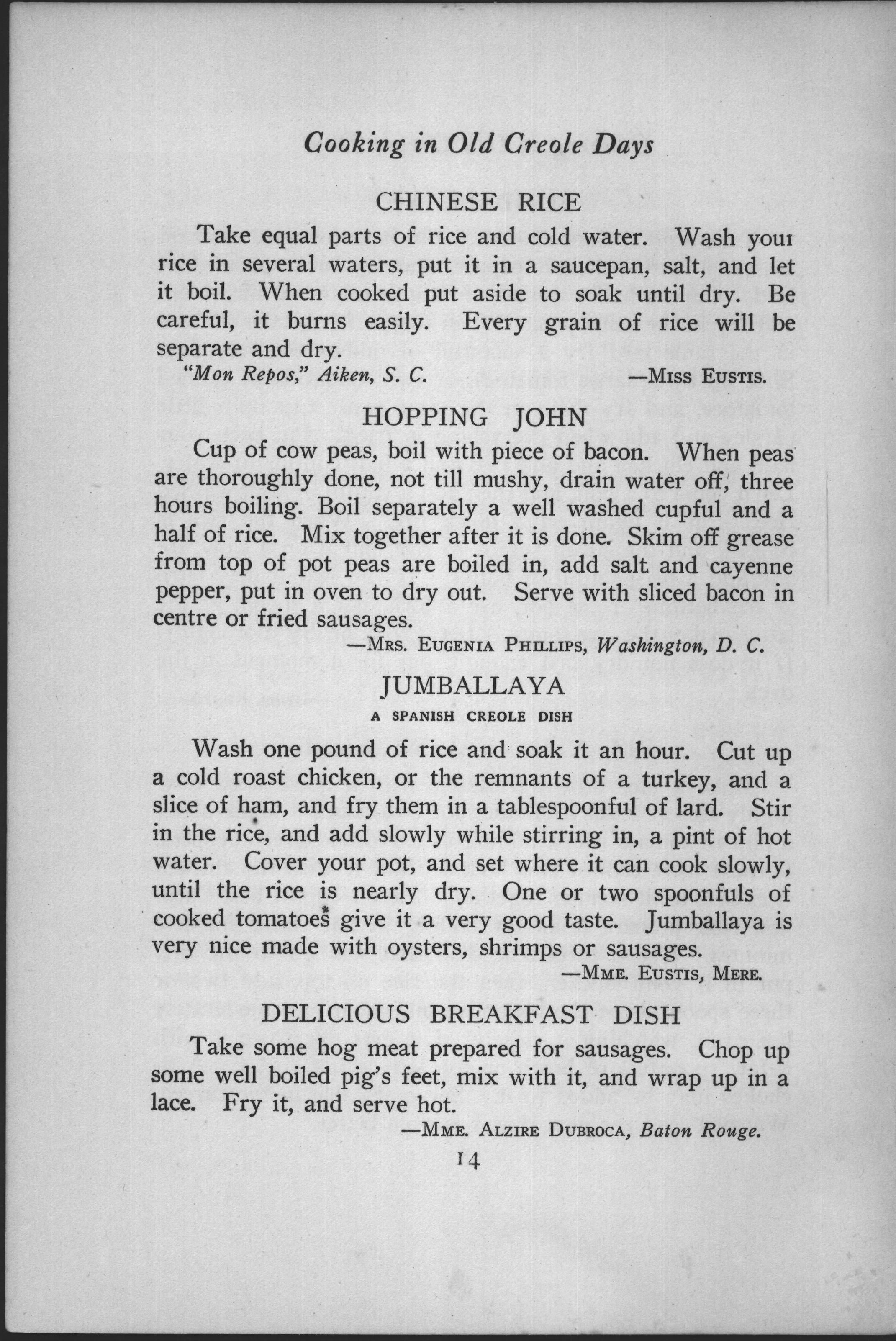
Chinese Rice
Miss Eustis, "Mon Repos," Aiken, S. C.
Take equal parts of rice and cold water. Wash your rice in several waters, put it in a saucepan, salt, and let it boil. When cooked put aside to soak until dry. Be careful, it burns easily. Every grain of rice will be separate and dry.
A stripped-down absorption method — no draining, no fuss — where the rice drinks up exactly the water it’s given.
- Equal parts, by volume“Equal parts rice and cold water” is quite lean and leans on the long soak-and-steam at the end. For more reliable results, add a bit more — closer to 1½ cups water per cup of rice.
- Start coldRice and water go in together from cold, so the grains heat evenly as the water comes up to a boil.
- It burns easilyWith so little water, use a heavy pot and the lowest heat once it simmers; a tight lid traps the steam that finishes the grains.
- Let it rest“Put aside to soak until dry” means let it sit off direct heat, covered, so each grain firms up separate and fluffy.
This is the absorption method — rice cooked in a measured amount of water until every drop is drunk up — as opposed to the Carolina way of boiling in plenty of water and draining. Nineteenth-century American cooks often gave the absorption technique names like “Chinese” or “Japanese,” likely because they associated dry, separate, steamed grains with East Asian kitchens, where rice is the daily staple and cooked with exactly this care. Whatever the name, the goal the recipe prizes — “every grain of rice will be separate and dry” — is simply well-cooked rice, and the absorption method remains the standard on most stoves today.
From page 14 of the 1904 edition.
Original page from the book