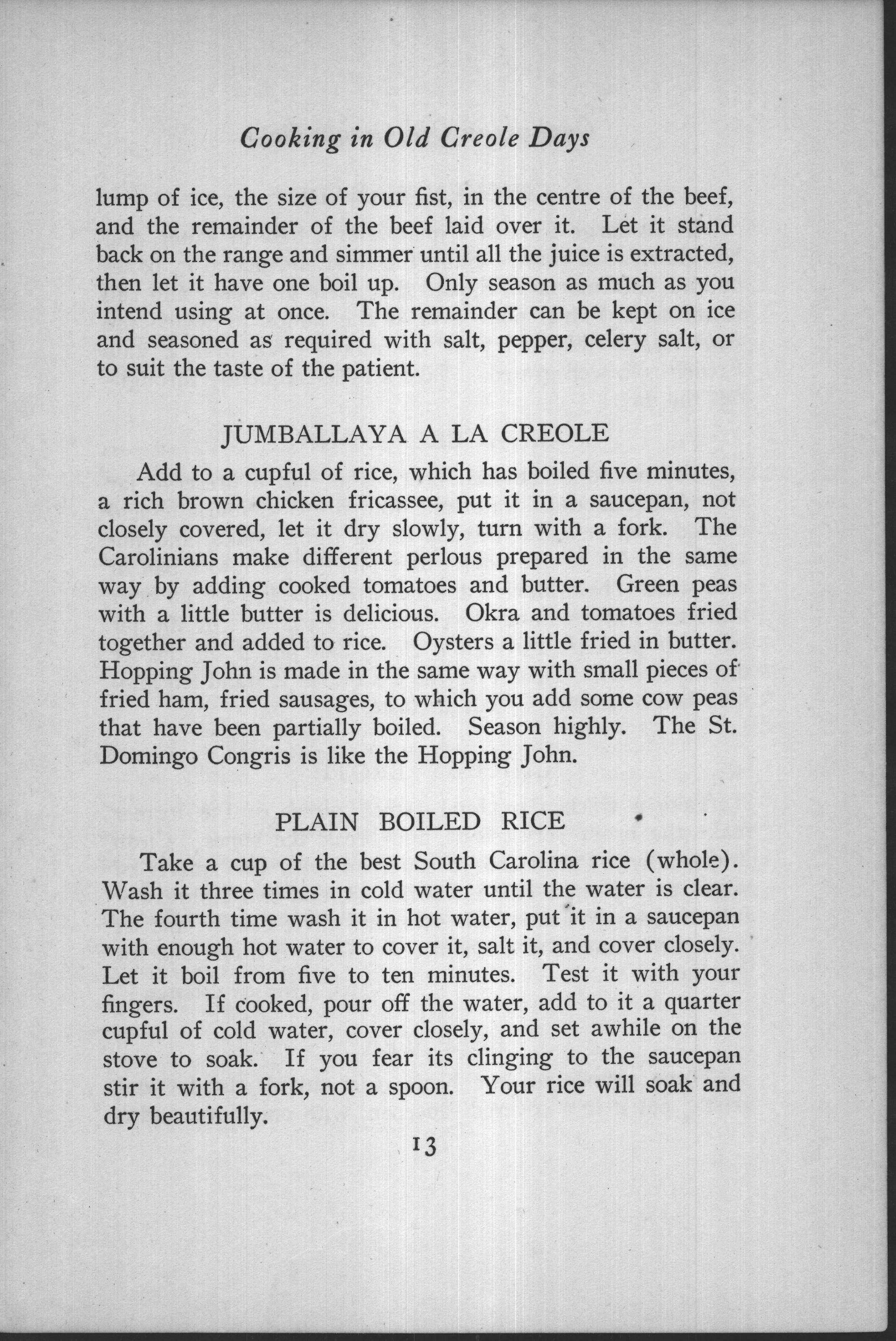
Plain Boiled Rice
Take a cup of the best South Carolina rice (whole). Wash it three times in cold water until the water is clear. The fourth time wash it in hot water, put it in a saucepan with enough hot water to cover it, salt it, and cover closely. Let it boil from five to ten minutes. Test it with your fingers. If cooked, pour off the water, add to it a quarter cupful of cold water, cover closely, and set awhile on the stove to soak. If you fear its clinging to the saucepan stir it with a fork, not a spoon. Your rice will soak and dry beautifully.
The Carolina method in miniature — wash hard, boil briefly, then let residual heat finish the job for dry, separate grains.
- “Best South Carolina rice”A long-grain white rice; any good long-grain (or true Carolina Gold, now revived) works. “Whole” means unbroken grains.
- Why wash until clearRinsing three or four times carries off surface starch, which is what makes rice gummy — the secret to grains that stay separate.
- Boil, then steamBoil just 5–10 minutes until a grain is tender when pinched, drain, add a splash (¼ cup) of cold water, cover, and let it sit and steam on the warm stove.
- Fork, not spoonOnce cooked, stir only with a fork; a spoon presses the grains together and turns them to paste.
- Modern shortcutThe same result comes from 1 cup rice to about 1¾ cups water, covered, 15 minutes, then 10 minutes off the heat — no draining.
“Carolina rice” was once the gold standard of American tables, and its story is inseparable from the people who grew it. From the late 1600s, the Lowcountry of South Carolina and Georgia produced Carolina Gold, a prized long-grain rice, on plantations that depended on the agricultural knowledge and forced labor of enslaved West Africans — many from Africa’s rice-growing “Rice Coast,” who understood tidal irrigation and cultivation far better than the planters did. Their expertise built one of the wealthiest crops in the colonies; the heirloom grain itself was nearly lost by the 20th century and has only recently been brought back.
From page 13 of the 1904 edition.
Original page from the book