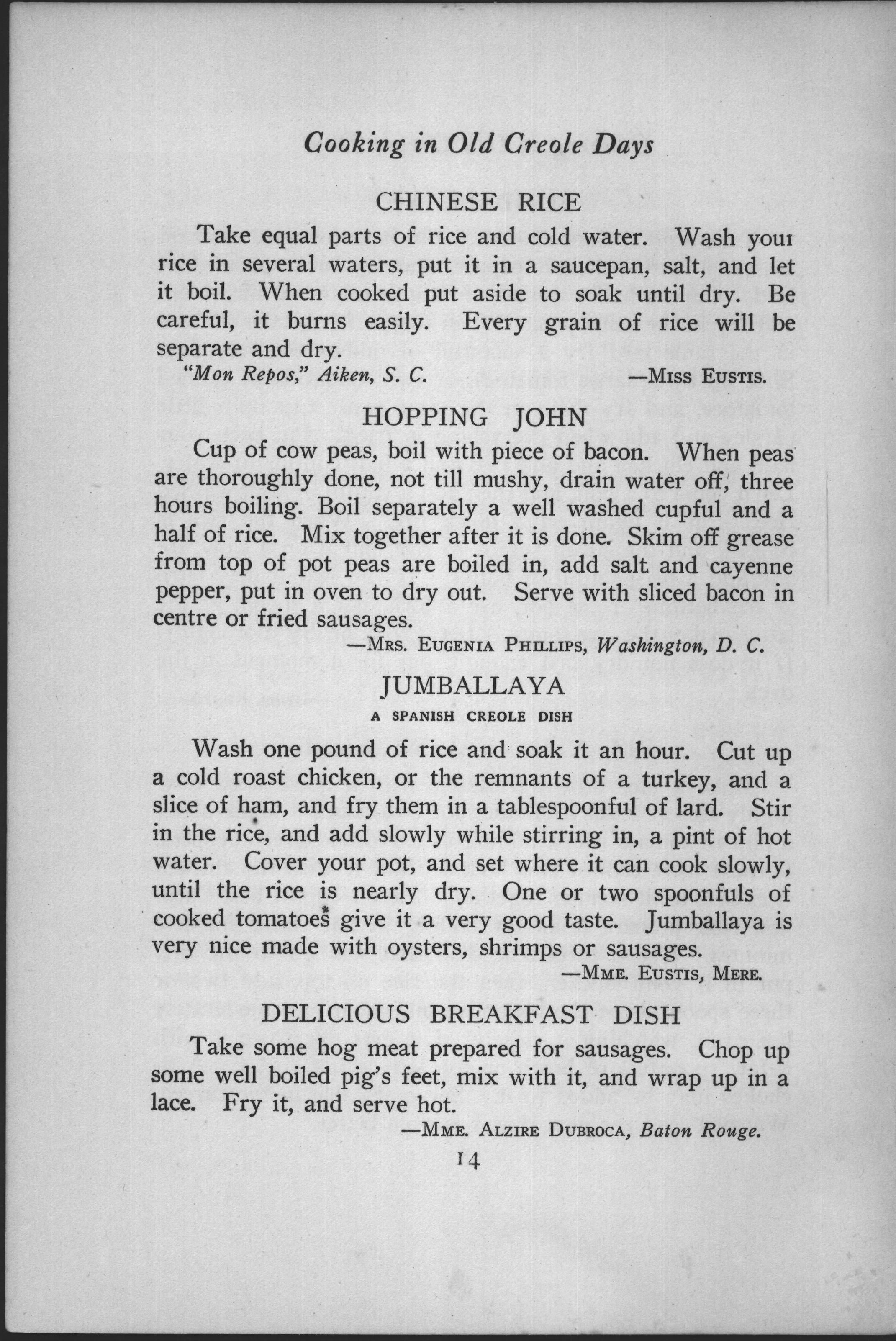
Hopping John
Mrs. Eugenia Phillips, Washington, D. C.
Cup of cow peas, boil with piece of bacon. When peas are thoroughly done, not till mushy, drain water off, three hours boiling. Boil separately a well washed cupful and a half of rice. Mix together after it is done. Skim off grease from top of pot peas are boiled in, add salt and cayenne pepper, put in oven to dry out. Serve with sliced bacon in centre or fried sausages.
The Lowcountry’s beloved rice-and-peas, built on a long-simmered pot of field peas and bacon, then bulked out with rice and dried in the oven.
- Cow peasThese are field peas — the black-eyed pea and its cousins. Dried peas need long cooking; soaking them first cuts the “three hours” considerably, or use canned in a pinch.
- Cook them just done“Not till mushy” is the key — peas that hold their shape, so they don’t dissolve when mixed with the rice.
- The ratioAbout 1 cup peas to 1½ cups rice; boil the rice separately, then fold the two together.
- Skim and seasonSkim the fat off the pea pot, then season firmly with salt and cayenne.
- “Put in oven to dry out”A low oven (300–325°F / 150–165°C) drives off excess moisture so the finished dish is fluffy, not wet. Serve topped with bacon or fried sausage.
Hopping John — rice simmered with cowpeas and a piece of pork — is one of the defining dishes of the Carolina and Georgia Lowcountry, and its roots run back to the rice-and-bean cookery of West Africa, carried across the Atlantic by enslaved people. One of its earliest published recipes appears in Sarah Rutledge’s The Carolina Housewife (1847). The name’s origin is a genuine mystery — many colorful explanations circulate and none is proven — but the dish’s luck is not in doubt: by tradition it is eaten on New Year’s Day, the peas standing in for coins and a prosperous year ahead.
From page 14 of the 1904 edition.
Original page from the book