Courtbouillon of Fish
Josephine Nicaud, New Orleans
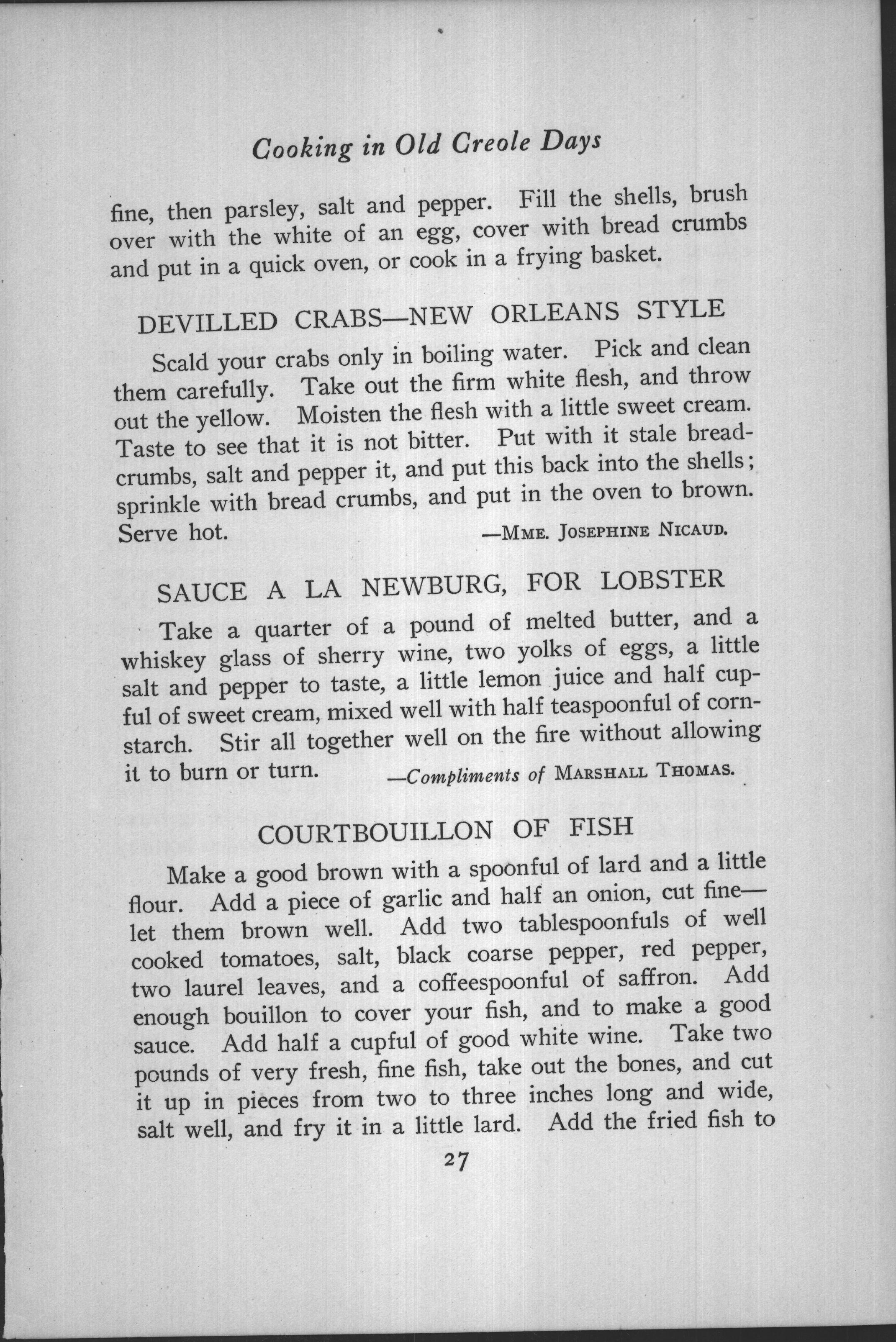
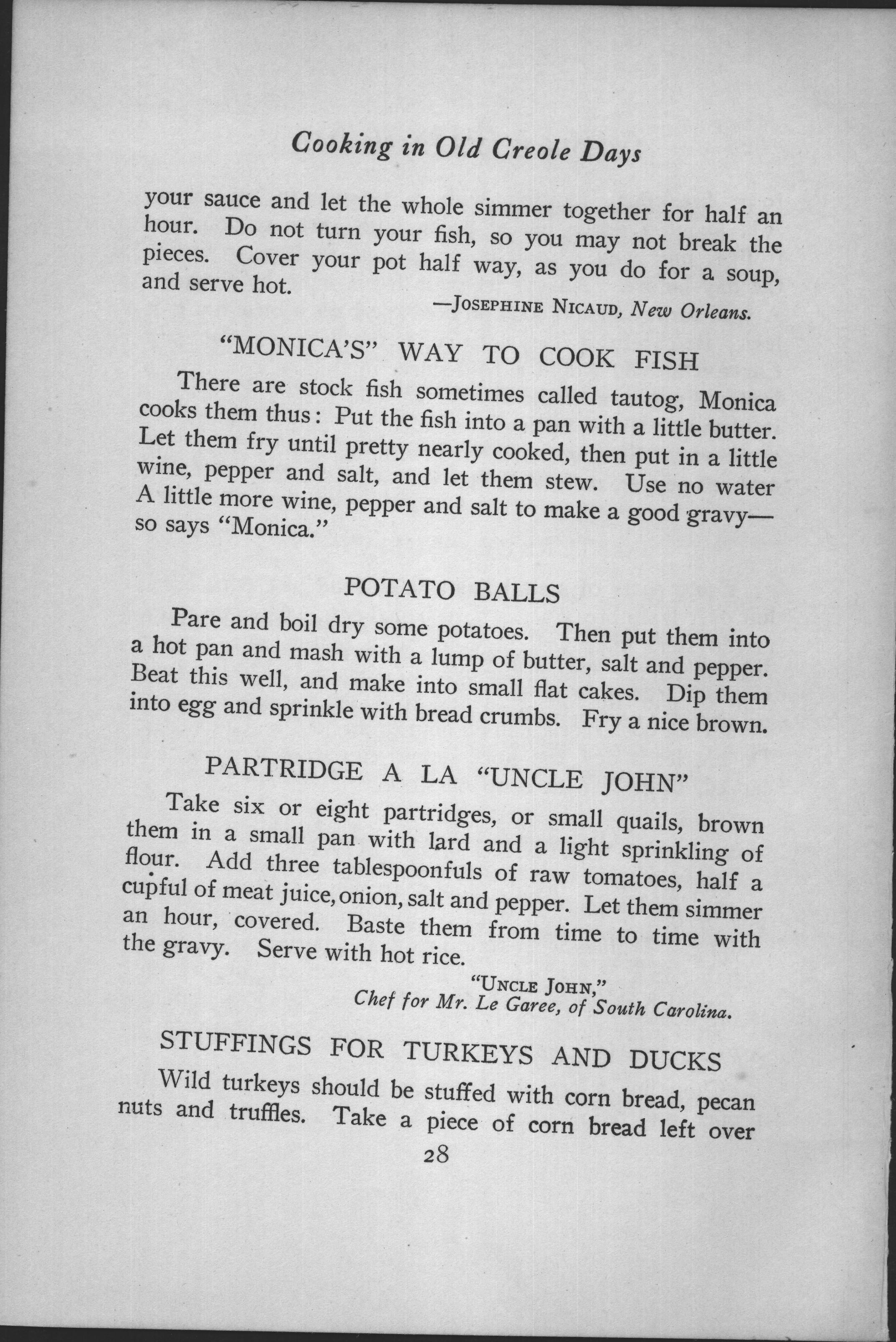
Make a good brown with a spoonful of lard and a little flour. Add a piece of garlic and half an onion, cut fine—let them brown well. Add two tablespoonfuls of well cooked tomatoes, salt, black coarse pepper, red pepper, two laurel leaves, and a coffeespoonful of saffron. Add enough bouillon to cover your fish, and to make a good sauce. Add half a cupful of good white wine. Take two pounds of very fresh, fine fish, take out the bones, and cut it up in pieces from two to three inches long and wide, salt well, and fry it in a little lard. Add the fried fish to your sauce and let the whole simmer together for half an hour. Do not turn your fish, so you may not break the pieces. Cover your pot half way, as you do for a soup, and serve hot.
Not the French poaching broth of the same name, but Louisiana’s hearty, roux-and-tomato fish stew — a Creole classic.
- Start with a brown roux“A good brown” of lard and flour is the foundation; cook it patiently to a nutty brown before the onion and garlic go in.
- “Laurel leaves” = bayTwo bay leaves; the “coffeespoonful of saffron” is about ¼ tsp — potent, so it truly colors and scents the pot.
- Build the sauceBrowned tomato, bouillon and half a cup of white wine make the braise; season boldly with black and red (cayenne) pepper.
- Fry the fish firstCut firm fish into 2–3 inch pieces, salt them, and brown lightly before adding to the sauce; redfish is the traditional choice, with snapper or another firm white fish an easy stand-in.
- Don’t stir or turnSimmer 30 minutes without turning the fish so the pieces stay whole; keep the pot half-covered, as you would for a soup.
Here is a lovely false cognate on a plate. In French cookery, court-bouillon means a “short broth,” a quick seasoned liquid for poaching fish. In Louisiana the words came ashore and became something else entirely: courtbouillon (locals say “COO-be-yon”) is a robust stew of fish simmered in a dark roux and tomato sauce, closer to gumbo’s kin than to any delicate broth. Traditionally made with redfish, it is one of the cornerstone Creole dishes — proof of how French vocabulary, in the Louisiana kitchen, often kept the name while completely changing the recipe.
From page 27 of the 1904 edition.
Original pages from the book