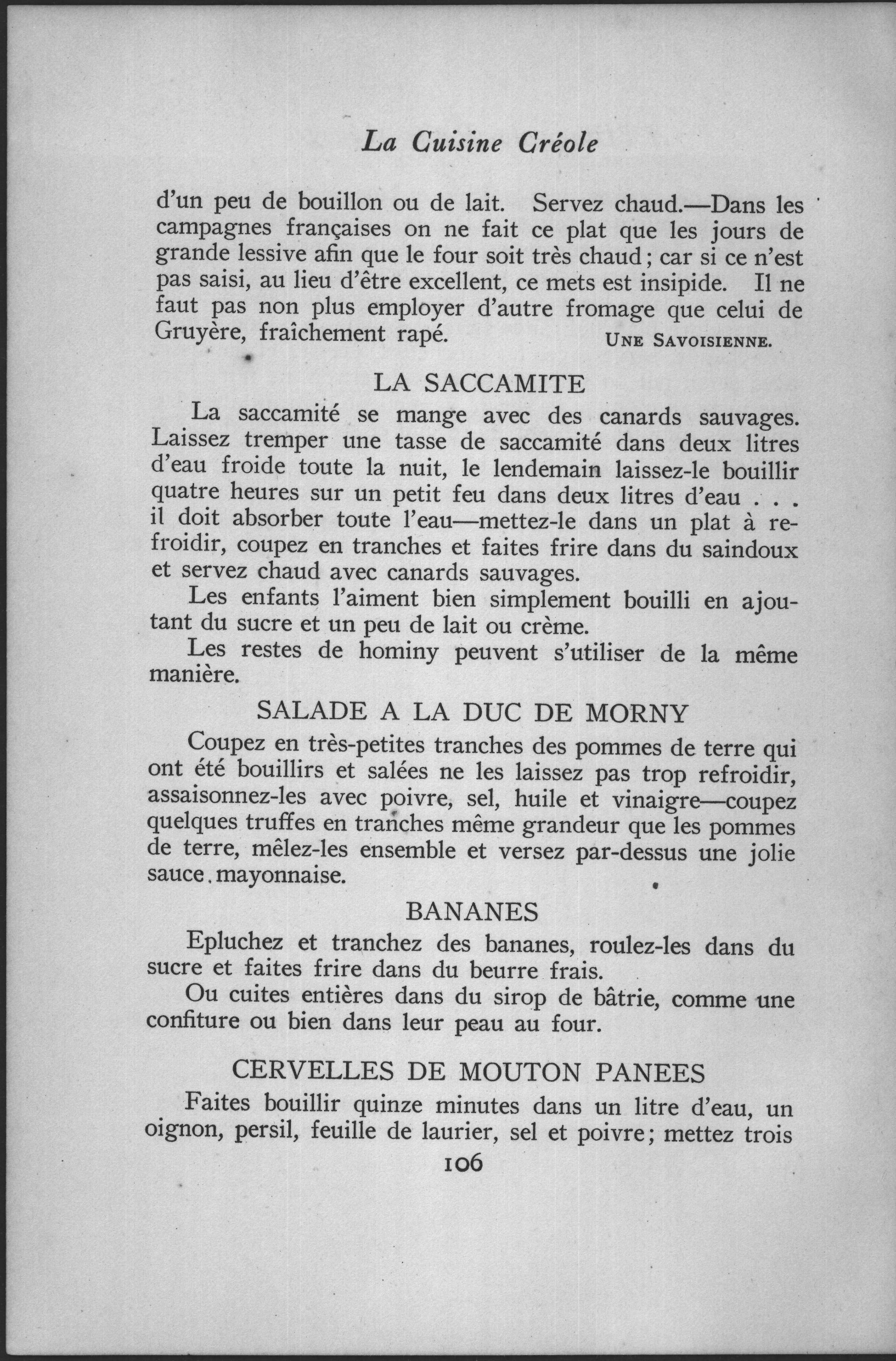
Bananes
Epluchez et tranchez des bananes, roulez-les dans du sucre et faites frire dans du beurre frais.
Ou cuites entières dans du sirop de bâtrie, comme une confiture ou bien dans leur peau au four.
Three quick ways with bananas — fried in butter and sugar, simmered in cane syrup, or baked in their skins — from a city that was America’s banana gateway.
- Fried in butter and sugarPeel, slice, roll in sugar and fry in fresh butter until caramelized — a simple stovetop dessert. Slightly under-ripe, firm bananas hold their shape best.
- “Sirop de bâtrie” decodedThis is almost certainly sirop de batterie — open-kettle cane syrup, named for the batterie, the last and hottest kettle in the old Louisiana sugar-house. Substitute cane syrup, or a mild molasses or dark corn syrup.
- Baked in the skinThe third method — whole bananas baked in their peels — is the easiest of all; the skin blackens while the fruit steams sweet and soft inside.
- Try plantainsFor a firmer, less sugary result closer to the tropical original, all three treatments work beautifully with plantains.
When this book appeared, New Orleans was on its way to becoming the banana capital of the United States. Steamships had begun carrying the fragile fruit up from Central America and the Caribbean, and by the late 19th century the city’s docks were handling bananas by the millions of bunches — a trade that would grow into empires like United Fruit. In sugar country, pairing that new tropical import with local cane syrup was the natural thing to do; these humble recipes catch a moment when the banana was turning from exotic novelty into everyday sweet.
From page 106 of the 1904 edition.
Original page from the book