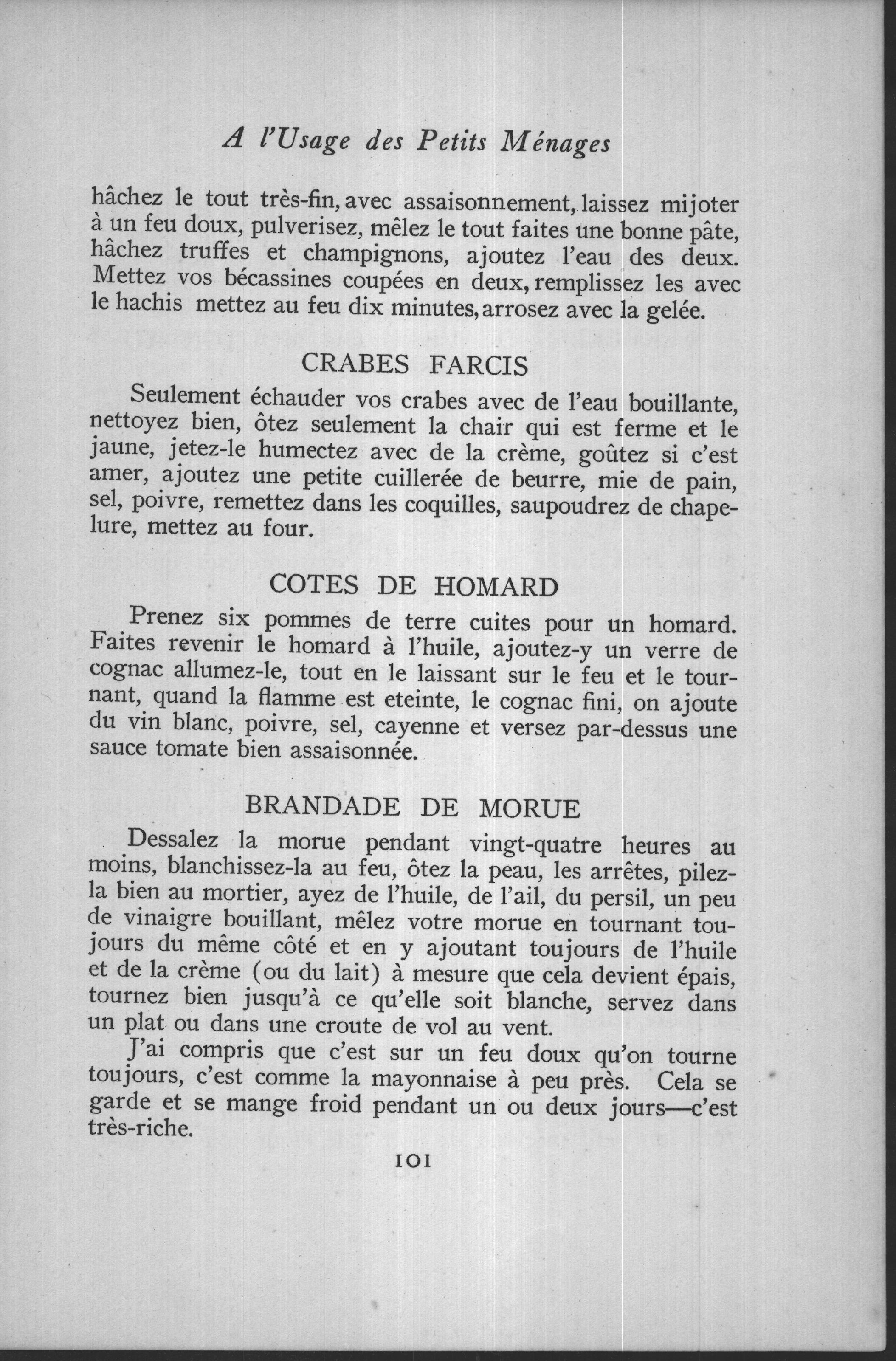
Brandade de Morue
Dessalez la morue pendant vingt-quatre heures au moins, blanchissez-la au feu, ôtez la peau, les arrêtes, pilez-la bien au mortier, ayez de l'huile, de l'ail, du persil, un peu de vinaigre bouillant, mêlez votre morue en tournant toujours du même côté et en y ajoutant toujours de l'huile et de la crème (ou du lait) à mesure que cela devient épais, tournez bien jusqu'à ce qu'elle soit blanche, servez dans un plat ou dans une croute de vol au vent.
J'ai compris que c'est sur un feu doux qu'on tourne toujours, c'est comme la mayonnaise à peu près. Cela se garde et se mange froid pendant un ou deux jours—c'est très-riche.
A Provençal classic tucked into a Creole book — salt cod pounded with oil and cream into a silky, garlicky paste, worked exactly like a mayonnaise.
- Salt cod needs a long soakMorue is cod cured stiff with salt. Soak it at least 24 hours in several changes of cold water, as the recipe says, to draw out the salt before cooking.
- It’s an emulsionThe author’s own note is the key: work over low heat, always stirring the same direction, dribbling in oil and cream so the flaked cod turns pale and thick without breaking.
- Mortar then, machine nowYou can pound it in a mortar as written, but a food processor makes quick work of it — pulse in the warm oil and cream gradually.
- “Vol-au-vent” = puff pastryServe it in a dish, or spoon it into a vol-au-vent, a hollow puff-pastry shell, for a more formal presentation.
- Keeps a day or two, coldAs promised, brandade holds in the refrigerator and is eaten cold. It’s very rich, so serve small portions with bread or toast.
Brandade de morue belongs to the south of France, above all to Nîmes, where cooks have pounded salt cod with olive oil, milk and garlic for centuries. Its presence in a New Orleans book is a reminder of how far the salt-cod trade reached: dried Atlantic cod was a global commodity that fed Catholic Europe through Lent and traveled wherever French kitchens went. The name comes from the Occitan brandar, to stir or shake — a nod to the vigorous, one-direction beating the emulsion demands.
From page 101 of the 1904 edition.
Original page from the book