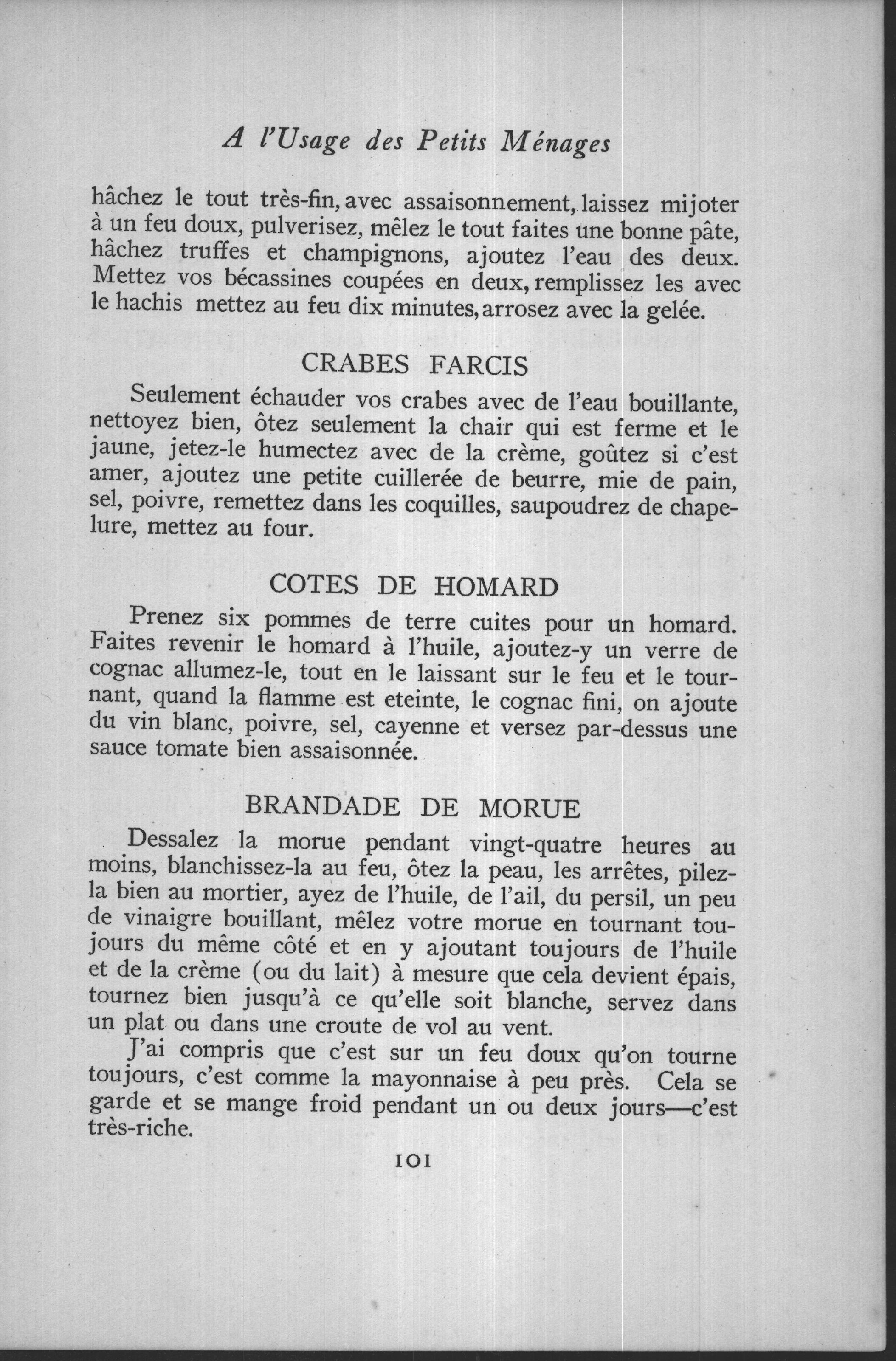
Cotes de Homard
Prenez six pommes de terre cuites pour un homard. Faites revenir le homard à l'huile, ajoutez-y un verre de cognac allumez-le, tout en le laissant sur le feu et le tournant, quand la flamme est eteinte, le cognac fini, on ajoute du vin blanc, poivre, sel, cayenne et versez par-dessus une sauce tomate bien assaisonnée.
Lobster flamed in cognac and finished with white wine and tomato — in all but name, the classic homard à l’américaine.
- “Un verre de cognac”Read this as a wineglassful, about ¼ cup (2 fl oz) of cognac or brandy.
- Flambé with careWarming the cognac and setting it alight burns off the raw alcohol and concentrates flavor. Pull the pan out from under the range hood, keep a lid handy to smother the flames, and let it burn out on its own.
- Six potatoes on the sideThe boiled potatoes aren’t cooked with the lobster — they’re the accompaniment, ready to soak up the sauce.
- A tomato sauce to finishUse this batch’s own sauce tomate or any well-seasoned tomato sauce; the cayenne and white wine make it unmistakably Creole.
- Start with cooked lobsterSauté the shelled meat in oil only to warm and color it. It’s already tender, so a long simmer just toughens it.
Lobster simmered with tomato, wine, cognac and cayenne is the signature of homard à l’américaine, a dish that surfaced in Parisian restaurants around the mid-19th century. Its odd name has been argued over ever since — some say it honored a chef’s American clientele, while others insist it should be à l’armoricaine, after Armorica, the old name for Brittany’s lobster coast. Either way, the tomato-and-pepper profile felt right at home in Creole New Orleans, where French technique met a local love of cayenne heat.
From page 101 of the 1904 edition.
Original page from the book