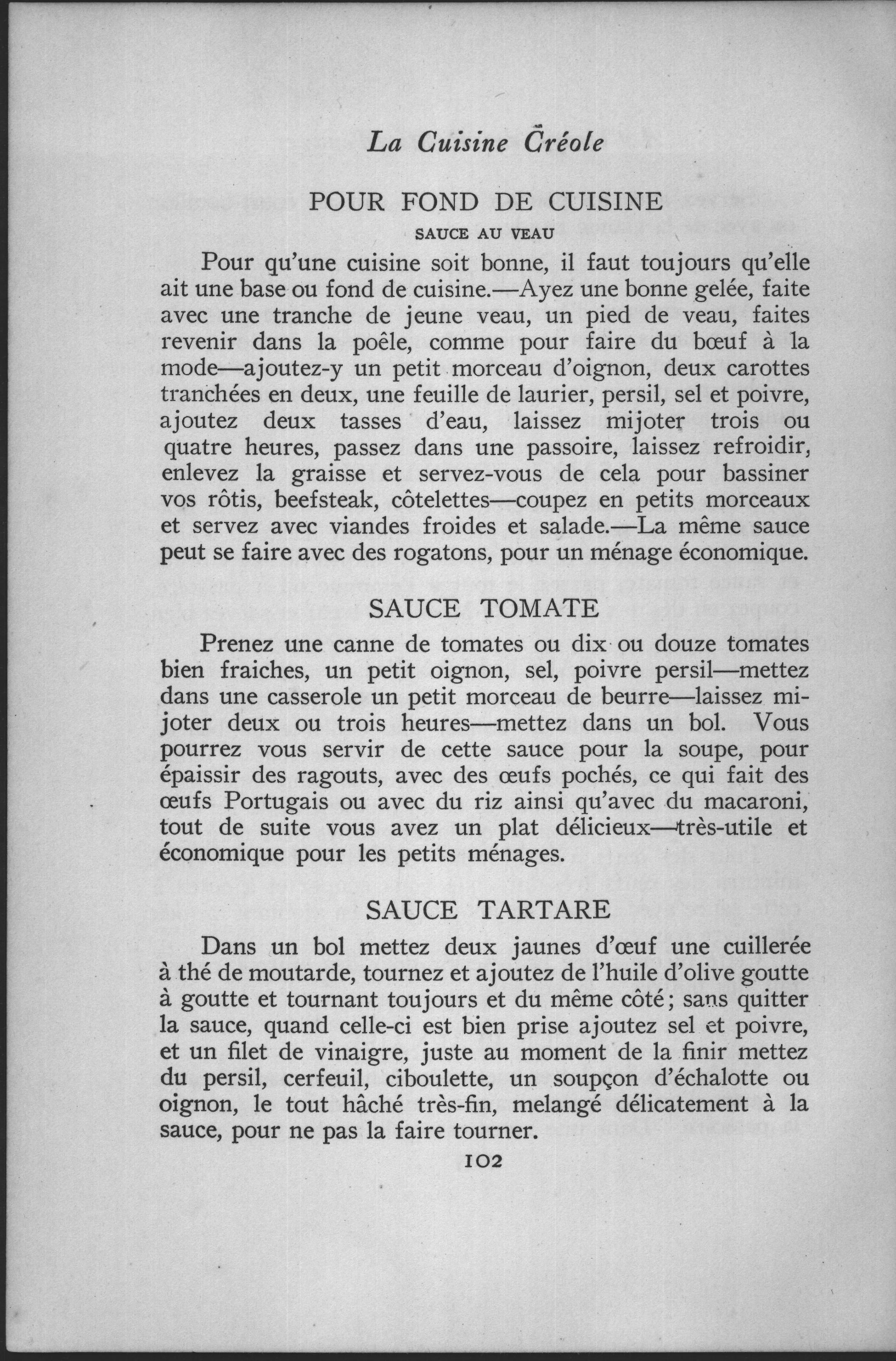
Pour Fond de Cuisine (Sauce au Veau)
Pour qu'une cuisine soit bonne, il faut toujours qu'elle ait une base ou fond de cuisine.—Ayez une bonne gelée, faite avec une tranche de jeune veau, un pied de veau, faites revenir dans la poêle, comme pour faire du bœuf à la mode—ajoutez-y un petit morceau d'oignon, deux carottes tranchées en deux, une feuille de laurier, persil, sel et poivre, ajoutez deux tasses d'eau, laissez mijoter trois ou quatre heures, passez dans une passoire, laissez refroidir, enlevez la graisse et servez-vous de cela pour bassiner vos rôtis, beefsteak, côtelettes—coupez en petits morceaux et servez avec viandes froides et salade.—La même sauce peut se faire avec des rogatons, pour un ménage économique.
Not a dish but the foundation beneath everything — a gelatin-rich veal stock the author rightly calls the “base” of good cooking.
- Why a calf’s foot?The pied de veau is pure collagen; simmered for hours it dissolves into gelatin, so the stock sets to a firm jelly (gelée) when cold. Modern cooks can supplement with a split veal knuckle or a little powdered gelatin.
- Brown firstSearing the veal and foot before simmering — as you would for boeuf à la mode, the classic braise the recipe cites — builds the deep color and flavor of the finished base.
- A long, slow simmerThree to four hours at a bare simmer, never a hard boil, keeps the stock clear. Strain, chill, and lift off the fat cap.
- “Rogatons” = odds and endsThe thrifty closing note says to make the same base from scraps and trimmings — a frugal household’s way to waste nothing.
- How to use itWarm, it bastes roasts, steaks and cutlets; cold and set, it’s cut into cubes of aspic to serve with cold meats and salad.
Every serious French kitchen of the era was built on a fond — a stock reduced until it carried flavor, body and shine. The idea was codified into the “mother sauce” system by Antonin Carême in the early 19th century and later by Auguste Escoffier, but the practical wisdom here predates both: a good cook keeps a pot of jellied veal stock on hand. Calf’s-foot jelly also had a second life as invalid food, spooned to the sick and the recovering all through the 1800s.
From page 102 of the 1904 edition.
Original page from the book