Calas
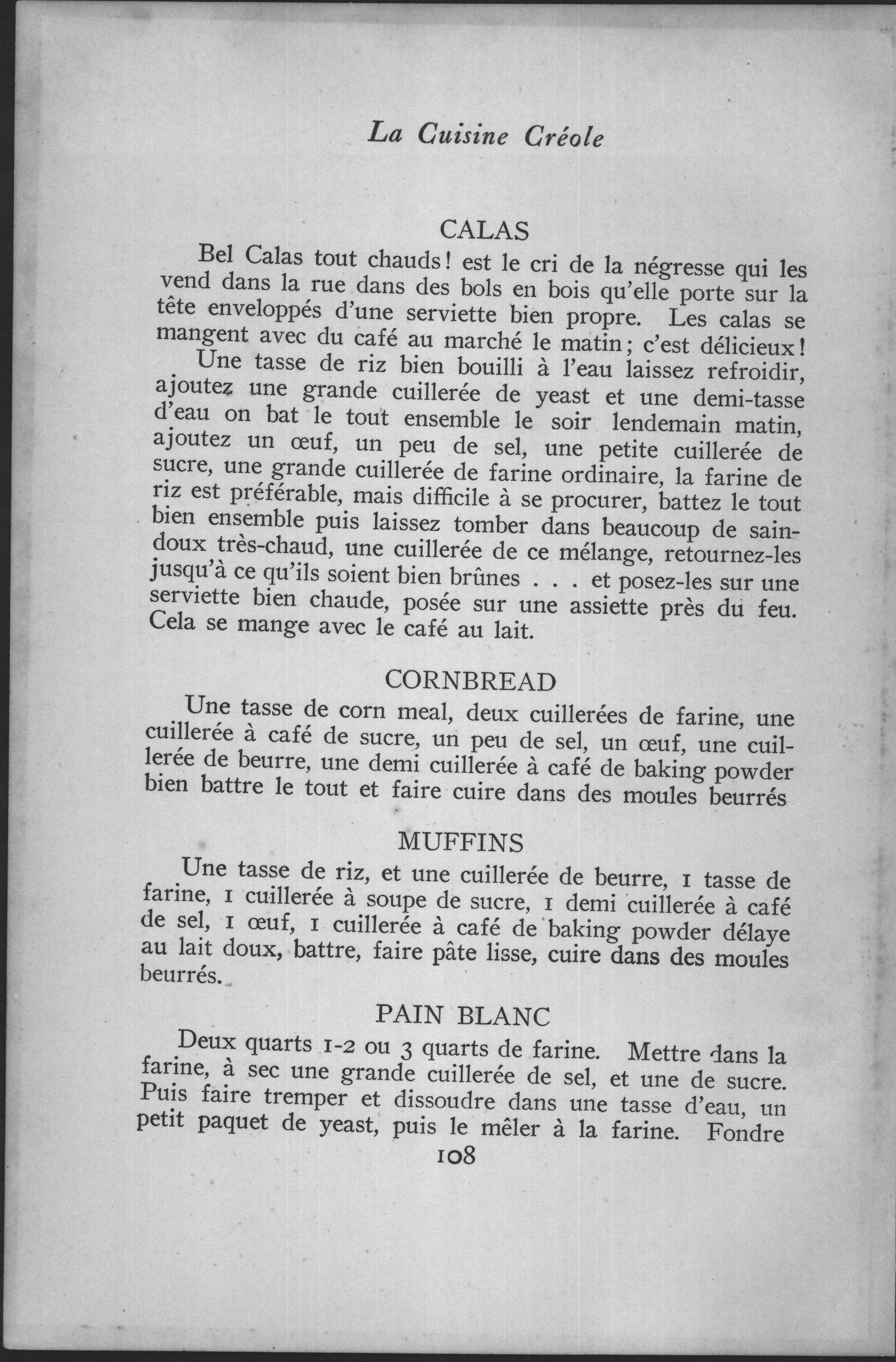
Bel Calas tout chauds! est le cri de la négresse qui les vend dans la rue dans des bols en bois qu'elle porte sur la tête enveloppés d'une serviette bien propre. Les calas se mangent avec du café au marché le matin; c'est délicieux!
Une tasse de riz bien bouilli à l'eau laissez refroidir, ajoutez une grande cuillerée de yeast et une demi-tasse d'eau on bat le tout ensemble le soir lendemain matin, ajoutez un œuf, un peu de sel, une petite cuillerée de sucre, une grande cuillerée de farine ordinaire, la farine de riz est préférable, mais difficile à se procurer, battez le tout bien ensemble puis laissez tomber dans beaucoup de saindoux très-chaud, une cuillerée de ce mélange, retournez-les jusqu'à ce qu'ils soient bien brûnes . . . et posez-les sur une serviette bien chaude, posée sur une assiette près du feu. Cela se mange avec le café au lait.
The book’s French pages give calas as the New Orleans street vendors knew them — sweet rice fritters, risen overnight and fried to order for the morning coffee.
- Overnight rice spongeThe batter is really a wild-yeast starter: mash about 1 cup cooked, cooled rice with a packet of yeast and ½ cup warm water and leave it bubbling overnight, like a rice sourdough.
- “Yeast” then and nowThe original’s yeast was a homemade barm; one modern envelope of active dry yeast (2¼ tsp) does the same job.
- Rice flour is the prizeThe book calls rice flour preferable but hard to find; today it’s on any shelf and gives the crispest calas — otherwise a spoonful of plain flour.
- Fry very hotSaindoux très-chaud is very hot lard — fry at 350–360°F, dropping the batter by the spoonful and turning until deep golden. Neutral oil works if you’d rather skip lard.
- Finish and serveDrain on paper (the old warm napkin), dust with powdered sugar, and eat hot with café au lait.
Calas are one of New Orleans’ most storied breakfast foods, cried through the French Quarter by Black women — many of them free women of color — who carried covered bowls on their heads: Belles calas, tout chauds! The fritters are widely traced to West African rice cookery brought by enslaved cooks, and the name is often linked to West African words for rice. Sold for pennies with coffee at the old French Market, calas are even said by tradition to have helped some enslaved women earn money toward their freedom. They faded for a century and are treasured today as a revival dish.
From page 108 of the 1904 edition.
Original page from the book