Cornbread
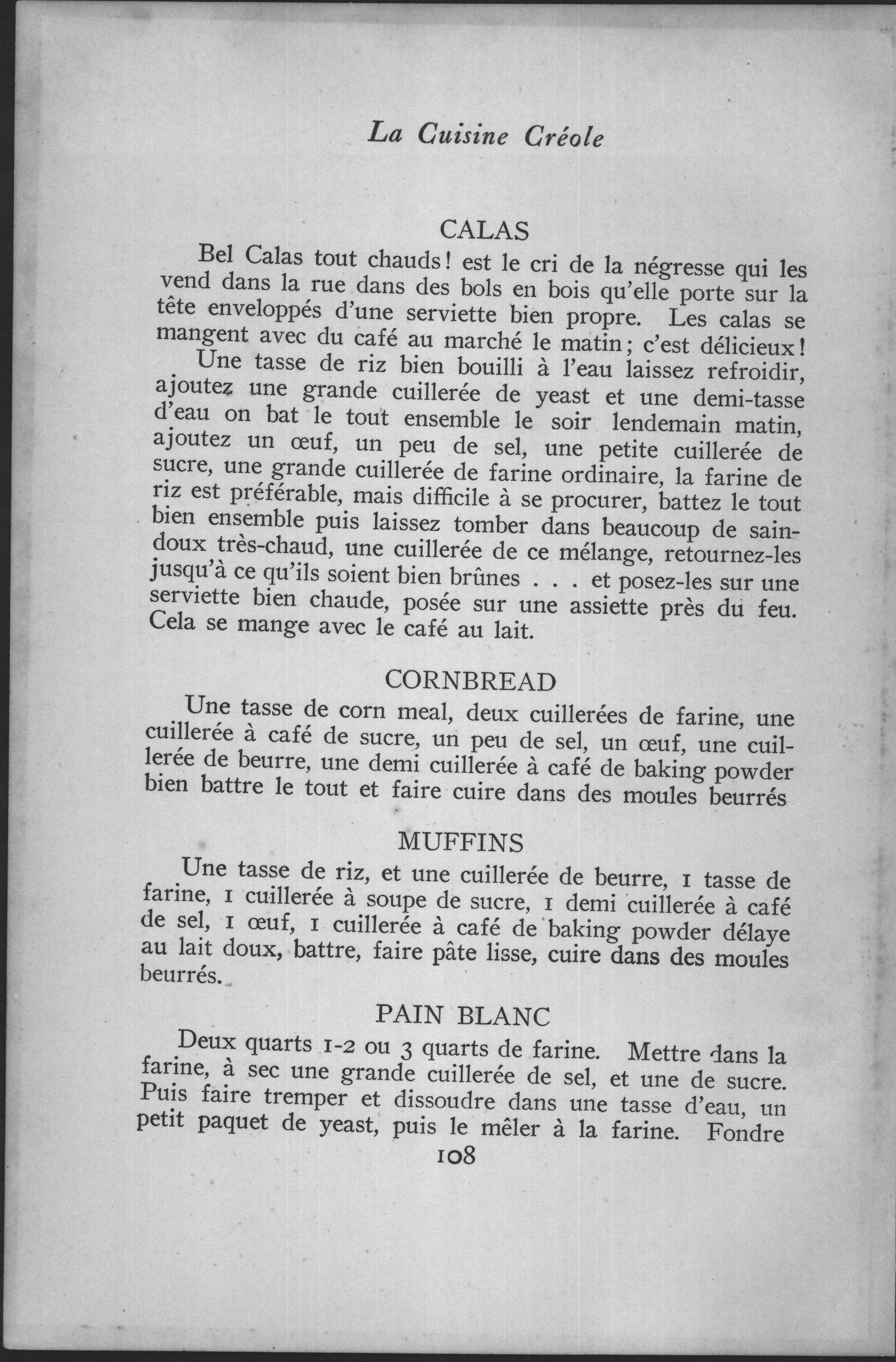
Une tasse de corn meal, deux cuillerées de farine, une cuillerée à café de sucre, un peu de sel, un œuf, une cuillerée de beurre, une demi cuillerée à café de baking powder bien battre le tout et faire cuire dans des moules beurrés.
A small, tender skillet-or-muffin cornbread from the book’s French section — quick to mix and leaning toward the sweeter, cakier Creole style.
- The measures1 cup cornmeal, 2 Tbsp flour, 1 tsp sugar, a pinch of salt, 1 egg, 1 Tbsp butter, and ½ tsp baking powder.
- Add the missing liquidAs written there’s almost no liquid; stir in about ½–¾ cup milk to reach a pourable batter. The French text assumes you’ll judge by feel.
- “Corn meal”Use fine or medium yellow cornmeal; nothing archaic here, just the everyday grain.
- Real oven heatBake the buttered molds at a moderate-to-hot 400°F for 18–22 minutes, until set and golden.
- Butter the pan hotMoules beurrés means any buttered muffin tin or a small cast-iron skillet; heat the greased pan first for a crisp crust.
Cornmeal bread is the great meeting point of Native American and European kitchens. Indigenous peoples of the Americas had ground and cooked corn for centuries before contact, and colonists adopted the grain out of necessity when wheat ran short. In Louisiana, French and Creole cooks folded cornmeal into their own baking, softening the plainer Anglo-American corn pone with egg, butter, and a little sugar. The result sits closer to a cake than the crumbly cornbreads further north — a small marker of how one grain took on a distinctly local accent.
From page 108 of the 1904 edition.
Original page from the book