Crabes Farcis
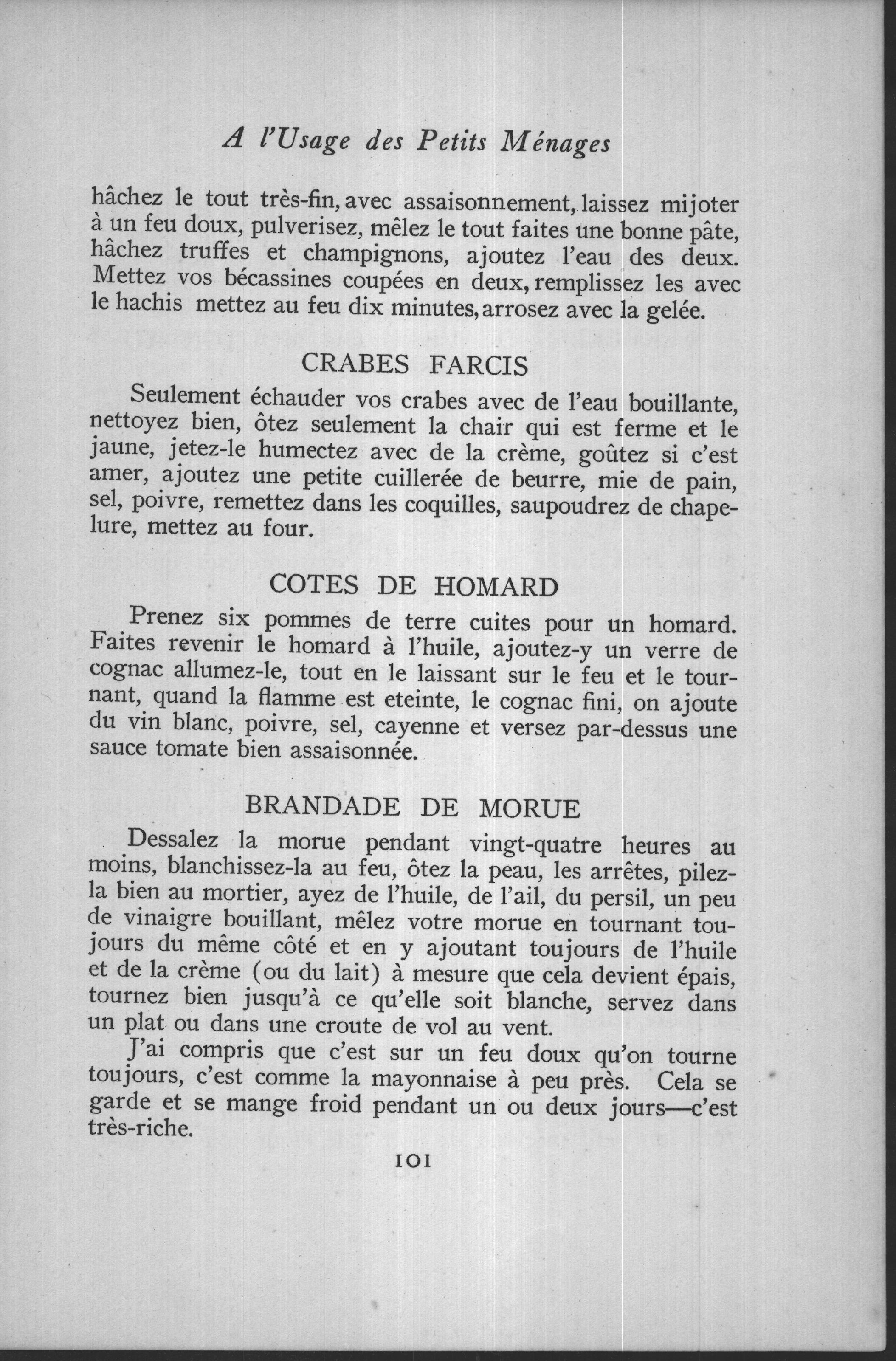
Seulement échauder vos crabes avec de l'eau bouillante, nettoyez bien, ôtez seulement la chair qui est ferme et le jaune, jetez-le humectez avec de la crème, goûtez si c'est amer, ajoutez une petite cuillerée de beurre, mie de pain, sel, poivre, remettez dans les coquilles, saupoudrez de chapelure, mettez au four.
This is the book’s French-language version, a spare little recipe that lets sweet crabmeat and its own rich fat do all the work.
- Two kinds of crumbThe filling is bound with mie de pain (soft crumb from inside a loaf), then topped with chapelure (dry, toasted breadcrumbs) for a crisp crust — two textures from the same bread.
- “Le jaune” is the crab fatThe yellow you’re told to save is the soft tomalley or ‘mustard’ inside the shell — rich and full of flavor, which is why you taste it. If it reads bitter, use less.
- Add cream by feelNo quantity is given: dribble in cream a spoonful at a time until the picked meat just holds together, then enrich with a small spoon of butter. You want a moist stuffing, not a soup.
- A moderate ovenBake at a moderate 350°F (175°C) for about 15–20 minutes, until the tops are golden and set — long enough to crisp the crumbs, since the crab is already cooked.
- Shells or ramekinsScrub the top shells to refill them as intended, or use small ovenproof ramekins if you’d rather skip the cleaning.
Stuffed crab is a hallmark of the Louisiana Gulf coast, built on the blue crab (Callinectes sapidus) that thrives in the brackish marshes around New Orleans. Refilling the cleaned shell as a serving vessel is an old Creole and coastal habit — thrifty, handsome at the table, and a way to stretch a little sweet meat with bread and seasoning. Nearly identical stuffed-crab dishes turn up across the French Atlantic world, from Brittany to the Antilles, a reminder of the shared kitchen vocabulary that Creole New Orleans inherited from France and the Caribbean.
From page 101 of the 1904 edition.
Original page from the book