Creme à la Glace à la Celestine
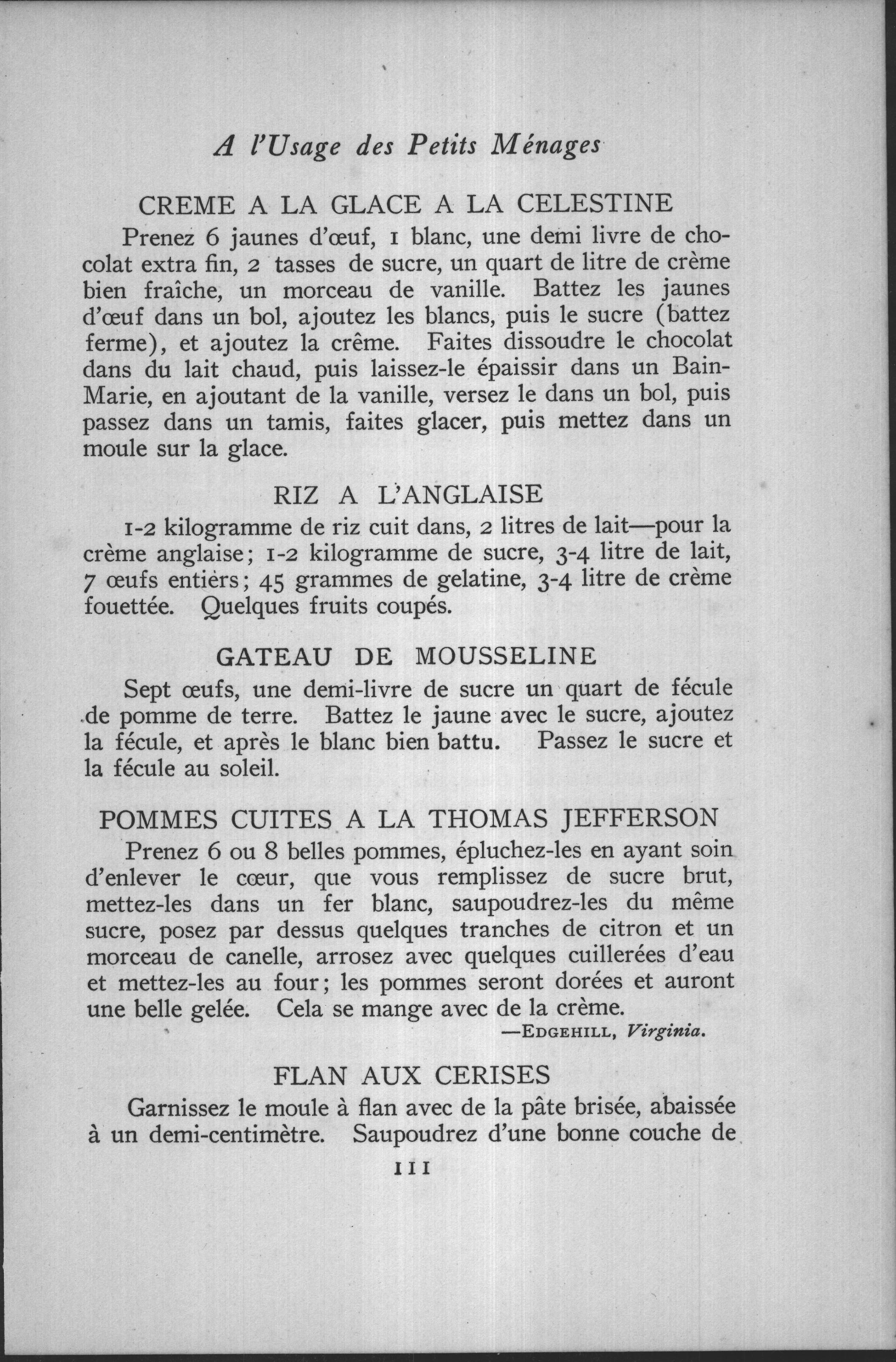
Prenez 6 jaunes d'œuf, 1 blanc, une demi livre de chocolat extra fin, 2 tasses de sucre, un quart de litre de crème bien fraîche, un morceau de vanille. Battez les jaunes d'œuf dans un bol, ajoutez les blancs, puis le sucre (battez ferme), et ajoutez la crême. Faites dissoudre le chocolat dans du lait chaud, puis laissez-le épaissir dans un Bain-Marie, en ajoutant de la vanille, versez le dans un bol, puis passez dans un tamis, faites glacer, puis mettez dans un moule sur la glace.
A rich chocolate custard ice cream — Célestine’s version, cooked over a water bath and frozen the old way in a mold packed with ice.
- The measures6 yolks plus 1 white, ½ lb fine chocolate, 2 cups sugar, about 1 cup (¼ liter) cream, and real vanilla.
- It’s a cooked custardMelting the chocolate into hot milk and thickening it in a bain-marie gently cooks the eggs — good, since it avoids raw yolks. Cook until it coats a spoon (about 170–175°F).
- Strain itPassing the custard through a sieve, as directed, catches any bits and gives a silky freeze.
- “Faites glacer” = freezeWith an ice-cream maker, churn the cooled, strained custard; without one, freeze in a mold and stir every 30 minutes to break up crystals.
- Real vanillaUn morceau de vanille is a piece of vanilla bean — split it and steep it in the hot milk, or use a good teaspoon of extract.
New Orleans had a genuine passion for ice cream through the 19th century, fed by a brisk trade in natural ice shipped south from northern lakes and packed in sawdust-insulated houses. Before mechanical refrigeration, freezing a custard meant a mold buried in a bucket of ice and salt — the salt drops the ice below freezing — and a good deal of patient stirring or cranking. A chocolate cream like this, built on egg yolks and real vanilla, shows the Creole kitchen’s French-rooted love of the polished, restaurant-style dessert.
From page 111 of the 1904 edition.
Original page from the book