Riz à l'Anglaise
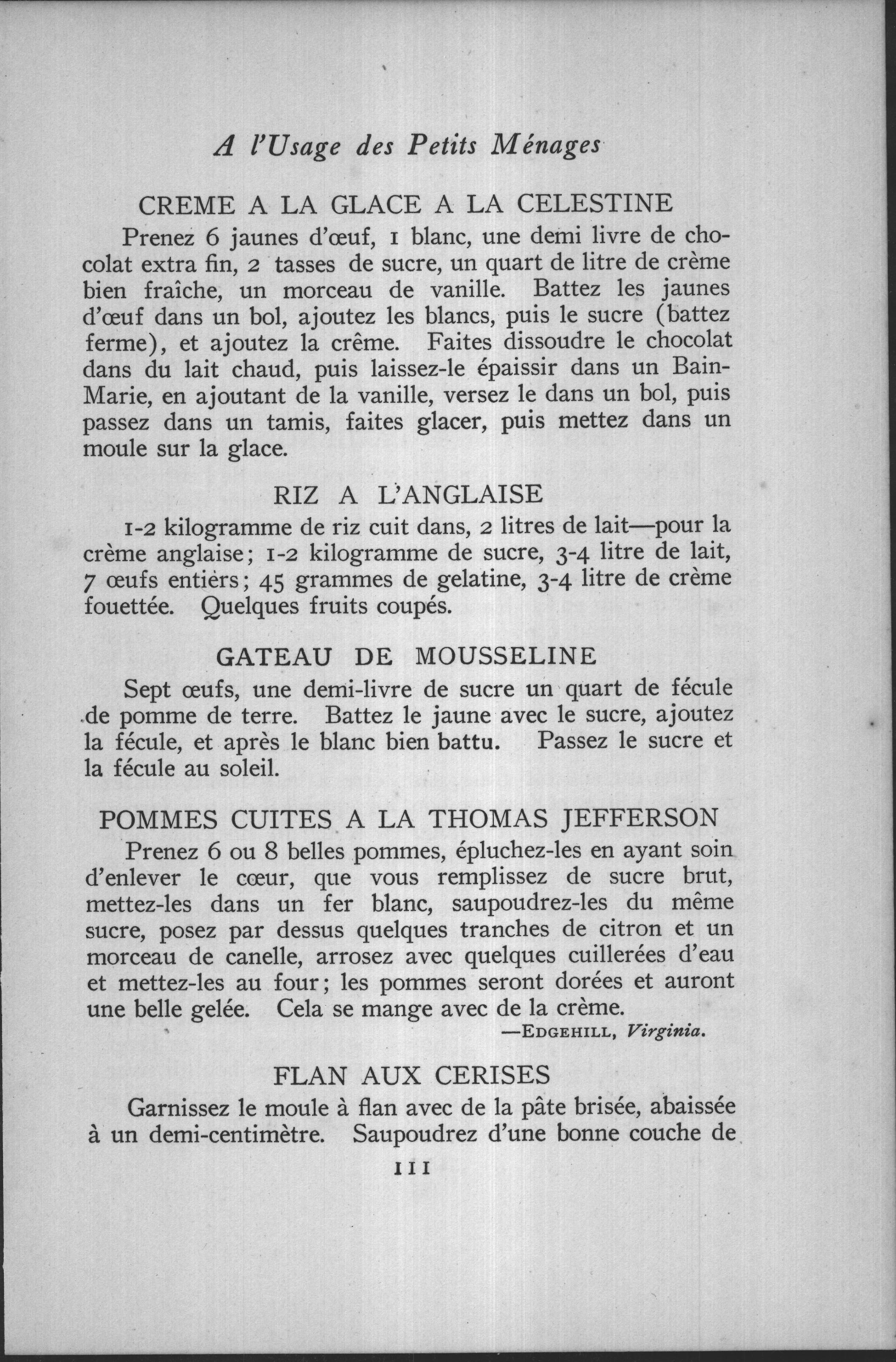
1-2 kilogramme de riz cuit dans, 2 litres de lait—pour la crème anglaise; 1-2 kilogramme de sucre, 3-4 litre de lait, 7 œufs entiers; 45 grammes de gelatine, 3-4 litre de crème fouettée. Quelques fruits coupés.
A grand molded rice dessert in the riz à l’impératrice family — rice simmered in milk, bound with custard and gelatin, folded with whipped cream and fruit; the book gives it in metric shorthand.
- Convert the metrics½ kg rice ≈ 1 lb (about 2½ cups raw); 2 liters milk ≈ 2 quarts; ½ kg sugar ≈ 1 lb; ¾ liter milk ≈ 3 cups; ¾ liter cream ≈ 3 cups.
- The gelatin45 g is about 1½ oz — roughly 6 modern ¼-oz envelopes; bloom in cold water before dissolving into the warm custard.
- Two componentsFirst simmer the rice soft in the 2 quarts milk; separately make a crème anglaise from the 3 cups milk, the sugar, and 7 whole eggs, then dissolve the gelatin into it.
- Fold and moldCombine rice and custard, cool until it just begins to set, fold in the whipped cream and cut fruit, and pour into a wetted mold; chill until firm.
- It’s a party moldThese quantities make a very large dessert — halve everything for a household-sized one.
Riz à l’anglaise and its dressier sibling riz à l’impératrice belong to the age of the molded, chilled dessert, when a cook’s gelatin mold was a centerpiece meant to impress. The technique is thoroughly French: sweetened rice enriched with custard and cream, set with gelatin, and turned out in a decorative shape — even as the à l’anglaise tag nods to the English fondness for milky rice puddings. Its appearance here, written in metric French, marks how directly New Orleans cooks drew on the professional French kitchen.
From page 111 of the 1904 edition.
Original page from the book