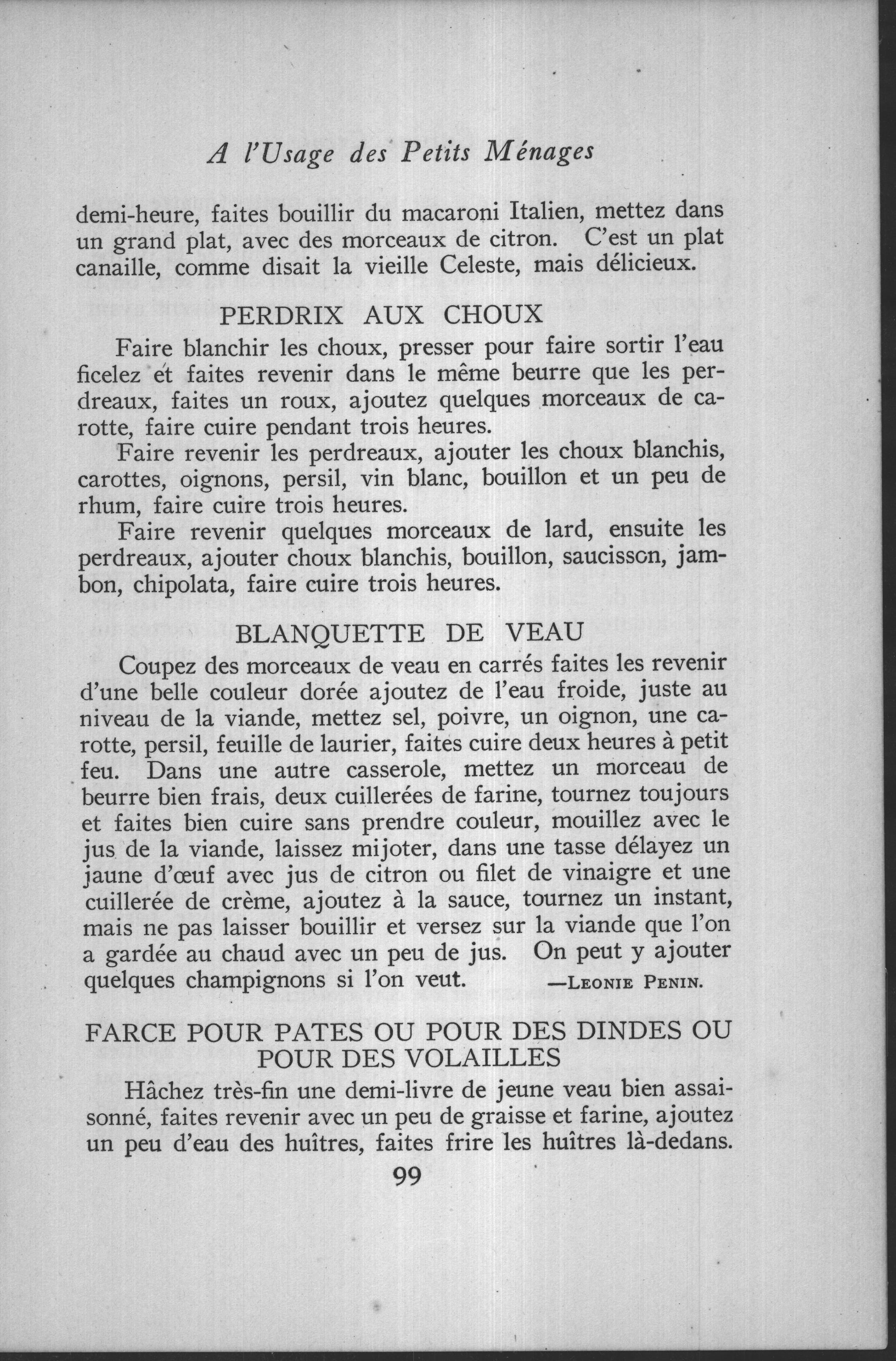
Farce pour Pates ou pour des Dindes ou pour des Volailles
Hâchez très-fin une demi-livre de jeune veau bien assaisonné, faites revenir avec un peu de graisse et farine, ajoutez un peu d'eau des huîtres, faites frire les huîtres là-dedans.
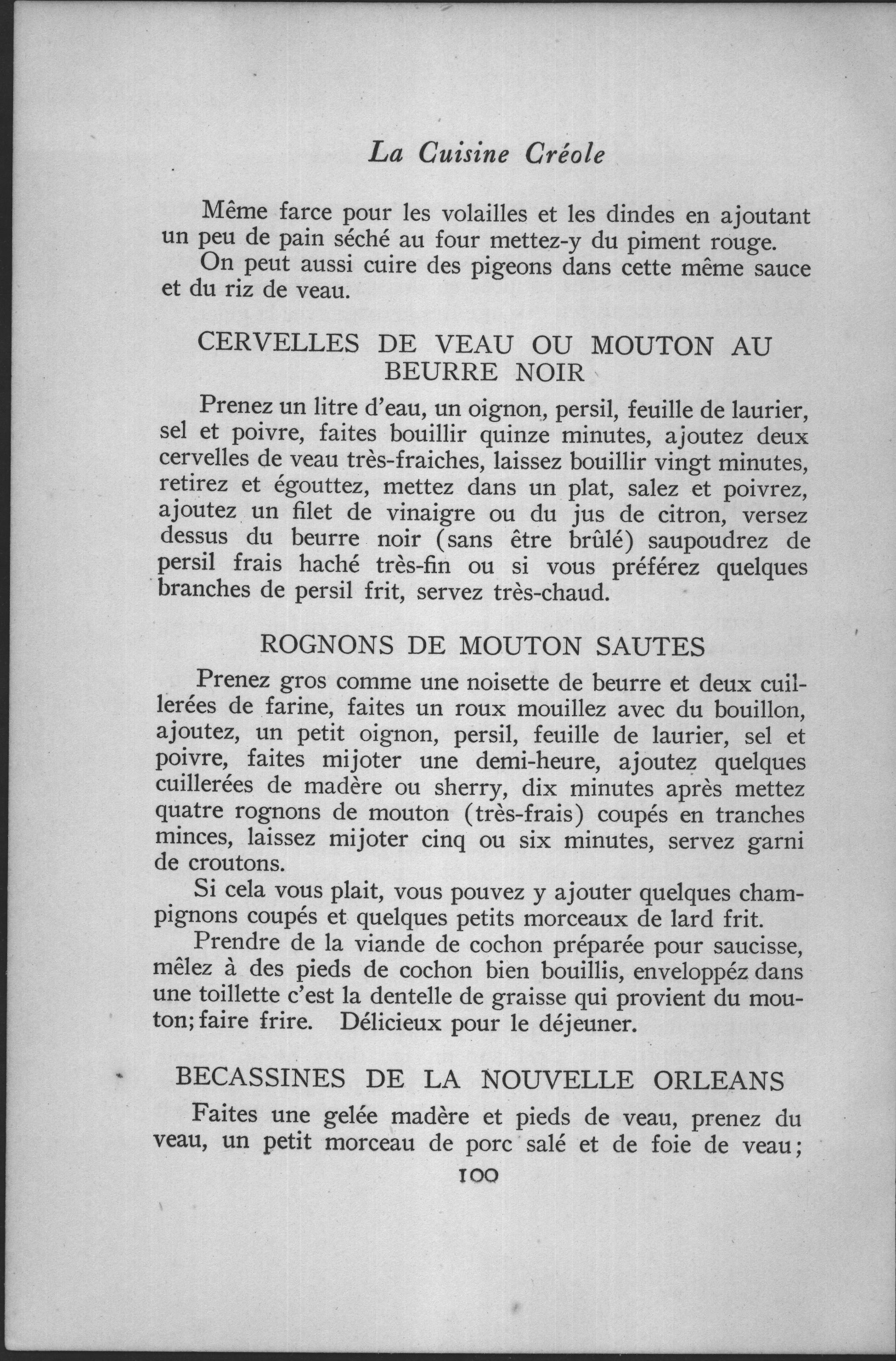
Même farce pour les volailles et les dindes en ajoutant un peu de pain séché au four mettez-y du piment rouge.
On peut aussi cuire des pigeons dans cette même sauce et du riz de veau.
An all-purpose Creole forcemeat — minced veal enriched with oysters — for pies, turkey, or any bird you care to stuff.
- Farce = forcemeat/stuffingA seasoned ground-meat mixture used to fill pastries and poultry; here, finely chopped young veal is the base.
- MeasuresUne demi-livre of veal is about ½ lb; brown it with a little fat and flour before the oysters go in.
- Oysters and their liquorAdd a little oyster liquor (l’eau des huîtres), then fry the oysters right in the mixture — their brine seasons the whole farce.
- For turkey or fowlWhen stuffing poultry, work in a little oven-dried bread to bind it and a touch of red pepper for warmth.
- Stuff safelyFill birds loosely and just before roasting, and cook until the stuffing itself reaches a safe temperature — an oyster stuffing should not sit warm and packed for long.
Oysters were once so plentiful and cheap around New Orleans that they turned up everywhere — in soups, dressings, patties, and forcemeats like this one — rather than being the luxury they are today. The Gulf and its brackish lakes yielded them by the barrel, and Creole cooks folded them into holiday stuffings as a matter of course, a habit that survives in the oyster dressing still served at Louisiana tables at Thanksgiving and Christmas. Using the oyster liquor as seasoning, as here, wastes nothing and doubles the briny flavor.
From page 99 of the 1904 edition.
Original pages from the book