Gateau de Mousseline
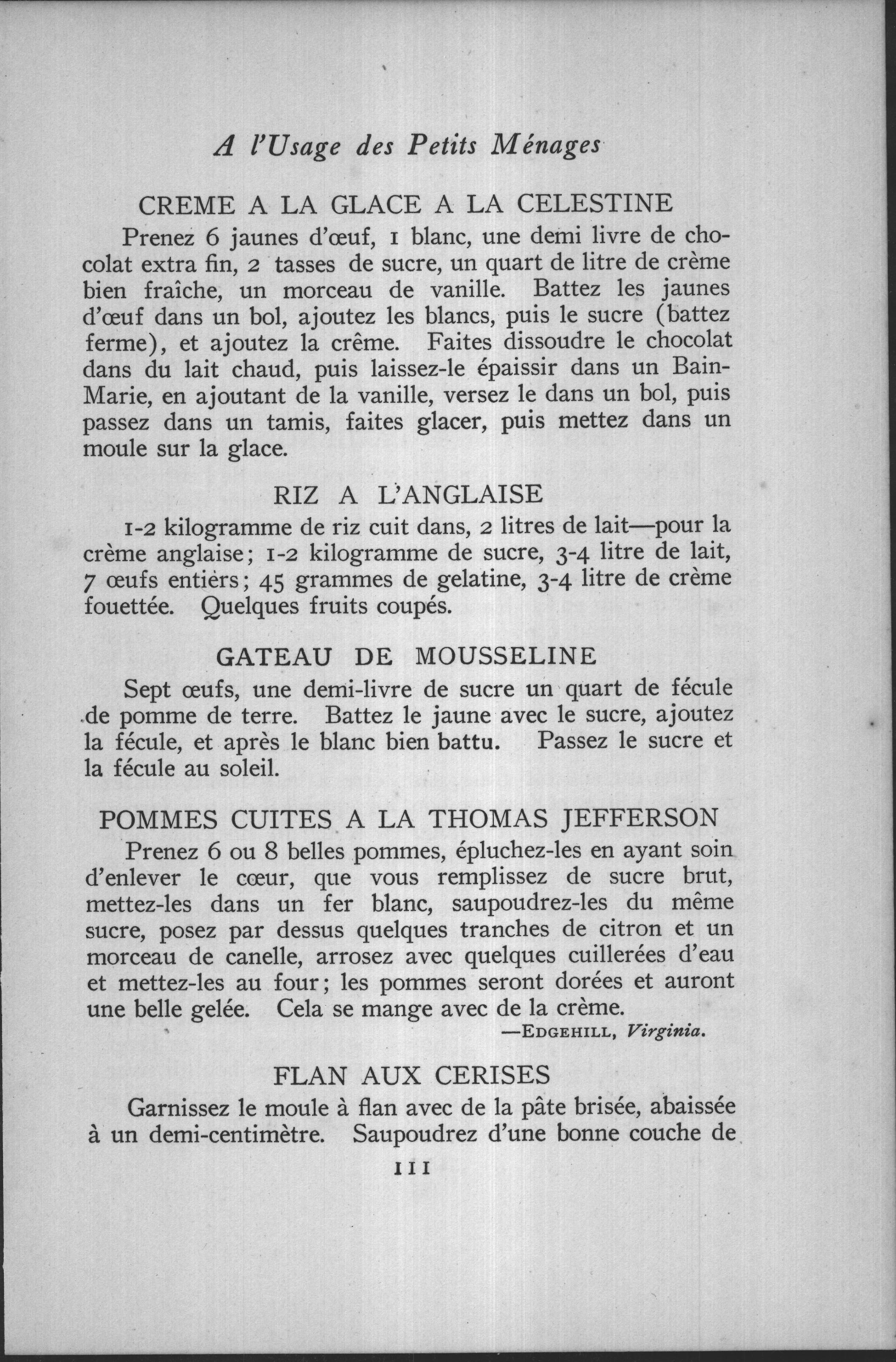
Sept œufs, une demi-livre de sucre un quart de fécule de pomme de terre. Battez le jaune avec le sucre, ajoutez la fécule, et après le blanc bien battu. Passez le sucre et la fécule au soleil.
A featherlight sponge leavened only with beaten eggs and lightened with potato starch instead of flour — the mousseline (muslin) name promises its delicacy.
- The measures7 eggs, ½ lb sugar (about 1 cup), and ¼ lb potato starch (about ¾ cup).
- “Fécule de pomme de terre”That’s potato starch — a fine, gluten-free starch, not potato flour — giving a tender, melting crumb; cornstarch is the nearest substitute.
- The methodBeat the yolks with the sugar until pale, fold in the starch, then fold in the stiffly beaten whites last; all the lift comes from that air.
- “Passez au soleil”Drying the sugar and starch in the sun simply kept them from clumping; today, just sift them together.
- Real oven heatBake in a buttered, lightly floured pan at a moderate 325–350°F so the delicate sponge sets without browning hard.
A sponge built on potato starch reflects a real 19th-century enthusiasm for fine starches in pastry. Potato starch and arrowroot were prized for producing cakes lighter and more tender than wheat flour alone could manage, and confectioners reached for them in their most refined sponges and biscuits. The word mousseline — muslin, the sheer cotton cloth — became French kitchen shorthand for anything especially airy and delicate, from this cake to the butter-enriched sauce. It signals, from the title alone, a dessert meant to feel weightless on the tea table.
From page 111 of the 1904 edition.
Original page from the book