Pommes Cuites à la Thomas Jefferson
"Edgehill," Virginia
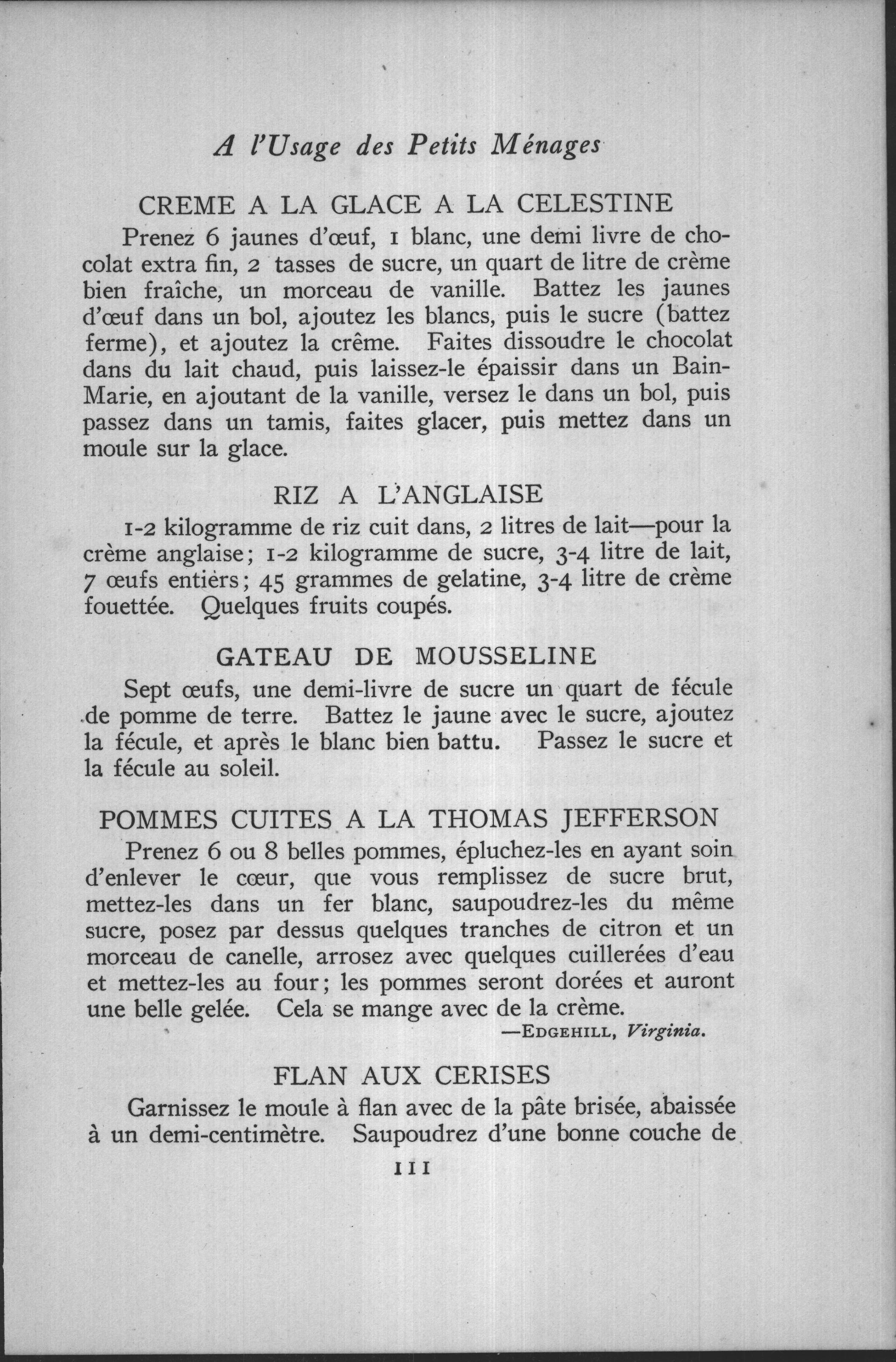
Prenez 6 ou 8 belles pommes, épluchez-les en ayant soin d'enlever le cœur, que vous remplissez de sucre brut, mettez-les dans un fer blanc, saupoudrez-les du même sucre, posez par dessus quelques tranches de citron et un morceau de canelle, arrosez avec quelques cuillerées d'eau et mettez-les au four; les pommes seront dorées et auront une belle gelée. Cela se mange avec de la crème.
Simple baked apples scented with lemon and cinnamon, contributed from “Edgehill” in Virginia and dressed up with Thomas Jefferson’s name.
- The measures6–8 firm apples, cored; fill and dust with brown sugar; lay a few lemon slices and a piece of cinnamon on top; add a few spoonfuls of water to the pan.
- Choose baking applesFirm, tart varieties (Rome, Granny Smith, and the like) hold their shape and give the belle gelée — the syrupy jelly formed from sugar, apple juice, and water.
- “Sucre brut”This is raw or brown sugar; any brown or turbinado sugar works and deepens the syrup.
- Real oven heatA moderate 350°F for 40–50 minutes, basting once or twice, until golden and tender.
- Serve with creamSpoon the pan jelly over the apples and pass cold cream, as the recipe directs.
Thomas Jefferson was early America’s most famous Francophile at the table — he kept a French-trained kitchen, championed European produce, and helped popularize everything from ice cream to fine vegetables in the young republic. “Edgehill” was the Randolph family plantation neighboring his Monticello, the seat of his daughter Martha and her family. Attaching Jefferson’s name to a homey baked-apple dish is almost certainly an affectionate association rather than a documented recipe of his; still, it suits a man remembered for bringing French polish to plain American ingredients — which is exactly what this dish does.
From page 111 of the 1904 edition.
Original page from the book