Gombo de Crabes
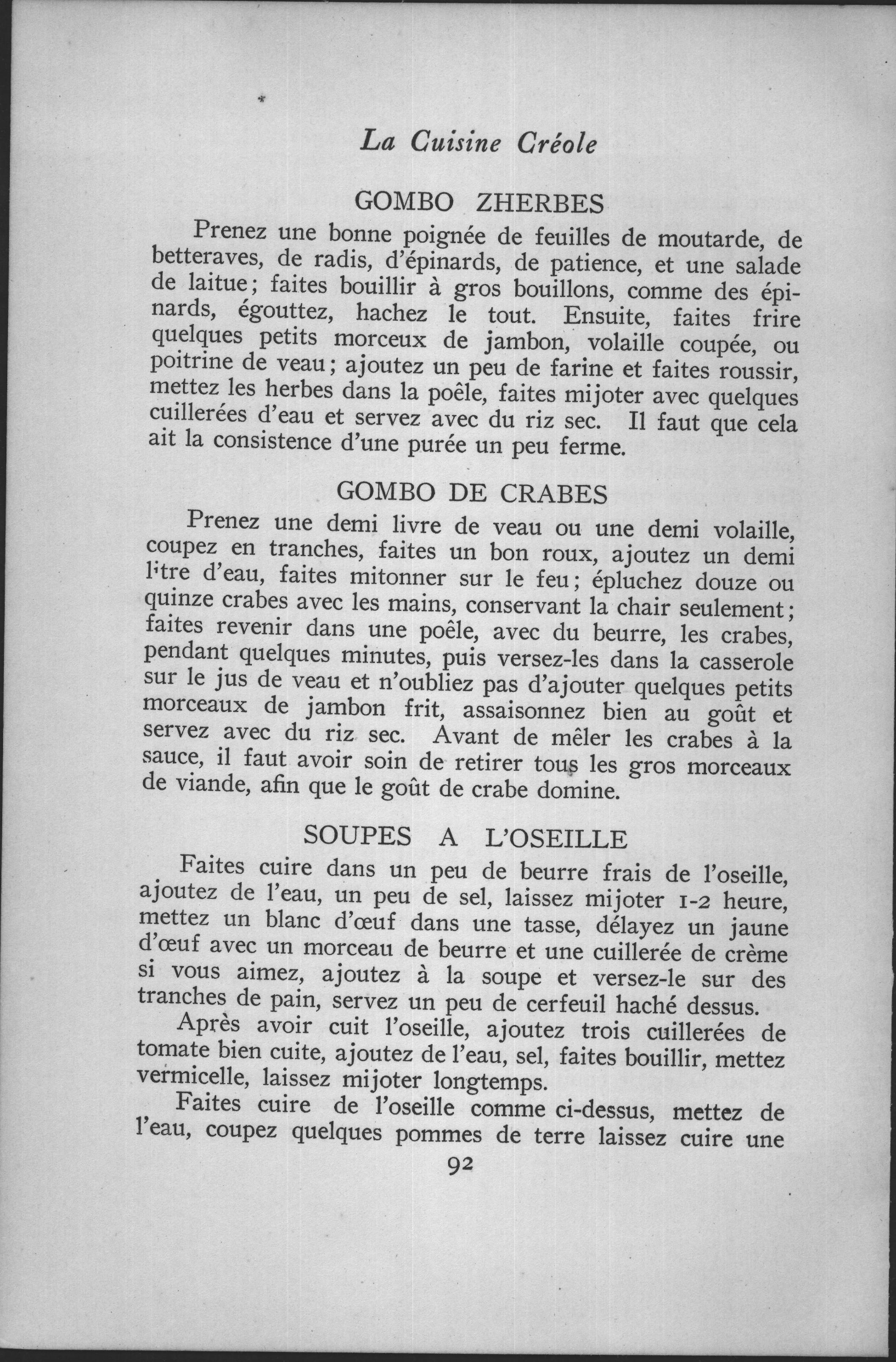
Prenez une demi livre de veau ou une demi volaille, coupez en tranches, faites un bon roux, ajoutez un demi litre d'eau, faites mitonner sur le feu; épluchez douze ou quinze crabes avec les mains, conservant la chair seulement; faites revenir dans une poêle, avec du beurre, les crabes, pendant quelques minutes, puis versez-les dans la casserole sur le jus de veau et n'oubliez pas d'ajouter quelques petits morceaux de jambon frit, assaisonnez bien au goût et servez avec du riz sec. Avant de mêler les crabes à la sauce, il faut avoir soin de retirer tous les gros morceaux de viande, afin que le goût de crabe domine.
A cleaner, brighter gumbo built on picked crabmeat, where the crab is meant to be the dominant flavor.
- Veal or chicken makes the stockBrown ½ lb (une demi livre) veal or half a chicken in the roux, then add un demi litre — about 2 cups — of water and simmer to a rich broth.
- Pick the crabs by hand12–15 crabs (Gulf blue crabs, ideally), cleaned and picked for meat only; a pound of good lump crabmeat is the modern shortcut.
- Butter the crab firstWarm the crabmeat in butter for just a few minutes before it goes into the pot, to set its flavor.
- Pull the big meat outThe recipe insists you remove the large pieces of veal or chicken before adding the crab, “so the taste of crab dominates” — the meat is there for the broth, not the plate.
- Ham for depthA few bits of fried ham round out the seasoning; salt and pepper to taste.
- Serve over dry ricePlain steamed rice alongside.
The blue crab (Callinectes sapidus — the name means “beautiful savory swimmer”) is the workhorse of the Louisiana marsh, and crab gumbo is one of the glories of the Gulf’s seafood cooking. Because the meat is delicate, this recipe treats the veal or chicken as a background broth to be lifted out, letting the sweet crab take the lead. Seafood gumbos like this one also had a place on the Creole Lenten table, when the Catholic calendar sent cooks to the water rather than the barnyard for the makings of the pot.
From page 92 of the 1904 edition.
Original page from the book