Gombo Zherbes
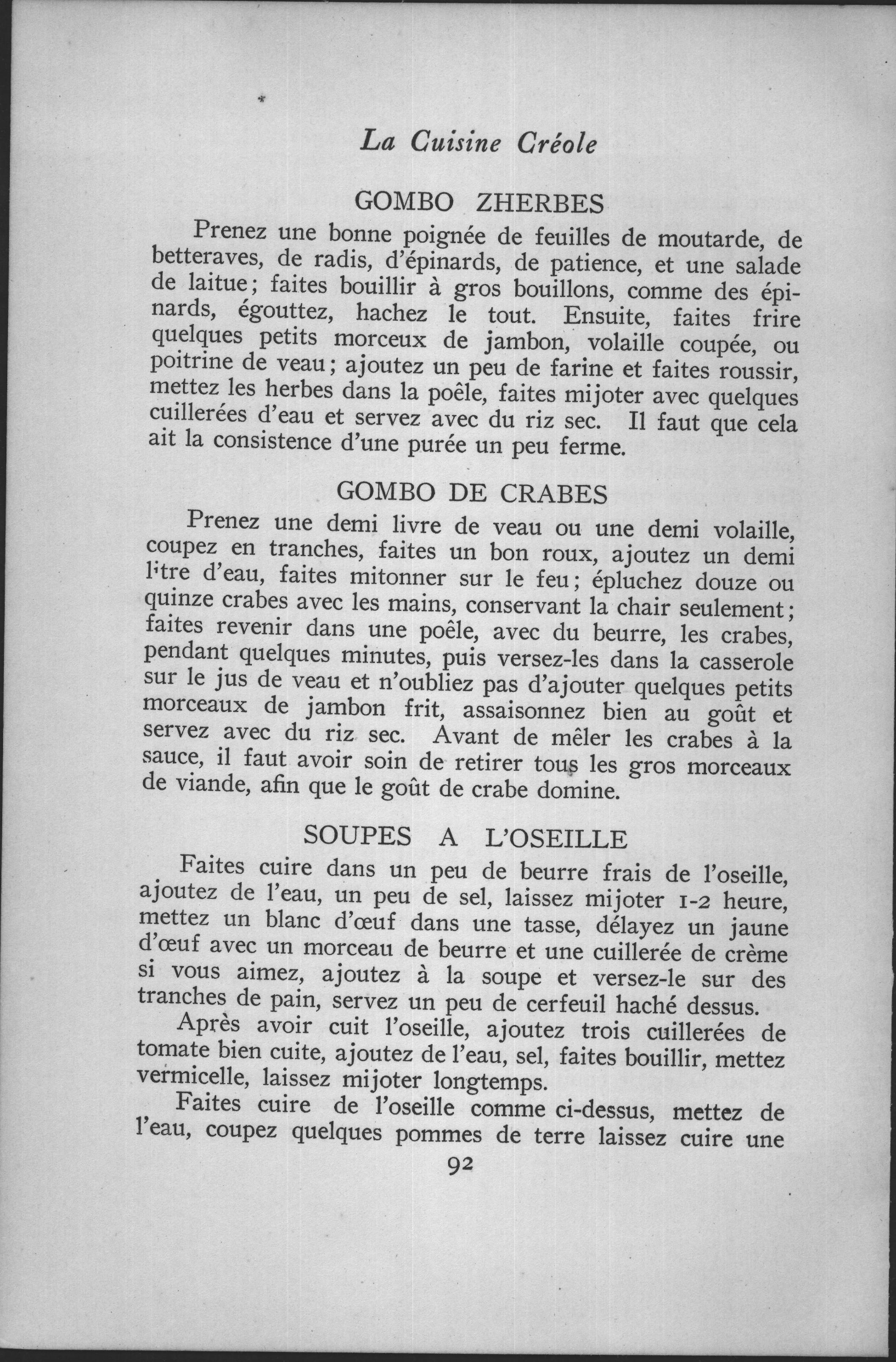
Prenez une bonne poignée de feuilles de moutarde, de betteraves, de radis, d'épinards, de patience, et une salade de laitue; faites bouillir à gros bouillons, comme des épinards, égouttez, hachez le tout. Ensuite, faites frire quelques petits morceux de jambon, volaille coupée, ou poitrine de veau; ajoutez un peu de farine et faites roussir, mettez les herbes dans la poêle, faites mijoter avec quelques cuillerées d'eau et servez avec du riz sec. Il faut que cela ait la consistence d'une purée un peu ferme.
Gombo z’herbes — “gumbo of herbs” — is the great green gumbo, a thick potée of many boiled greens smothered with a little meat.
- Decode the greensMoutarde is mustard greens, betteraves here means beet tops, radis radish greens, épinards spinach, and patience is patience dock, a tangy spinach-like green — use spinach, chard, or sorrel if you can’t find it.
- Boil hard, then chopBlanch the greens in plenty of fast-boiling water like spinach, drain well, and chop them together before they meet the roux.
- A light roux binds itFry the ham, chicken, or poitrine de veau (veal breast), stir in a little flour to brown, then fold the greens in.
- Aim for a firm puréeThe finished gumbo should hold the “consistency of a slightly firm purée” — add only a few spoonfuls of water, not a soup’s worth.
- Serve with dry riceSteamed rice on the side, as always.
Gumbo z’herbes is the Creole Lenten gumbo, traditionally served on Holy Thursday when meat was avoided or kept to a minimum. Folk custom held that you should use an odd number of greens, and that you would make a new friend for every different green in the pot. The dish braids together several traditions: African greens-cookery, French potage, and the Catholic calendar of New Orleans. Its deep, mineral flavor comes from cooking many humble greens down together — mustard, radish and beet tops, spinach, dock and lettuce all melting into one.
From page 92 of the 1904 edition.
Original page from the book