Gombo Fevis
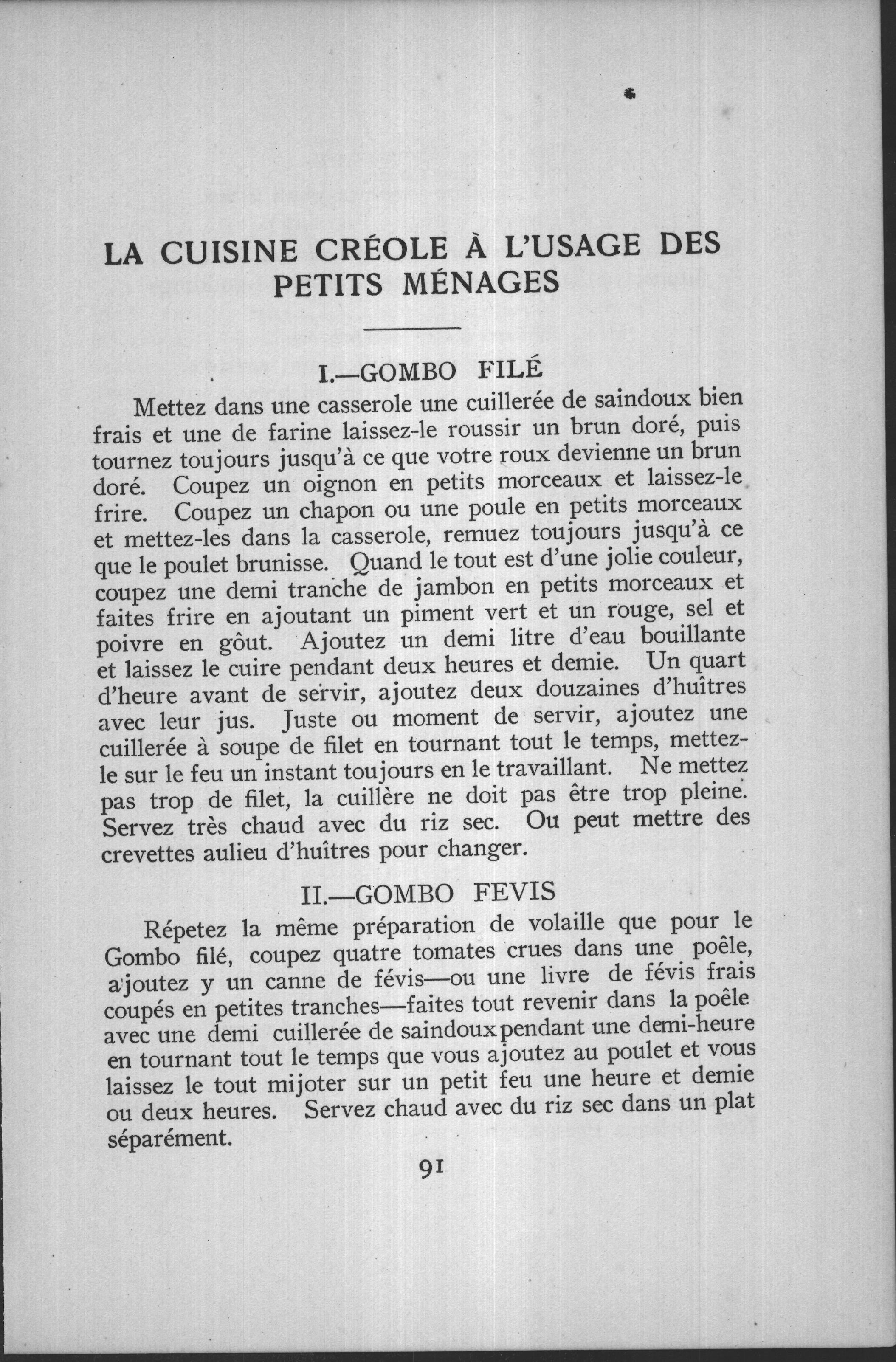
Répetez la même préparation de volaille que pour le Gombo filé, coupez quatre tomates crues dans une poêle, ajoutez y un canne de févis—ou une livre de févis frais coupés en petites tranches—faites tout revenir dans la poêle avec une demi cuillerée de saindoux pendant une demi-heure en tournant tout le temps que vous ajoutez au poulet et vous laissez le tout mijoter sur un petit feu une heure et demie ou deux heures. Servez chaud avec du riz sec dans un plat séparément.
The okra version of the same gumbo — févi is the old Louisiana Creole word for okra, and here it does the thickening in place of filé.
- Start from the filé gumbo baseMake the same roux-and-chicken foundation as the Gombo Filé, then build the okra and tomato on top.
- Un canne de févis = a can of okraCanne is likely a Creole borrowing of English “can”; use about a 1-lb can, or the 1 lb of fresh okra the recipe offers, sliced into rounds.
- No filé neededOkra releases a natural mucilage as it cooks that gives the gumbo its body — so an okra gumbo skips the filé entirely.
- Tame the sliminessFrying the okra with the tomatoes and its ½ Tbsp lard for the full half-hour, stirring, cuts the “rope”; the acid in the tomatoes helps too.
- Long, gentle simmerAfter combining, let it barely bubble for 1½ to 2 hours so the flavors marry and the okra softens completely.
- Serve over dry riceAs with all these gumbos, the plain steamed rice goes in a separate dish.
If filé gumbo speaks Choctaw, okra gumbo speaks West Africa. The pods traveled to the Americas through the transatlantic slave trade, and the word gumbo itself descends from Bantu names for okra such as ki ngombo. Louisiana Creole gave the vegetable its own affectionate name, févi (heard here as févis), and Black cooks — enslaved and free — made okra gumbo the older and arguably the truer claim on the dish’s name. Its slippery, thickening quality is a feature, not a flaw.
From page 91 of the 1904 edition.
Original page from the book