Gombo Filé
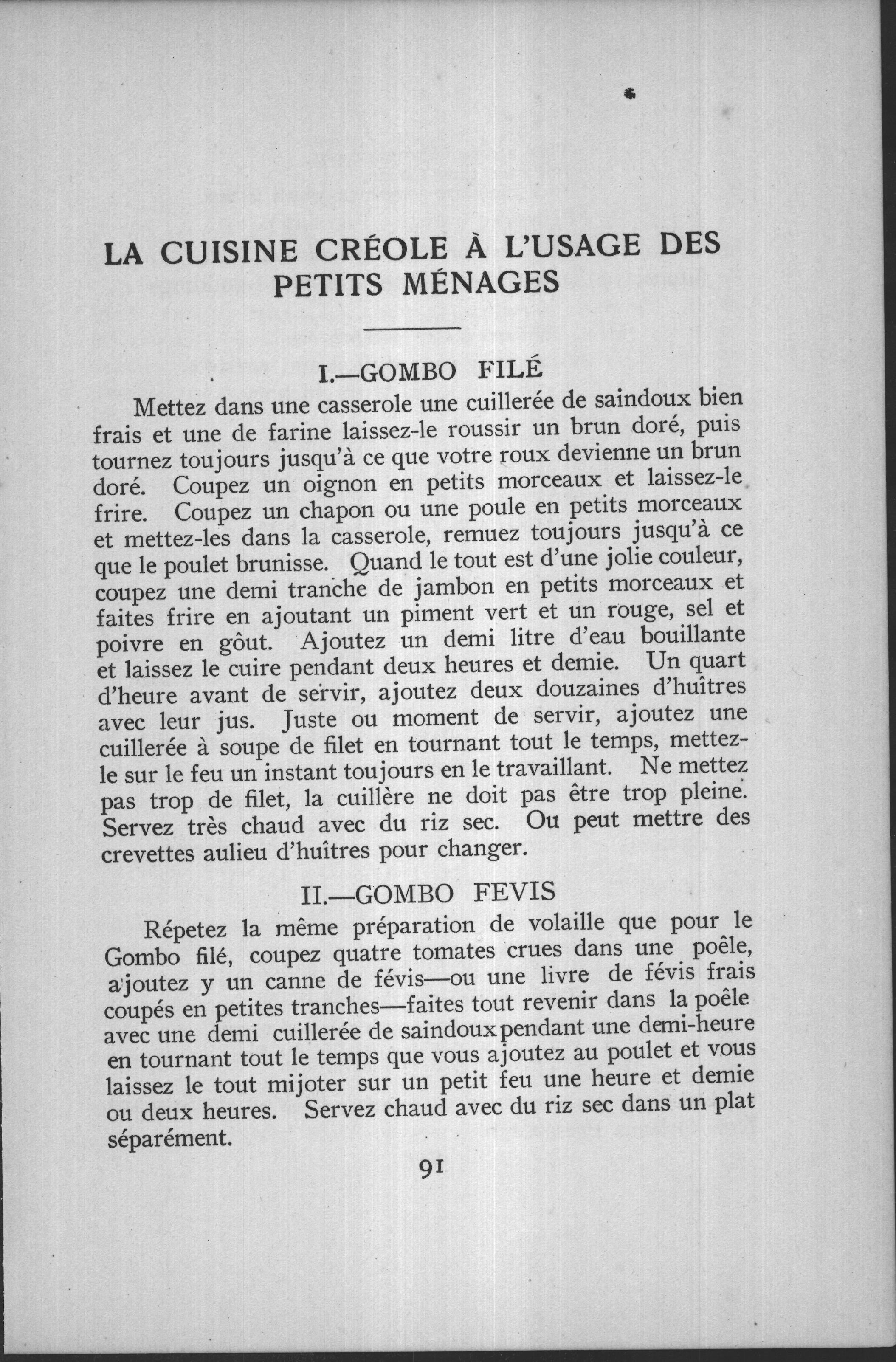
Mettez dans une casserole une cuillerée de saindoux bien frais et une de farine laissez-le roussir un brun doré, puis tournez toujours jusqu'à ce que votre roux devienne un brun doré. Coupez un oignon en petits morceaux et laissez-le frire. Coupez un chapon ou une poule en petits morceaux et mettez-les dans la casserole, remuez toujours jusqu'à ce que le poulet brunisse. Quand le tout est d'une jolie couleur, coupez une demi tranche de jambon en petits morceaux et faites frire en ajoutant un piment vert et un rouge, sel et poivre en gôut. Ajoutez un demi litre d'eau bouillante et laissez le cuire pendant deux heures et demie. Un quart d'heure avant de servir, ajoutez deux douzaines d'huîtres avec leur jus. Juste ou moment de servir, ajoutez une cuillerée à soupe de filet en tournant tout le temps, mettez-le sur le feu un instant toujours en le travaillant. Ne mettez pas trop de filet, la cuillère ne doit pas être trop pleine. Servez très chaud avec du riz sec. Ou peut mettre des crevettes aulieu d'huîtres pour changer.
The book’s French rendering of the great sassafras-thickened gumbo — a golden-brown roux, chicken and ham, finished off the heat with a spoonful of filé.
- Build the roux slowlyCook 1 Tbsp lard + 1 Tbsp flour (une cuillerée each), stirring constantly, to a golden-brown — the color of the roux sets the flavor of the whole pot.
- Chapon = caponA capon is a castrated rooster, prized for its especially tender, fatty flesh; any good roasting chicken or hen stands in perfectly.
- Liquid and timingUn demi litre of boiling water is about 2 cups; add more to keep it soupy, and simmer the full 2½ hours for tender meat.
- Add filé OFF the heatFilé (dried, powdered sassafras) turns ropy and stringy if boiled. Stir in 1 Tbsp at the very end — the book warns not to heap the spoon — and only warm it through.
- Oysters at the finishSlip in the oysters with their liquor just 15 minutes before serving so they plump but don’t toughen; shrimp make the easy swap the recipe suggests.
- Serve over dry riceRiz sec means plain steamed rice, spooned in or served alongside — never cooked into the gumbo.
Filé is the Choctaw contribution to gumbo: the young leaves of the sassafras tree, dried and pounded to a fragrant green powder that both thickens and perfumes the pot. Louisiana cooks bought it from Choctaw women who sold it in the New Orleans markets. Its French name comes from filer, “to spin threads,” a nod to the ropy strands it forms if it ever boils — which is exactly why it goes in at the last moment, off the fire. Filé and okra are the two traditional thickeners, and cooks generally choose one or the other.
From page 91 of the 1904 edition.
Original page from the book