Jambalaya
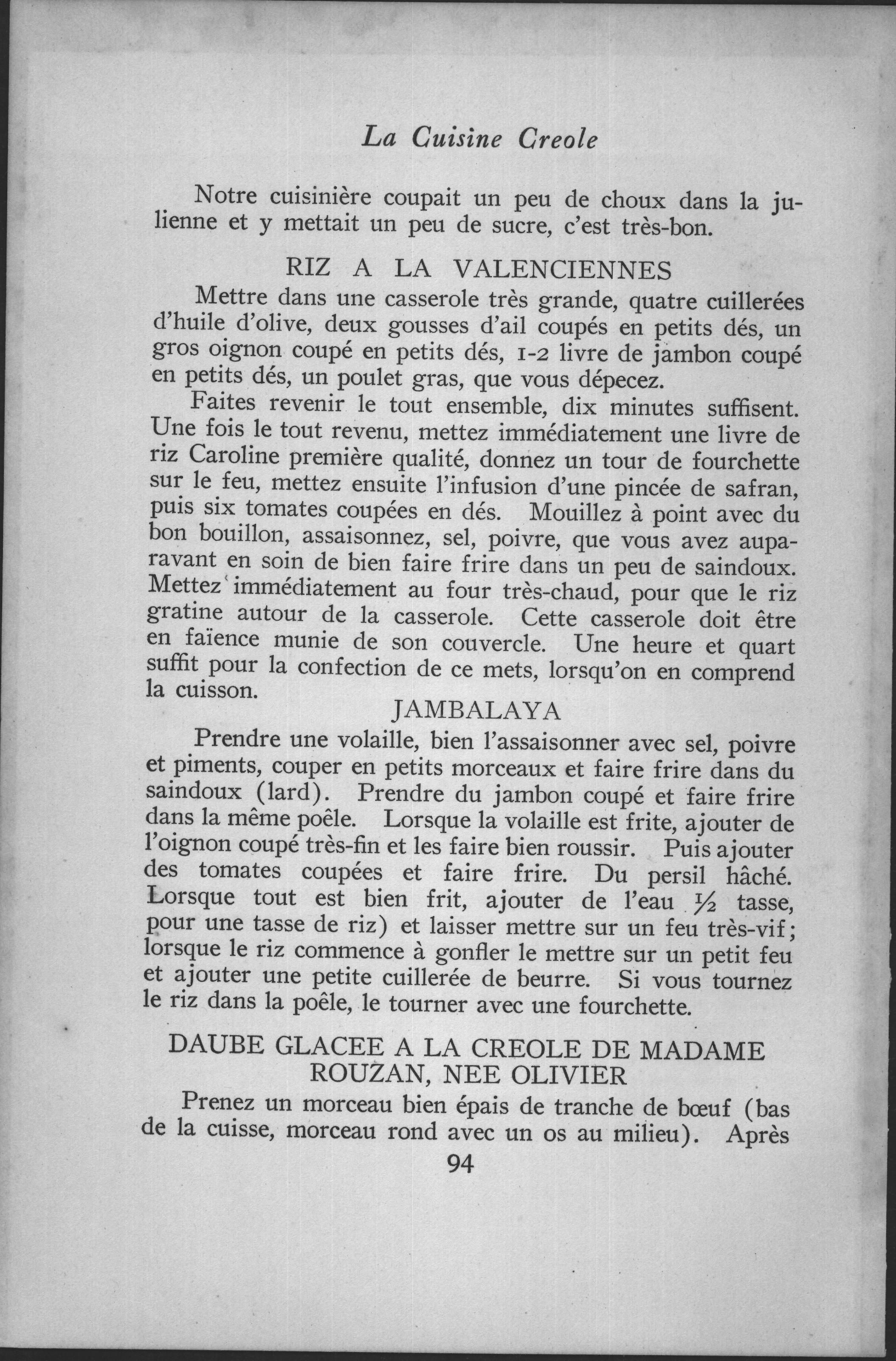
Prendre une volaille, bien l'assaisonner avec sel, poivre et piments, couper en petits morceaux et faire frire dans du saindoux (lard). Prendre du jambon coupé et faire frire dans la même poêle. Lorsque la volaille est frite, ajouter de l'oignon coupé très-fin et les faire bien roussir. Puis ajouter des tomates coupées et faire frire. Du persil hâché. Lorsque tout est bien frit, ajouter de l'eau (1/2 tasse, pour une tasse de riz) et laisser mettre sur un feu très-vif; lorsque le riz commence à gonfler le mettre sur un petit feu et ajouter une petite cuillerée de beurre. Si vous tournez le riz dans la poêle, le tourner avec une fourchette.
The one-pot rice dish that is pure New Orleans — chicken and ham fried down with onion and tomato, then rice cooked right in the same pan.
- Season and brown in stagesSeason the cut-up chicken well with salt, pepper, and piments (peppers) and fry it in lard, then fry the ham in the same fat — layering the browning builds the flavor.
- Saindoux (lard)The recipe names its fat twice for clarity: lard. It fries the meat and carries the flavor; a neutral oil works but lard is traditional.
- Mind the rice ratioThe note gives ½ cup water to 1 cup rice — the tomatoes and rendered juices supply the rest of the moisture, so resist adding more.
- High heat, then lowStart over a très-vif (very high) flame; once the rice begins to swell, drop to a bare simmer, add a little butter, and let it steam.
- Fork, never spoonTurn the rice only with a fork so the grains stay separate and don’t crush into paste.
Jambalaya is Louisiana’s answer to the rice dishes of Spain — a first cousin of paella, adapted to what the local larder offered when saffron was dear. Beyond that, its history is more folklore than fact: the popular tales tracing the name to a Provençal word for a rice medley, or to jambon plus an African word for rice, are guesses that scholars can’t confirm. What’s certain is the technique — meat browned first, rice cooked in the same pot to soak up every bit of flavor — a thrifty, communal way of cooking that defines the dish.
From page 94 of the 1904 edition.
Original page from the book