La Saccamite
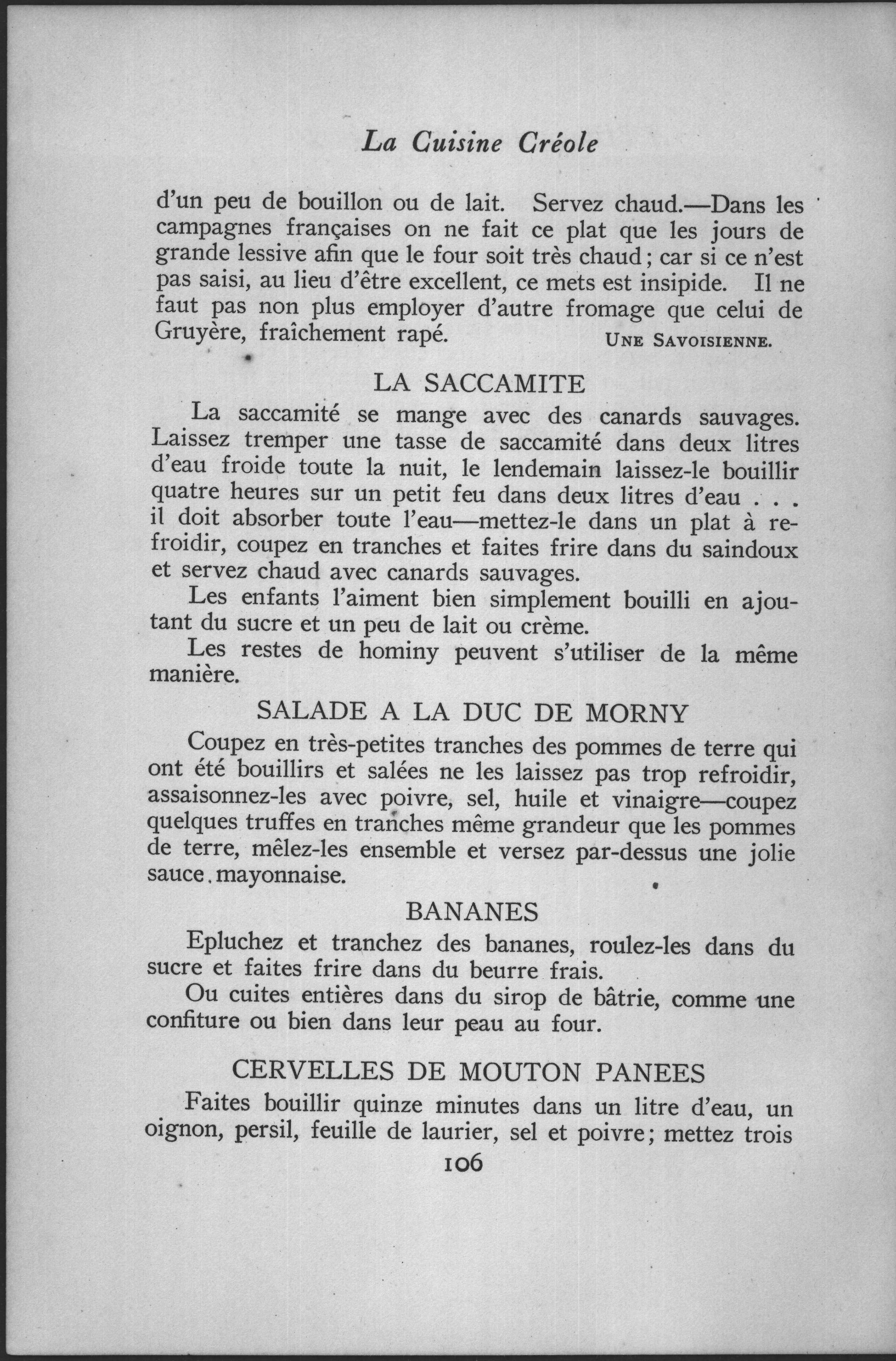
La saccamité se mange avec des canards sauvages. Laissez tremper une tasse de saccamité dans deux litres d'eau froide toute la nuit, le lendemain laissez-le bouillir quatre heures sur un petit feu dans deux litres d'eau . . . il doit absorber toute l'eau—mettez-le dans un plat à refroidir, coupez en tranches et faites frire dans du saindoux et servez chaud avec canards sauvages.
Les enfants l'aiment bien simplement bouilli en ajoutant du sucre et un peu de lait ou crème.
Les restes de hominy peuvent s'utiliser de la même manière.
A Creole way with hominy — big corn simmered soft, set firm, then sliced and fried — traditionally the partner to wild duck.
- What ‘saccamité’ isIt’s a Louisiana word for hominy — dried corn treated with alkali until the hulls slip and the kernels swell. Use canned or dried hominy; coarse grits work as a stand-in.
- Overnight soak, long boilSoak overnight, then simmer up to 4 hours until the corn drinks up all the water — a slow cook that turns it tender and creamy.
- Set, slice, and fryPoured out to cool, the hominy firms up like polenta; slice it and fry the slices in lard (the recipe’s saindoux) until crisp and golden.
- Two ways to serveSavory and fried alongside duck for the adults; or, for children, simply boiled soft with a little sugar and milk or cream.
- Use up leftoversThe closing note is thrift itself: leftover hominy or grits can be set, sliced and fried in exactly the same way.
The word saccamité descends from sagamité, a term French colonists borrowed from Indigenous peoples of the Americas for a porridge of hulled corn. Behind it lies nixtamalization — the ancient practice of soaking corn in an alkaline solution of wood ash or lime, which loosens the hulls and, though no one then understood why, unlocks nutrients the body otherwise can’t absorb. Adopted into the Creole kitchen and paired here with wild duck, it’s a small monument to the deep Native American roots beneath so much of Louisiana cooking.
From page 106 of the 1904 edition.
Original page from the book