Gratin aux Pommes de Terre
Une Savoisienne
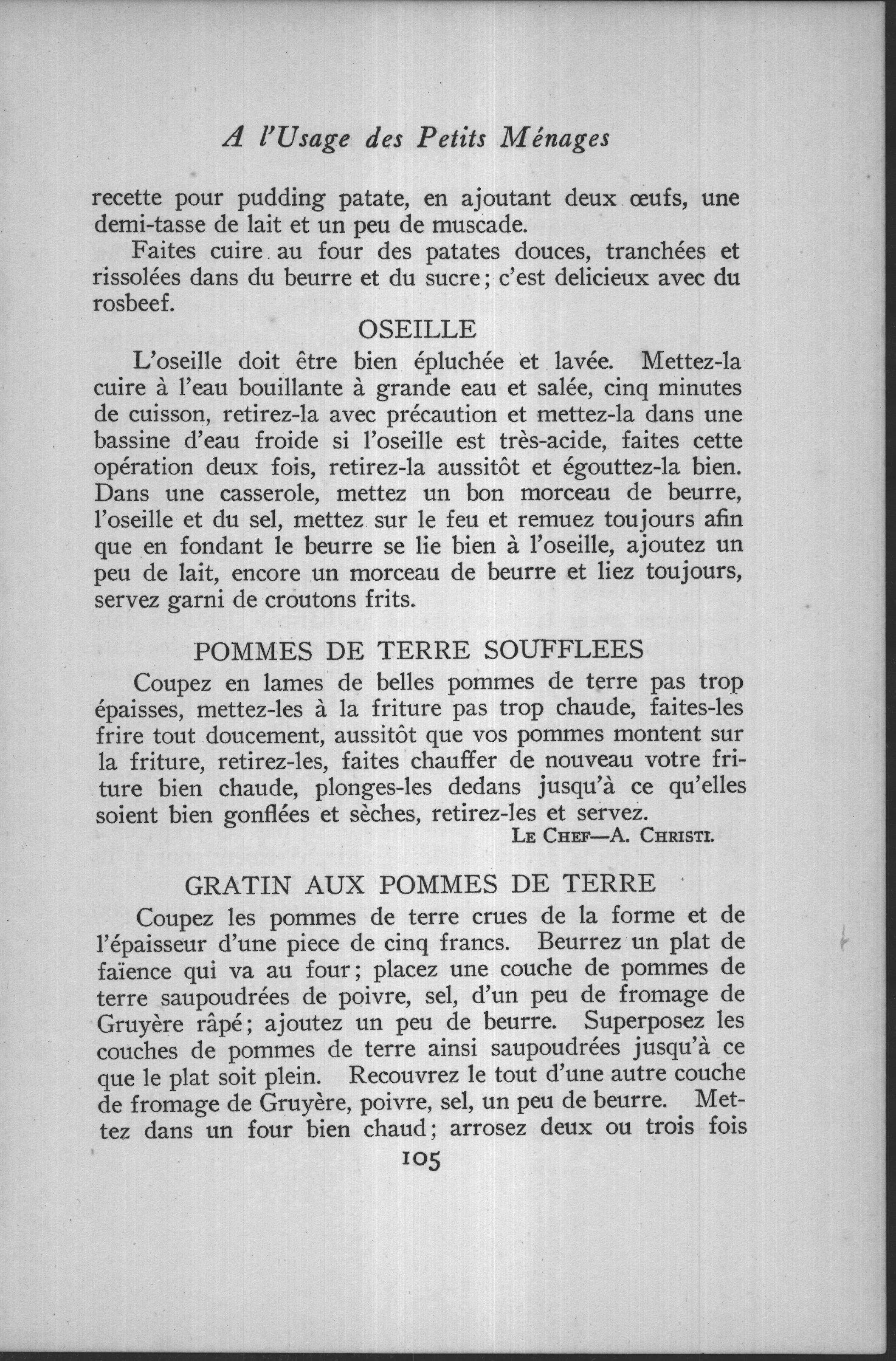
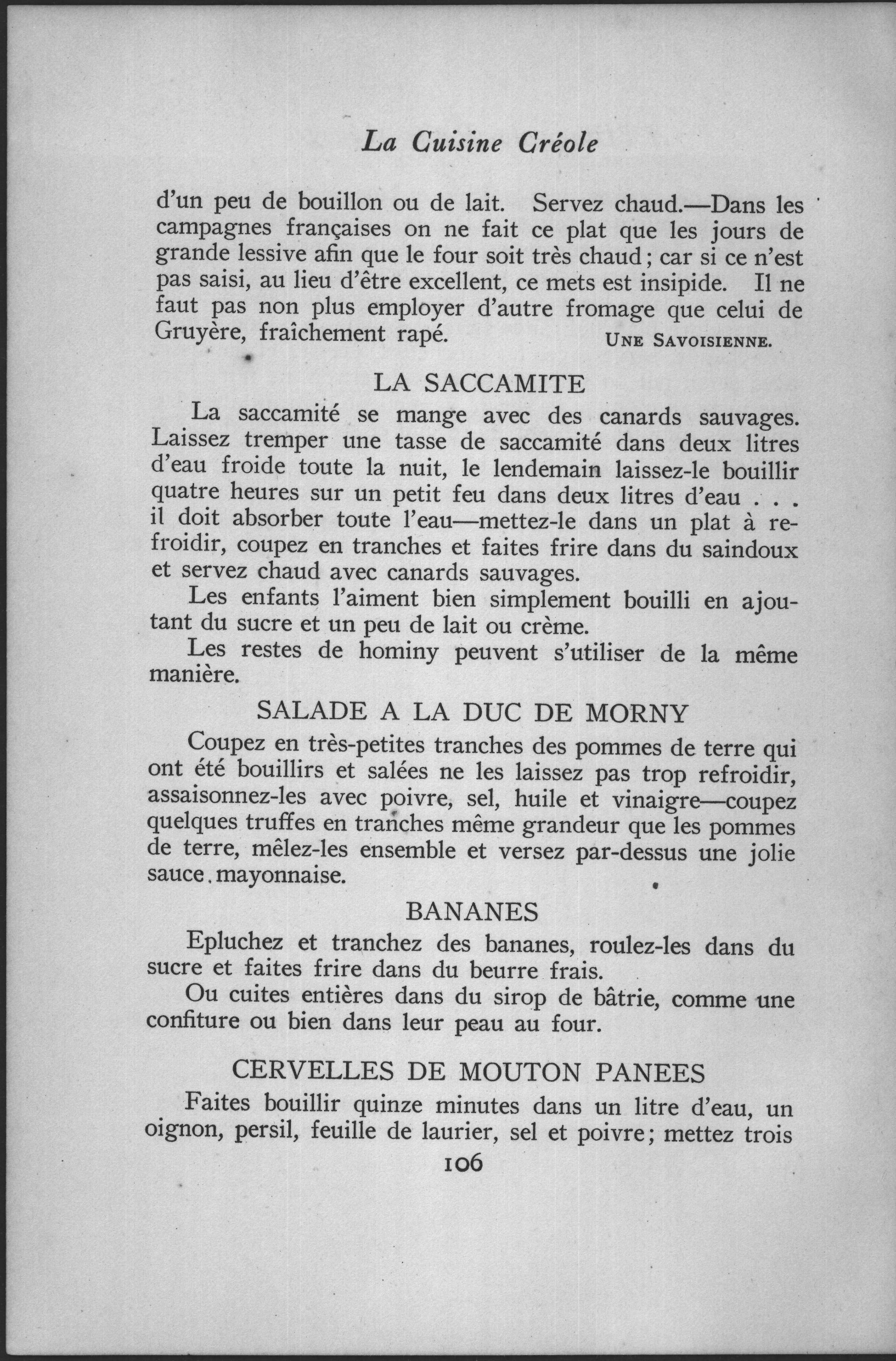
Coupez les pommes de terre crues de la forme et de l'épaisseur d'une piece de cinq francs. Beurrez un plat de faïence qui va au four; placez une couche de pommes de terre saupoudrées de poivre, sel, d'un peu de fromage de Gruyère râpé; ajoutez un peu de beurre. Superposez les couches de pommes de terre ainsi saupoudrées jusqu'à ce que le plat soit plein. Recouvrez le tout d'une autre couche de fromage de Gruyère, poivre, sel, un peu de beurre. Mettez dans un four bien chaud; arrosez deux ou trois fois d'un peu de bouillon ou de lait. Servez chaud.—Dans les campagnes françaises on ne fait ce plat que les jours de grande lessive afin que le four soit très chaud; car si ce n'est pas saisi, au lieu d'être excellent, ce mets est insipide. Il ne faut pas non plus employer d'autre fromage que celui de Gruyère, fraîchement rapé.
A Savoyard’s potato gratin — thin raw slices layered with Gruyère and butter, baked hot and basted — complete with a charming note on why it was a laundry-day dish.
- “A five-franc piece”Slice the raw potatoes to the size of an old five-franc coin: roughly ⅛ inch thick and about 1½ inches across. Thin and even is what matters.
- Gruyère, and only GruyèreThe author is emphatic — use freshly grated Gruyère and no substitute. Pre-grated cheese, dusted with anti-caking starch, won’t melt as cleanly.
- A hot ovenBake in a hot oven, about 425°F (220°C). Her point stands: a gratin that isn’t started hot and ‘seared’ turns insipid instead of golden.
- Baste as it bakesMoisten two or three times with a little bouillon or milk so the potatoes cook through without drying — this is what gives a gratin its creamy interior under the crust.
- “Faïence” = earthenwareBake in a buttered faïence (glazed earthenware) or any ceramic dish, which holds and radiates heat gently.
The recipe’s contributor signs herself Une Savoisienne — a woman of Savoy, the Alpine region that gave the world its cheese-and-potato gratins. Her version, layered with Gruyère and moistened with stock, is essentially the classic gratin savoyard (its cousin, gratin dauphinois, uses cream and no cheese). The detail about baking it only on “big laundry days,” when the household fire was already roaring to heat the wash water, is a lovely window into a world where a very hot oven was a scheduled luxury, not the turn of a dial.
From page 105 of the 1904 edition.
Original pages from the book