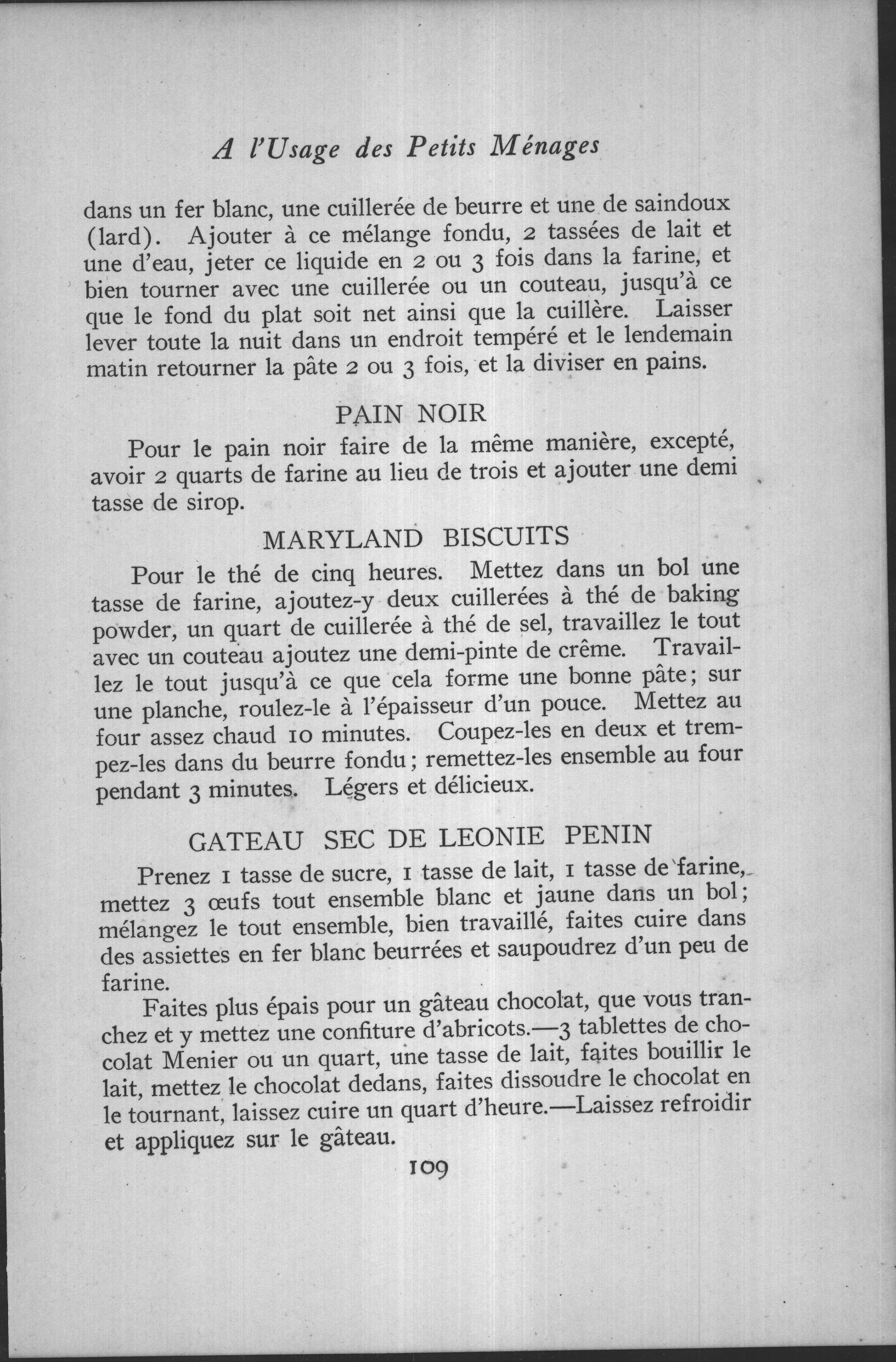
Maryland Biscuits
Pour le thé de cinq heures. Mettez dans un bol une tasse de farine, ajoutez-y deux cuillerées à thé de baking powder, un quart de cuillerée à thé de sel, travaillez le tout avec un couteau ajoutez une demi-pinte de crême. Travaillez le tout jusqu'à ce que cela forme une bonne pâte; sur une planche, roulez-le à l'épaisseur d'un pouce. Mettez au four assez chaud 10 minutes. Coupez-les en deux et trempez-les dans du beurre fondu; remettez-les ensemble au four pendant 3 minutes. Légers et délicieux.
A quick cream biscuit for “five o’clock tea,” split and butter-dipped — the book’s easy take on the famous Maryland biscuit.
- The measures1 cup flour, 2 tsp baking powder, ¼ tsp salt, and ½ pint (1 cup) cream to bind.
- Cut, don’t beatWork the cream in with a knife just until it forms a dough; mixing lightly keeps the biscuits tender.
- Roll thickRoll to a full inch — these are meant to be tall and split-able, not thin.
- Real oven heatAssez chaud is a hot oven, about 425°F for the first 10 minutes.
- The butter trickSplit the part-baked biscuits, dip the cut faces in melted butter, reassemble, and return for 3 minutes so the butter soaks in.
The true Maryland biscuit is a “beaten biscuit” — a stiff, unleavened dough pounded with a mallet or rolling pin, sometimes for half an hour, until it blistered, then baked hard and crisp. It was a signature of Chesapeake and Upper South tables, born in an era before reliable chemical leavening. This tea-table version takes the shortcut the 19th century made possible: cream and baking powder stand in for all that pounding, giving a lighter, quicker biscuit that keeps the Maryland name if not the aching arm.
From page 109 of the 1904 edition.
Original page from the book