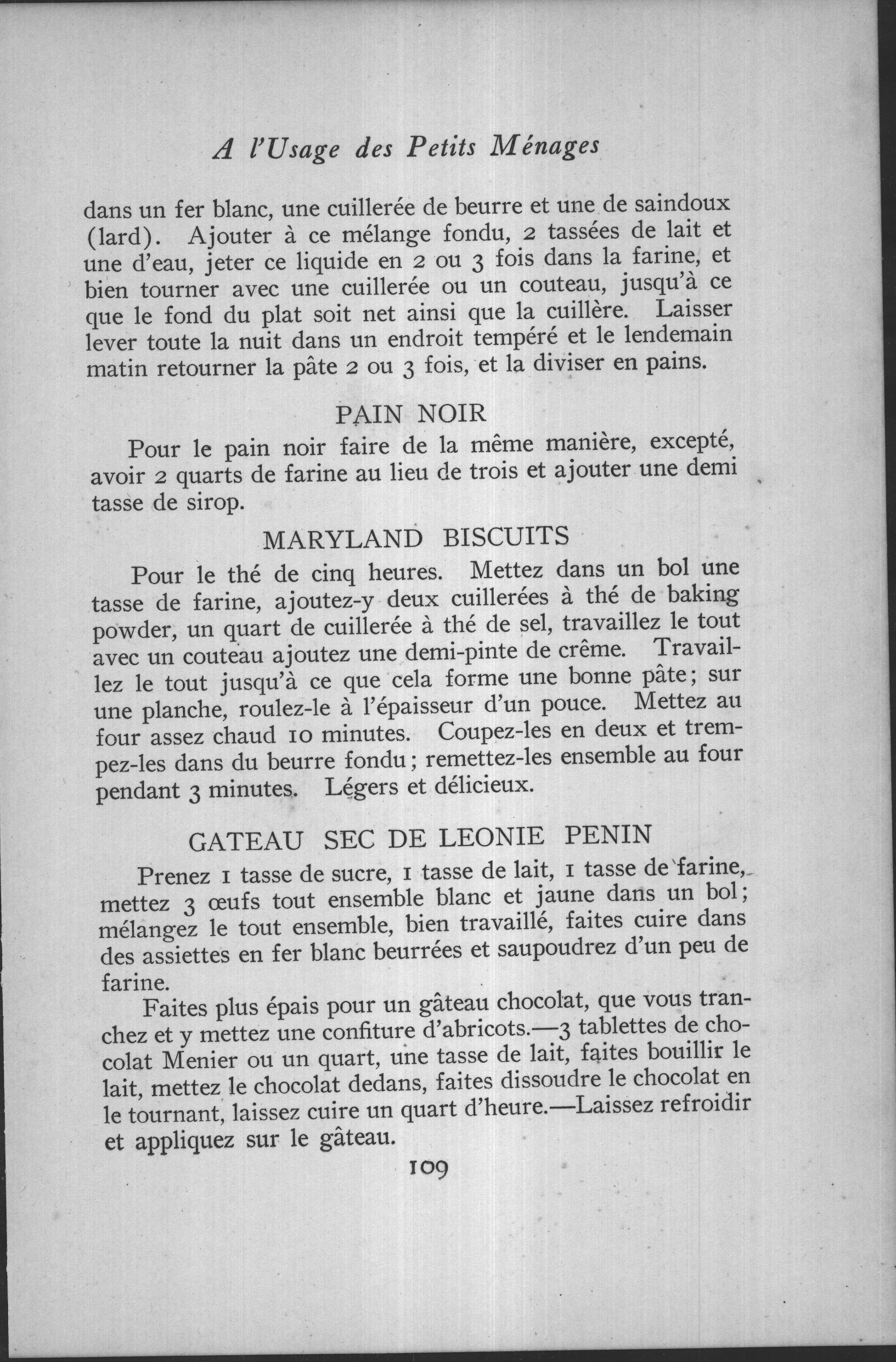
Pain Noir
Pour le pain noir faire de la même manière, excepté, avoir 2 quarts de farine au lieu de trois et ajouter une demi tasse de sirop.
The book’s “black bread” is simply the white loaf made darker and lightly sweet with molasses — a quick variation, not a new recipe.
- Follow the white-bread methodUse the same overnight process as the Pain Blanc, with only two changes.
- Less flourDrop to 2 quarts (about 8 cups) of flour instead of three.
- Add the syrupStir in about ½ cup cane syrup or molasses (the sirop) with the liquids; it colors and gently sweetens the loaf.
- Not a European ryeDespite the name, this is a molasses-darkened wheat bread, closer to a light brown bread than to Europe’s dark peasant ryes.
- Watch the crustMolasses sugars brown fast, so bake a touch lower at 375–400°F and tent with foil if the top darkens too soon.
“Brown bread” across the 18th and 19th centuries usually meant a loaf darkened and sweetened with molasses, the cheap, abundant sweetener of the Atlantic world. Molasses flowed into North American ports as a byproduct of Caribbean sugar production, and cooks reached for it constantly — in breads, cakes, and puddings — wherever refined white sugar was costly. Calling a molasses loaf “black bread” nodded loosely to Europe’s dark ryes, but in Louisiana the darkness came from cane syrup: one more sign of sugar’s grip on the regional kitchen.
From page 109 of the 1904 edition.
Original page from the book