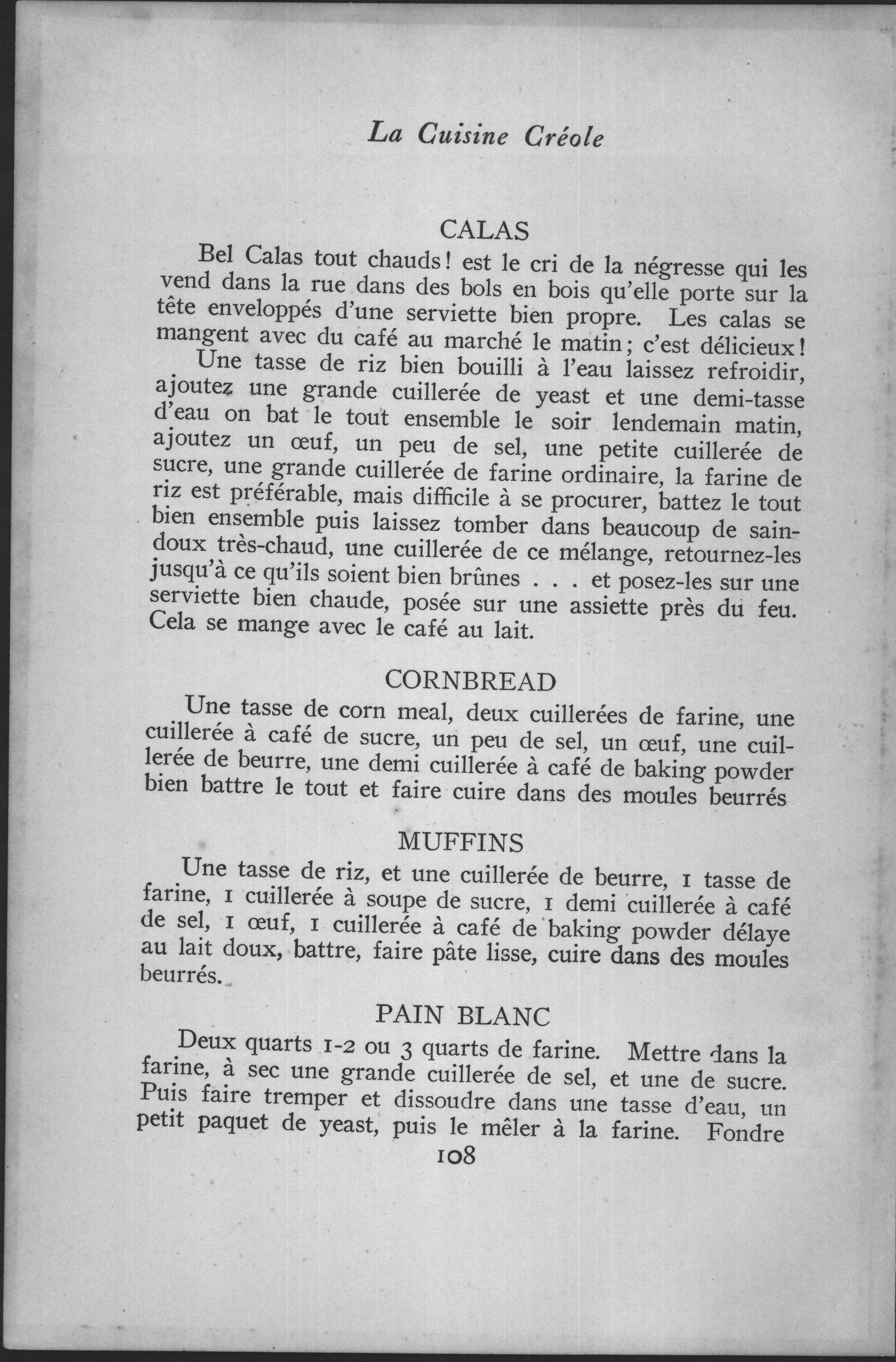
Pain Blanc
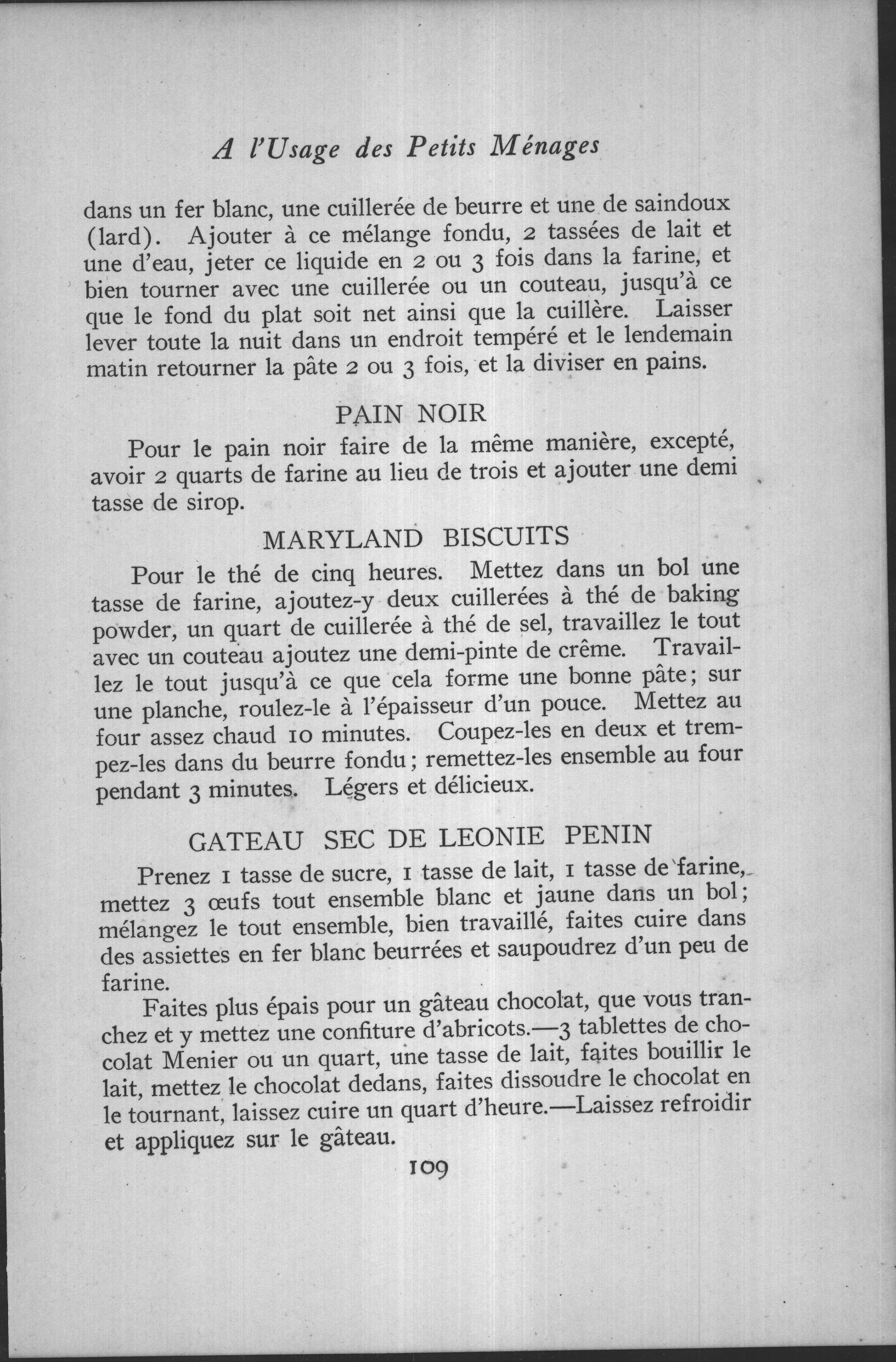
Deux quarts 1-2 ou 3 quarts de farine. Mettre dans la farine, à sec une grande cuillerée de sel, et une de sucre. Puis faire tremper et dissoudre dans une tasse d'eau, un petit paquet de yeast, puis le mêler à la farine. Fondre dans un fer blanc, une cuillerée de beurre et une de saindoux (lard). Ajouter à ce mélange fondu, 2 tassées de lait et une d'eau, jeter ce liquide en 2 ou 3 fois dans la farine, et bien tourner avec une cuillerée ou un couteau, jusqu'à ce que le fond du plat soit net ainsi que la cuillère. Laisser lever toute la nuit dans un endroit tempéré et le lendemain matin retourner la pâte 2 ou 3 fois, et la diviser en pains.
A plain overnight white loaf enriched with a little butter and lard — the everyday household bread of the Creole kitchen, mixed at night and baked in the morning.
- Flour by volumeTwo-and-a-half or three quarts of flour is roughly 10–12 cups (1 quart flour ≈ 4 cups); start with 10 and add more as the dough needs.
- The other measures1 Tbsp each salt and sugar worked in dry; 1 cup water to bloom the yeast; then 1 Tbsp each butter and lard melted with 2 cups milk and 1 cup water.
- “Un petit paquet de yeast”One envelope (2¼ tsp) active dry yeast, dissolved in the cup of warm — not hot — water.
- Mix to a clean bowlTurning until “the bottom of the dish is clean” just means working the dough until it pulls away from the sides into a smooth, elastic mass.
- Overnight rise, then bakeLet it rise slowly overnight in a cool spot, knock it back in the morning, shape into loaves, prove again, and bake at 400–425°F until they sound hollow.
Before packaged yeast and daily bakeries, a household’s bread ran on time rather than speed: dough was set in the evening with a modest amount of leaven and left to rise overnight in whatever cool corner the kitchen offered. Enriching the loaf with a spoonful each of butter and lard, and mixing with milk instead of water alone, gave a softer, richer crumb than a lean European loaf. That small luxury was typical of the Creole table, where French bread tradition met the easy abundance of a New World larder.
From page 108 of the 1904 edition.
Original pages from the book