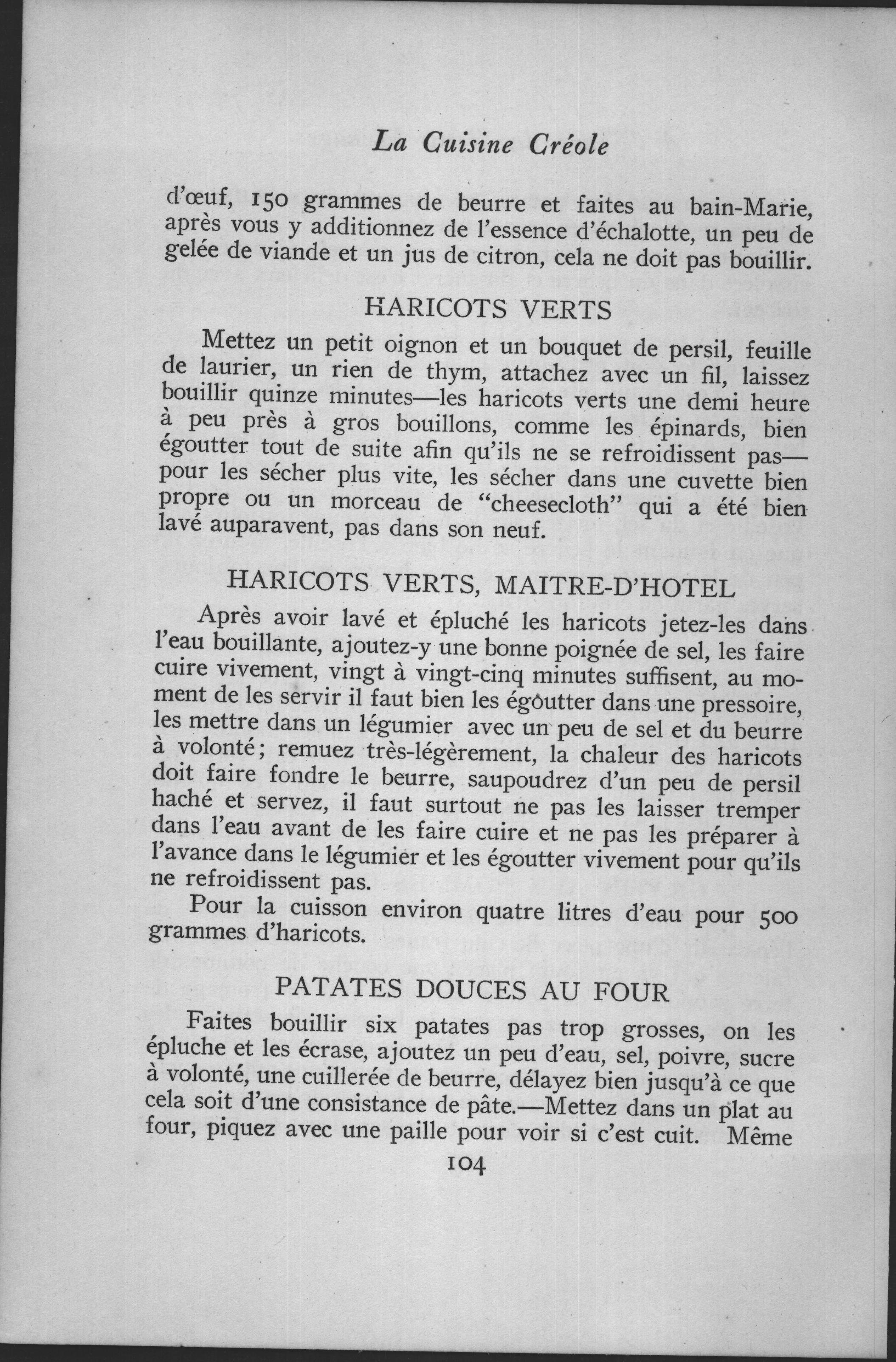
Patates Douces au Four
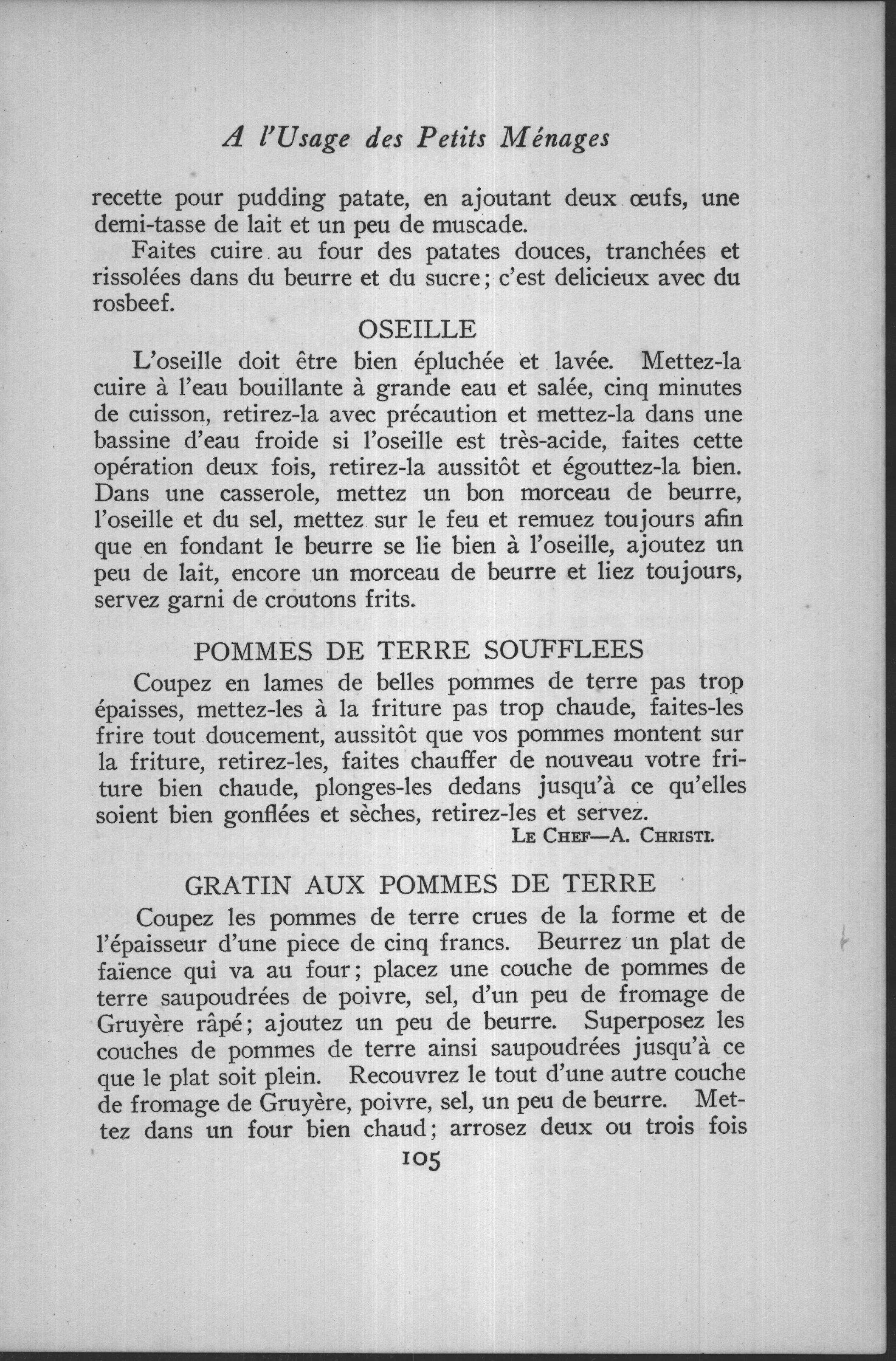
Faites bouillir six patates pas trop grosses, on les épluche et les écrase, ajoutez un peu d'eau, sel, poivre, sucre à volonté, une cuillerée de beurre, délayez bien jusqu'à ce que cela soit d'une consistance de pâte.—Mettez dans un plat au four, piquez avec une paille pour voir si c'est cuit. Même recette pour pudding patate, en ajoutant deux œufs, une demi-tasse de lait et un peu de muscade.
Faites cuire au four des patates douces, tranchées et rissolées dans du beurre et du sucre; c'est delicieux avec du rosbeef.
A thrifty trio of sweet-potato ideas in one recipe — a mashed and baked purée, a richer pudding, and buttery candied slices.
- Boil, then bakeThe sweet potatoes are boiled and mashed to a smooth paste, then baked to set and lightly brown the top — a two-step method that guarantees an even purée.
- Test with a ‘straw’Piercing with a straw to check doneness is the period version of the toothpick or cake-tester test — it should come out clean.
- A moderate ovenBake at a moderate 350°F (175°C); the pudding variation, richer with egg, likes the same gentle heat.
- The pudding upgradeAdd 2 eggs, ½ cup milk and a little nutmeg to the same base and you have a sweet-potato pudding — the eggs set it, the nutmeg warms it.
- Candied slices, tooThe last idea — slices browned in butter and sugar — is a quick candied sweet potato, and the recipe is right that it’s wonderful with roast beef.
The sweet potato is a true American native, carried out of the tropics long before Columbus, and it became a cornerstone of Louisiana cooking — cheap, sweet, and endlessly adaptable. Creole and Southern kitchens have long blurred it with the “yam,” though the real yam is a different, African plant; what Americans call a yam is almost always this orange sweet potato. Recipes like this one — sliding easily between savory side and sugared dessert — capture exactly why the patate douce earned such deep affection across the Gulf South.
From page 104 of the 1904 edition.
Original pages from the book