Petit Avis aux Menageres
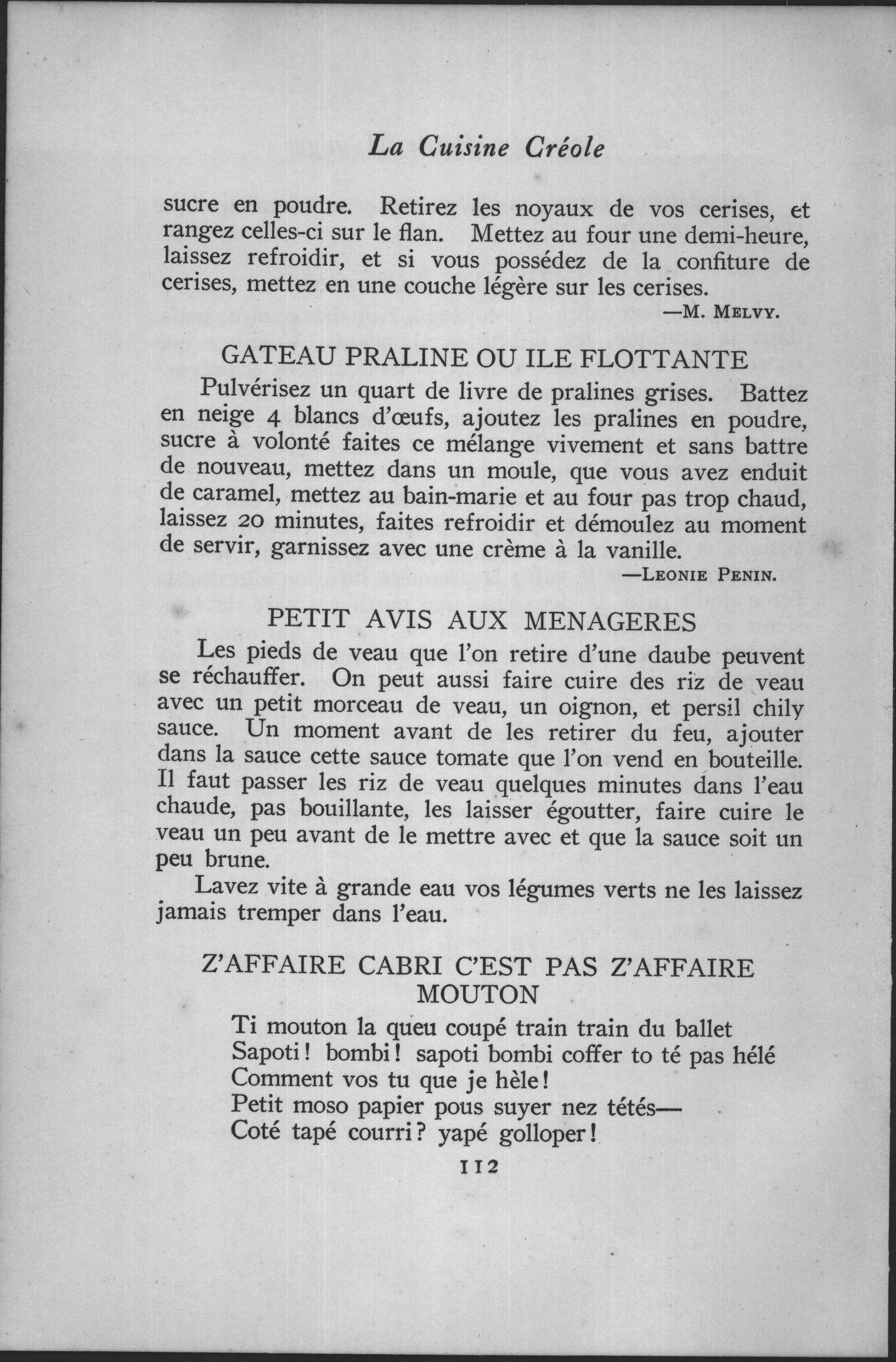
Les pieds de veau que l'on retire d'une daube peuvent se réchauffer. On peut aussi faire cuire des riz de veau avec un petit morceau de veau, un oignon, et persil chily sauce. Un moment avant de les retirer du feu, ajouter dans la sauce cette sauce tomate que l'on vend en bouteille. Il faut passer les riz de veau quelques minutes dans l'eau chaude, pas bouillante, les laisser égoutter, faire cuire le veau un peu avant de le mettre avec et que la sauce soit un peu brune.
Lavez vite à grande eau vos légumes verts ne les laissez jamais tremper dans l'eau.
Not a single recipe but a cluster of the book’s household tips, centered on stretching leftovers and cooking veal sweetbreads (ris de veau).
- “Ris de veau” = sweetbreadsThe thymus gland of a calf — a prized delicacy, not brains or other offal. Ask a butcher; they’re increasingly a special-order item.
- Blanch firstThe old step is right: soak, then blanch the sweetbreads briefly in hot (not boiling) water, drain, and trim before cooking to firm and clean them.
- The dish describedSweetbreads gently cooked with a little veal, onion, and parsley, finished with bottled tomato sauce for a lightly browned gravy — an easy braise.
- Thrift with the daubeThe note that calf’s-feet from a daube can be reheated reflects a whole-animal kitchen; the gelatin-rich feet reheat well in their sauce.
- The vegetable rule holds“Wash greens fast in plenty of water; never let them soak” is still sound — soaking leaches flavor and nutrients and leaves greens limp.
Avis aux ménagères — advice to housewives — was a stock feature of 19th-century cookbooks, dispensing the frugal, whole-animal wisdom that actually ran a household kitchen. Sweetbreads sat near the top of the offal hierarchy, genteel enough for company yet part of the same nose-to-tail thrift that reheated leftover calf’s-feet rather than waste them. The casual mention of “bottled tomato sauce” is a small time-stamp: by the late 19th century commercial tomato sauces and ketchups were widely sold, and even tradition-minded Creole cooks welcomed the convenience.
From page 112 of the 1904 edition.
Original page from the book