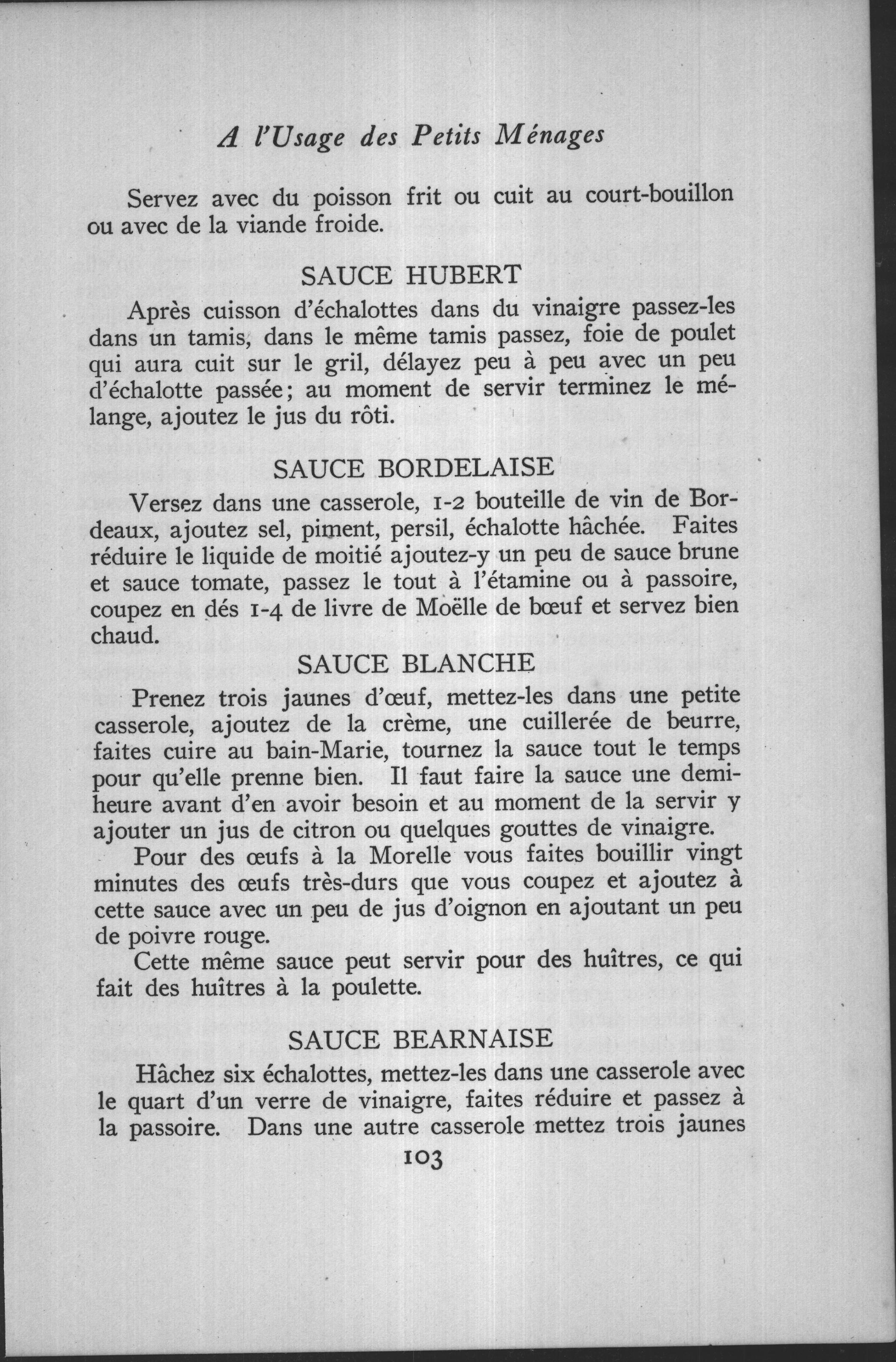
Sauce Bearnaise
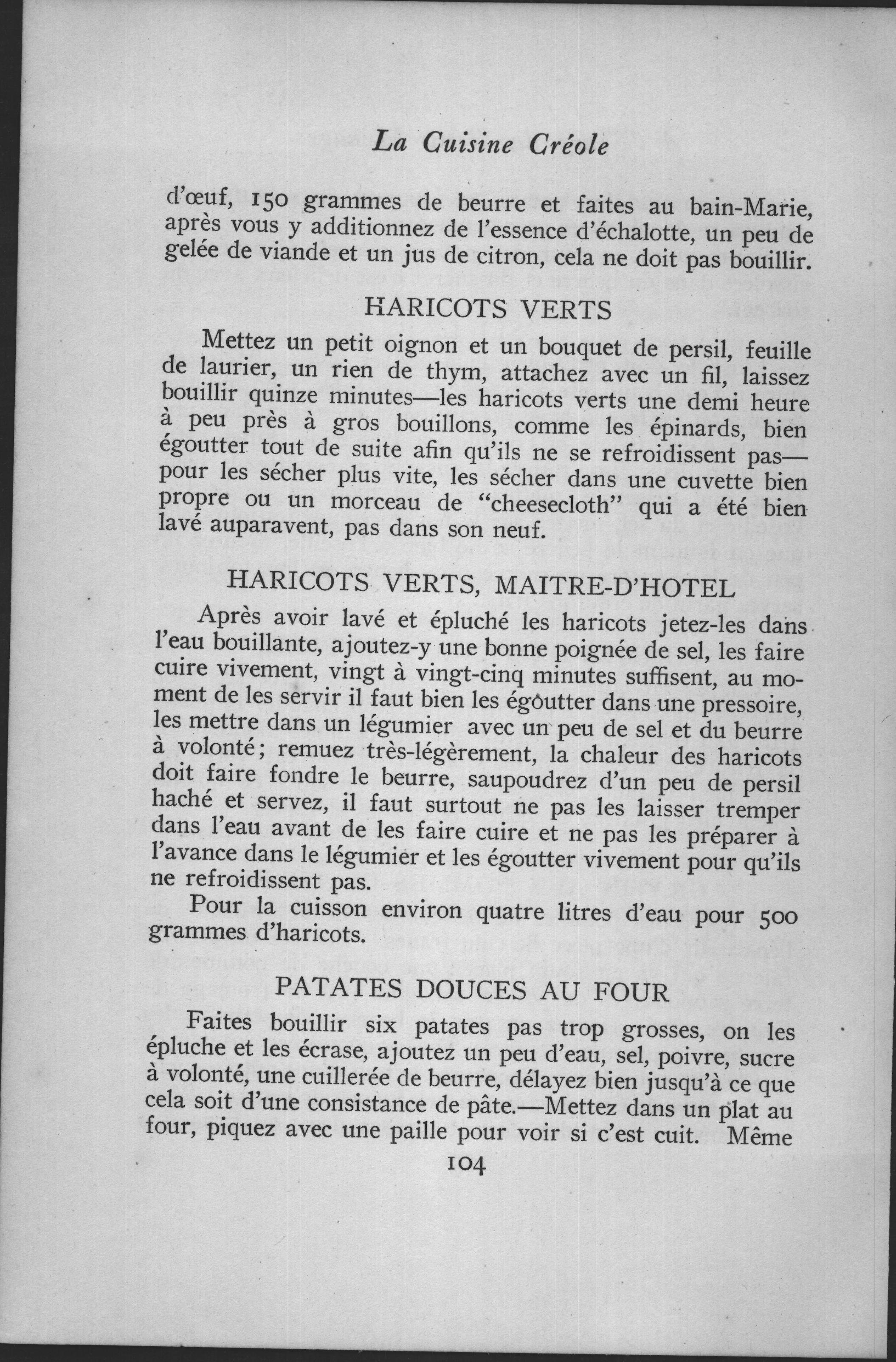
Hâchez six échalottes, mettez-les dans une casserole avec le quart d'un verre de vinaigre, faites réduire et passez à la passoire. Dans une autre casserole mettez trois jaunes d'œuf, 150 grammes de beurre et faites au bain-Marie, après vous y additionnez de l'essence d'échalotte, un peu de gelée de viande et un jus de citron, cela ne doit pas bouillir.
A true béarnaise in miniature — egg yolks and butter mounted over gentle heat with a shallot-vinegar essence — though it’s missing the herb that usually defines it.
- 150 grams of butterThat’s about 10–11 Tbsp (two-thirds of a cup, roughly 5 oz) of butter, mounted into three yolks.
- “¼ verre” of vinegarA quarter of a wineglass is roughly 1 Tbsp of vinegar, reduced with the shallots to a concentrated ‘essence.’
- Gentle heat, never boilingWork in a bain-Marie (double boiler); the warning “it must not boil” is the whole secret — too much heat scrambles the yolks and splits the sauce.
- Where’s the tarragon?A classic béarnaise leans on tarragon and chervil, which this version omits. Add a spoon of chopped fresh tarragon to the shallot reduction to bring it in line with the sauce we know.
- A little meat glazeThe gelée de viande is reduced meat stock (use this batch’s veal fond); it deepens the flavor. Finish with lemon.
Béarnaise takes its name from Béarn, the southwestern region that was the cradle of King Henri IV — but the sauce is far younger than he was. It’s generally credited to the kitchens of the Paris region around the 1830s, and often tied by tradition to Le Pavillon Henri IV, a restaurant in Saint-Germain-en-Laye named for the king — which may be all the connection the name really has. However it was born, béarnaise became one of the pillars of French sauce cookery and the near-inseparable companion of a good grilled steak.
From page 103 of the 1904 edition.
Original pages from the book