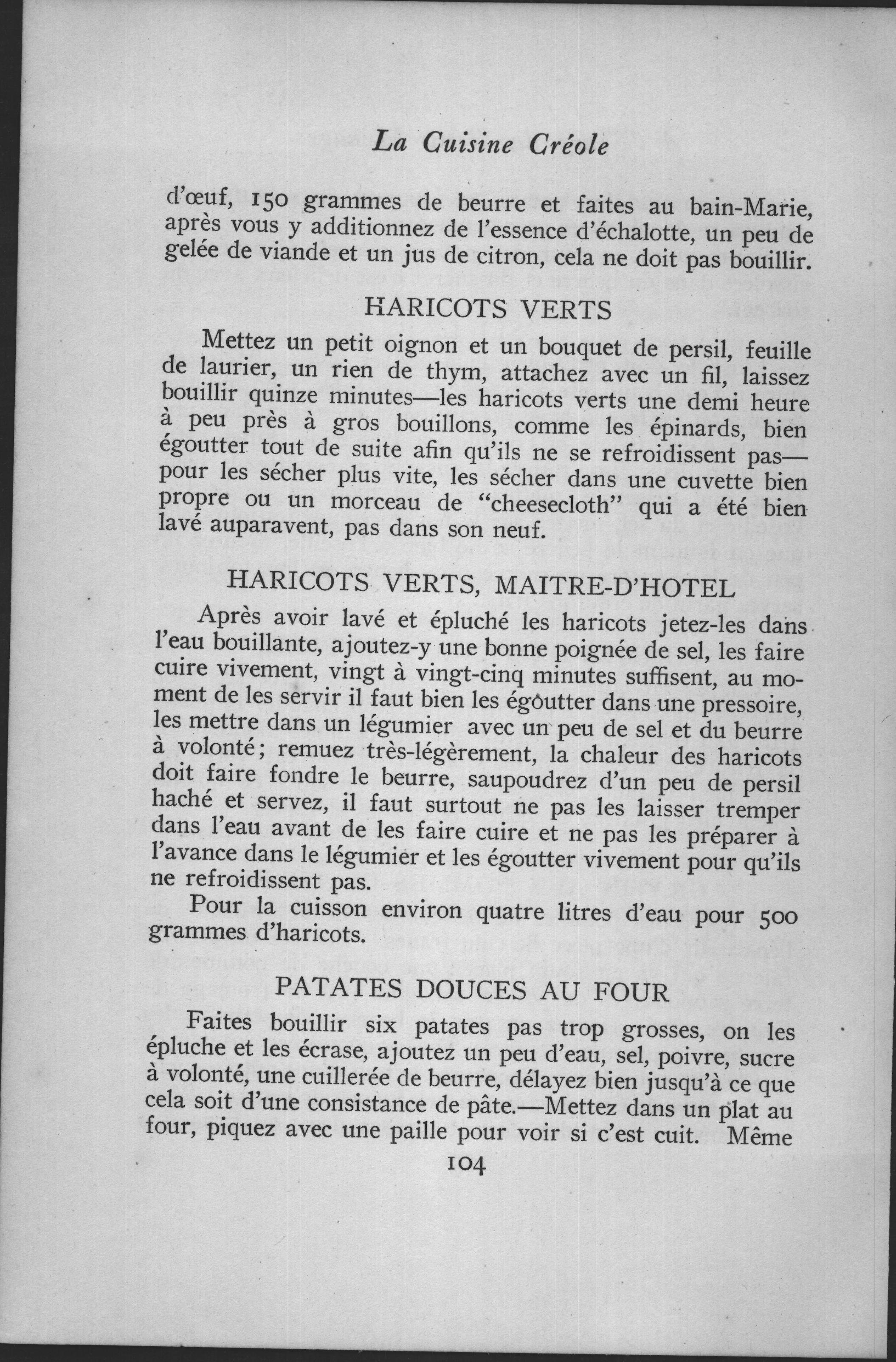
Haricots Verts
Mettez un petit oignon et un bouquet de persil, feuille de laurier, un rien de thym, attachez avec un fil, laissez bouillir quinze minutes—les haricots verts une demi heure à peu près à gros bouillons, comme les épinards, bien égoutter tout de suite afin qu'ils ne se refroidissent pas—pour les sécher plus vite, les sécher dans une cuvette bien propre ou un morceau de "cheesecloth" qui a été bien lavé auparavant, pas dans son neuf.
A period method for green beans — simmered with a bundle of herbs, then thoroughly dried — that shows just how differently the 19th century liked its vegetables.
- Build a bouquet garniThe onion, parsley, bay and thyme tied with thread are a classic bouquet garni; simmer it 15 minutes first to perfume the water, then cook the beans in it.
- Half an hour is a period choiceThirty minutes at a rolling boil gives soft, old-fashioned beans. For bright, crisp-tender ones, blanch just 4–6 minutes and shock in ice water — a modern preference the original didn’t share.
- Salt the water wellSeason the boiling water generously so the beans are seasoned through as they cook.
- Dry them thoroughlyDraining and drying at once keeps the beans from steaming to mush — and, the recipe warns, from going cold.
- The cheesecloth tipUse washed cheesecloth, never straight from the package: new cloth carries sizing and lint that can taint delicate vegetables.
The very phrase haricots verts signals a French ideal of the green bean — slim, tender pods eaten young, a vegetable the French have prized since beans crossed the Atlantic from the Americas in the 16th century. The bouquet garni here is one of those small, unglamorous techniques that quietly define French cooking: a bundle of aromatics that flavors a pot and is lifted out before serving, leaving no stray leaves behind. The insistence on draining and drying betrays a cook who understood that water is the enemy of a good vegetable.
From page 104 of the 1904 edition.
Original page from the book